







 Book an appointment
GBS TESTING DURING PREGNANCY – PROTECTING YOUR BABY FROM THE VERY FIRST MOMENTS OF LIFE
 Posted date: 13/08/2026
 Posted by: Nông Đức Thắng


Quick view of main content
What is GBS?
Why should pregnant women have GBS testing?
Recommended time for testing
Is GBS testing painful?
What if the result is GBS positive?
Important reminders for expectant mothers
Contact Information
TNH Hospital System
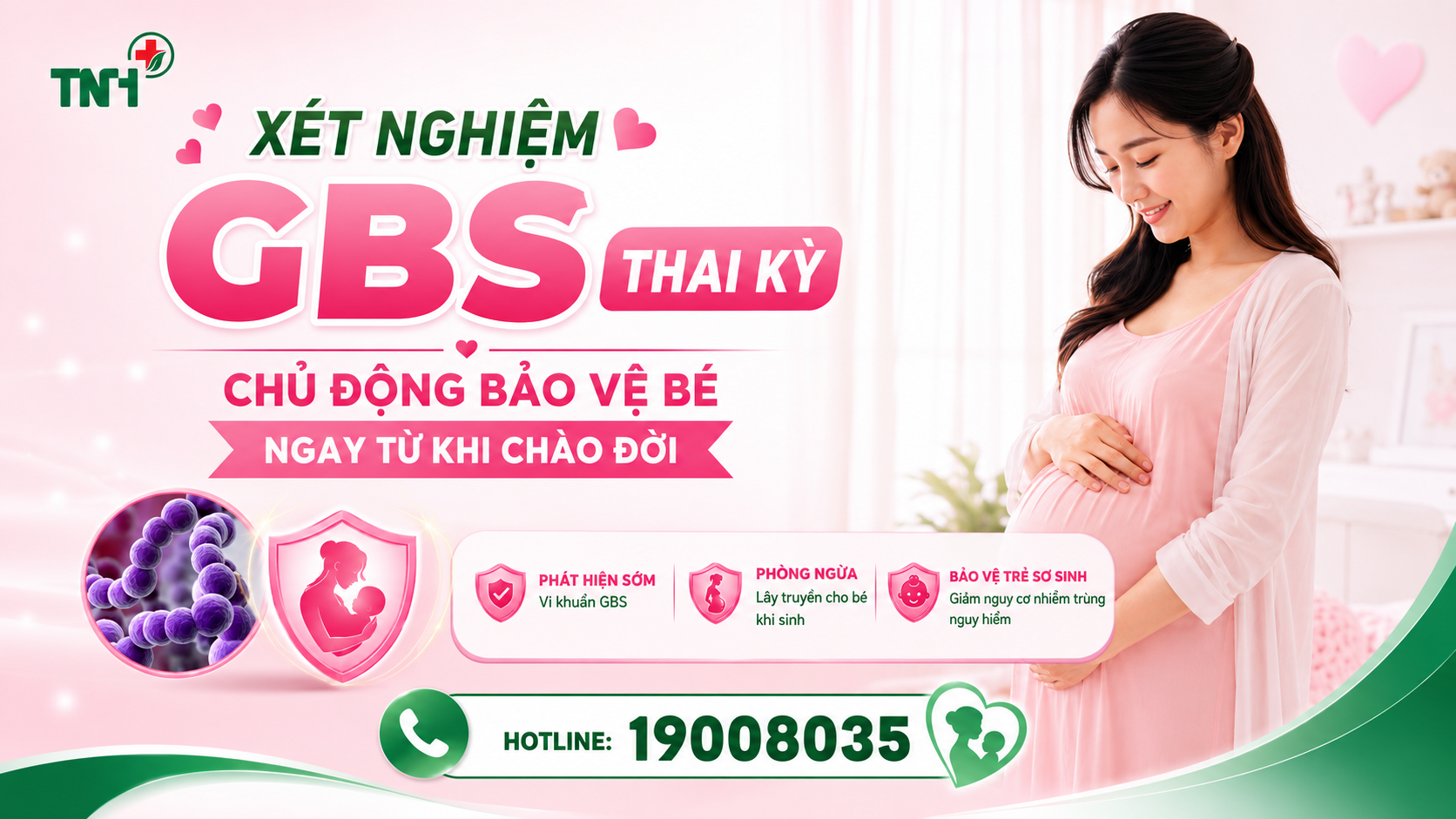
Pregnancy is a precious journey, and every appropriate prenatal care step contributes to protecting both mother and baby. In the final weeks of pregnancy, GBS testing (Group B Streptococcus screening) is an important examination that expectant mothers should not overlook in order to proactively reduce the risk of infection in newborns from the moment they are born.
What is GBS?
Group B Streptococcus (GBS) is a type of bacteria that can naturally reside in the gastrointestinal and genital tracts of approximately 10–30% of pregnant women. Most women who carry GBS have no symptoms, and it is not a sexually transmitted infection.
However, during vaginal delivery, the baby may come into contact with GBS from the mother. Because a newborn’s immune system is still immature, GBS can cause serious infections such as:
- Bloodstream infection (sepsis)
- Pneumonia
- Meningitis
Why should pregnant women have GBS testing?
GBS screening allows doctors to develop an appropriate prevention plan during labor and delivery, thereby significantly reducing the risk of early-onset GBS infection in newborns. This is a proactive step that helps improve the baby’s safety at birth.
Recommended time for testing
Current obstetric guidelines recommend GBS testing between 36 weeks 0 days and 37 weeks 6 days of pregnancy. Testing during this period provides the most accurate assessment of GBS colonization close to the time of delivery.
Is GBS testing painful?
Expectant mothers can feel reassured because GBS testing is a simple and gentle procedure:
- A small swab is used to collect a sample from the vaginal area.
- The procedure is quick and non-invasive.
- It does not affect the baby or the amniotic sac.
- The specimen is analyzed using culture methods or other appropriate laboratory techniques according to medical indications.
What if the result is GBS positive?
A positive GBS result does not mean that the baby will definitely become infected. It simply indicates that the mother is carrying GBS bacteria at the time of testing.
When labor begins or the membranes rupture, the doctor will assess the specific situation and may administer intravenous preventive antibiotics during labor to reduce the risk of transmitting GBS to the baby. Therefore, mothers should not be overly worried and should follow the guidance of their obstetrician.
Important reminders for expectant mothers
- Discuss GBS testing with your obstetrician when you are around 36 weeks pregnant.
- Have the test performed at the recommended time.
- When admitted for delivery, bring your GBS test result so the obstetric team has complete information for timely management.
One simple test can be another proactive step in protecting your baby from the very first moments of life. Attend all scheduled prenatal visits and do not miss GBS testing in the final weeks of pregnancy.
Contact Information
TNH Hospital Group Joint Stock Company
☎ Hotline: 1900 8035
🌐 Website: https://tnh.com.vn
TNH Hospital System
- TNH Viet Yen Hospital: Nguyen The Nho Street, Viet Yen Ward, Bac Ninh, Vietnam.
- Thai Nguyen International Hospital: 328 Luong Ngoc Quyen Street, Phan Dinh Phung Ward, Thai Nguyen, Vietnam.
- TNH Lang Son Hospital: Block 10, Nhi Thanh Street, Tam Thanh Ward, Lang Son, Vietnam.
- TNH Pho Yen Hospital: Tran Nguyen Han Street, Chua Residential Group, Van Xuan Ward, Thai Nguyen, Vietnam.
If you need further advice, please send a message to our Fanpage or contact our hotline 1900 8035 for timely support.