







 Book an appointment
CHRONIC OTITIS MEDIA WITH CHOLESTEATOMA – RISK OF DAMAGE TO IMPORTANT STRUCTURES OF THE EAR
 Posted date: 28/09/2026
 Posted by: Nông Đức Thắng


Quick view of main content
What Structures Can Cholesteatoma Damage?
Warning Signs That Should Not Be Ignored
Early Detection – Appropriate Management
Don’t Wait Until Hearing Loss Becomes Severe
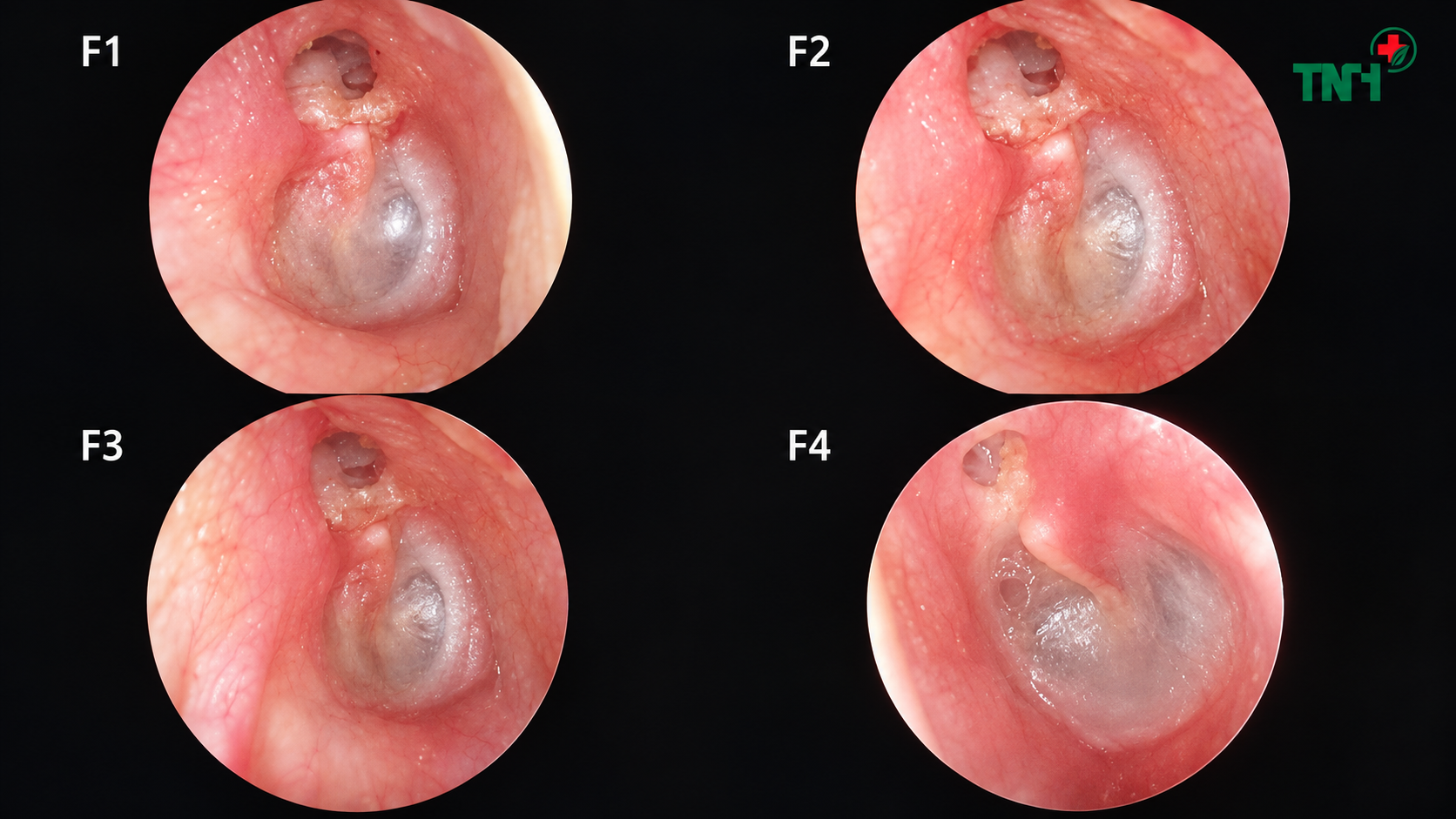
Chronic otitis media commonly presents with persistent or recurrent ear discharge, hearing loss, and sometimes foul-smelling drainage. Because these symptoms may persist without causing severe discomfort, many people tend to underestimate the condition and only use medication when ear discharge occurs without seeking a comprehensive specialist evaluation.
However, persistent middle ear inflammation may be associated with cholesteatoma – a lesion caused by the abnormal accumulation of keratinizing squamous epithelium in the middle ear and/or mastoid. Although cholesteatoma is not a malignant tumor, it can progressively expand, cause chronic inflammation, and damage surrounding structures if not detected and appropriately managed.
What Structures Can Cholesteatoma Damage?
The middle ear contains several small but important structures that play essential roles in hearing and balance. As cholesteatoma progresses, chronic inflammation and bone erosion may damage these structures.
The ossicular chain may be eroded, resulting in progressively worsening hearing loss. The disease may also extend into the mastoid bone and the walls of the middle ear cavity, allowing the affected area to become more extensive.
In advanced cases, cholesteatoma may involve the facial nerve canal, increasing the risk of facial paralysis. It may also affect the inner ear structures, potentially causing dizziness, labyrinthine fistula, and further hearing impairment.
More seriously, if inflammation and destructive changes spread toward structures adjacent to the brain, potentially severe complications such as meningitis or intracranial abscess may occur.
Warning Signs That Should Not Be Ignored
Patients should seek an examination by an Ear, Nose and Throat (ENT) specialist if they experience persistent or recurrent ear discharge, particularly if the discharge has an unpleasant odor; progressively worsening hearing loss in one ear; a feeling of fullness or pressure in the ear; recurrent middle ear infections; or a long-standing perforated eardrum.
Other symptoms such as tinnitus, dizziness, ear pain, or any unusual changes involving the ear should also be medically evaluated.
Importantly, persistent ear discharge without pain does not necessarily mean the condition is mild. Cholesteatoma can progress silently over a long period while continuing to damage structures inside the ear.
Early Detection – Appropriate Management
To evaluate chronic otitis media and detect cholesteatoma, an ENT specialist may perform a thorough ear examination using otoscopy or endoscopy, together with a hearing assessment. When necessary, a CT scan of the temporal bone may be recommended to determine the location and extent of the lesion and assist in treatment planning.
Unlike some ear infections that can be controlled with medical treatment, cholesteatoma usually requires surgical removal of the lesion to control the disease and prevent further damage. The specific treatment approach will be determined by the doctor based on the location and extent of the disease as well as the individual patient’s condition.
Don’t Wait Until Hearing Loss Becomes Severe
Persistent discharge from one ear may be associated with chronic otitis media, but it can also be a sign of cholesteatoma. Delaying medical evaluation or relying on prolonged self-treatment may allow the disease to progress and increase the risk of damage to important structures within the ear.
If you or a family member experiences persistent ear discharge, hearing loss, foul-smelling ear drainage, tinnitus, dizziness, or recurrent ear infections, you should visit a healthcare facility with an ENT specialty for timely examination, assessment, and appropriate treatment advice.
Early detection and appropriate treatment are important for controlling cholesteatoma, limiting structural damage, and preventing serious complications.
TNH HOSPITAL GROUP JSC
Hotline: 1900 8035
Website: tnh.com.vn