







 Book an appointment
ACUTE AND CHRONIC PULMONARY EMBOLISM: THE IMPORTANT ROLE OF CT PULMONARY ANGIOGRAPHY IN DIAGNOSIS
 Posted date: 13/11/2026
 Posted by: Nông Đức Thắng


Quick view of main content
Differentiating Acute and Chronic Pulmonary Embolism Through Diagnostic Imaging
The Role of CT Pulmonary Angiography in Diagnosing Pulmonary Embolism
Recognizing Early Warning Signs of Pulmonary Embolism
Proactive Health Monitoring, Early Detection, and Cardiopulmonary Protection
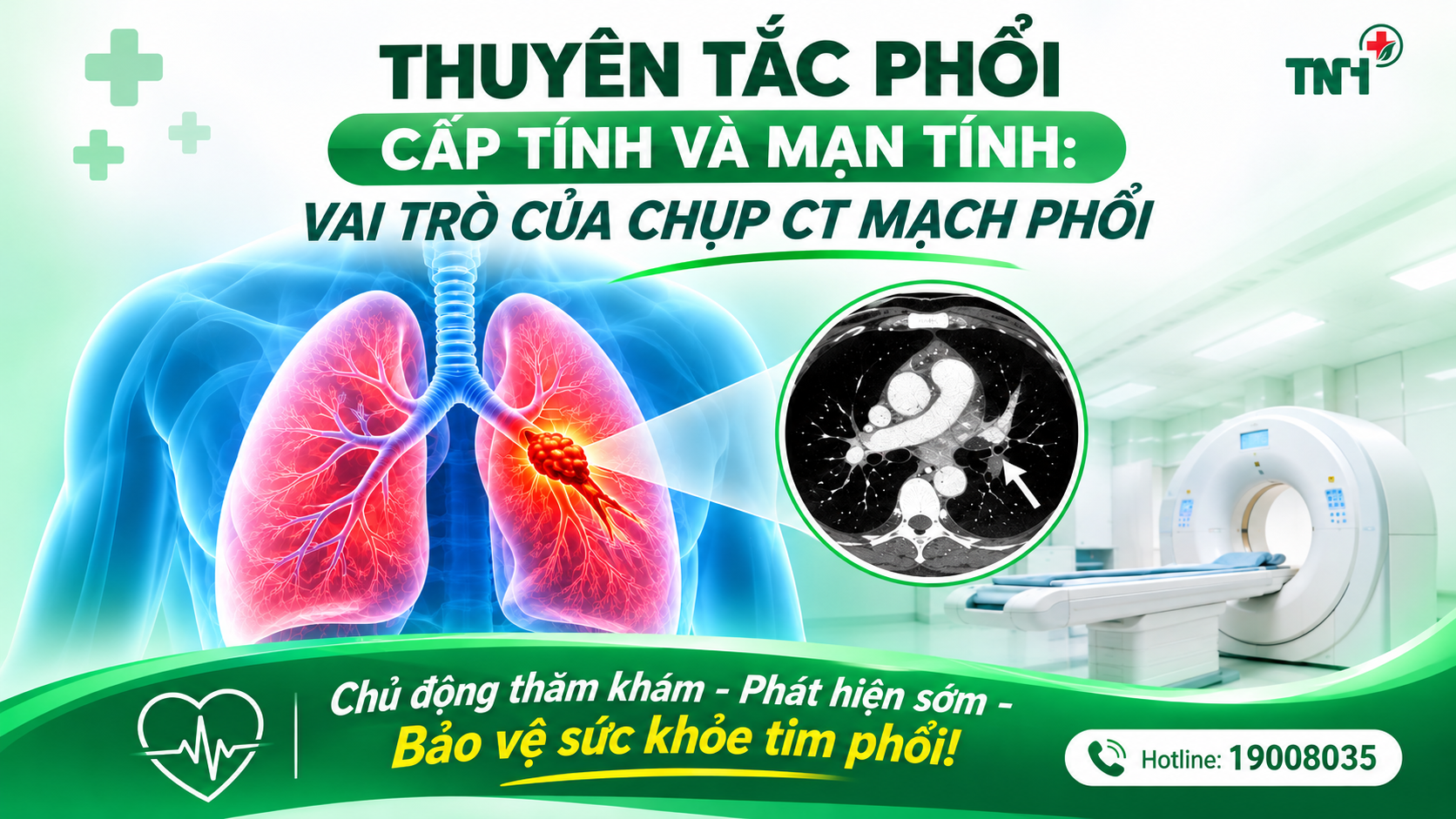
Pulmonary embolism (PE) is a condition in which a blood clot obstructs one or more pulmonary arteries, disrupting blood circulation and gas exchange in the lungs. It is a potentially life-threatening cardiovascular condition that requires timely diagnosis and treatment. Computed Tomography Pulmonary Angiography (CTPA) plays a crucial role in detecting blood clots, assessing the extent of vascular damage, and helping physicians determine appropriate treatment strategies.
Differentiating Acute and Chronic Pulmonary Embolism Through Diagnostic Imaging
Pulmonary embolism occurs when a blood clot, typically originating from the deep veins of the lower extremities, travels through the bloodstream and becomes lodged in the pulmonary arteries, obstructing blood flow. Depending on the duration and progression of the clot, pulmonary embolism may present as an acute or chronic condition, each with distinct imaging characteristics.
Acute Pulmonary Embolism: This condition occurs when a blood clot suddenly obstructs one or more branches of the pulmonary arteries, interrupting blood flow to the affected regions of the lungs. On CTPA images, acute thrombi typically appear as filling defects within the contrast-enhanced pulmonary arteries. These findings may be accompanied by enlargement of the affected vessel and changes in pulmonary perfusion. In severe cases, acute pulmonary embolism can lead to a sudden increase in pulmonary arterial pressure, right ventricular failure, and hemodynamic instability.
Chronic Pulmonary Embolism: This condition involves persistent blood clots that gradually become organized and fibrotic, resulting in structural changes within the pulmonary arteries. CT imaging may reveal fibrous bands, intravascular webs, arterial narrowing, or complete vascular obstruction. In some cases, collateral circulation and imaging findings associated with pulmonary hypertension may also be observed.
Accurately identifying these imaging characteristics enables physicians to distinguish between acute and chronic pulmonary embolism, assess the impact on pulmonary circulation, and develop appropriate treatment and follow-up strategies.
The Role of CT Pulmonary Angiography in Diagnosing Pulmonary Embolism
Computed Tomography Pulmonary Angiography (CTPA) is an advanced diagnostic imaging technique that combines X-ray technology with intravenous contrast administration to produce detailed images of the pulmonary arterial system.
As a minimally invasive imaging method, CTPA provides high diagnostic value, particularly in patients with suspected acute pulmonary embolism.
Through CTPA imaging, physicians can:
- Detect and locate blood clots: Identify contrast-filling defects within the pulmonary arteries and determine the location and extent of vascular obstruction.
- Assess the degree of obstruction: Evaluate the severity of arterial blockage and its impact on pulmonary circulation.
- Identify signs of chronic vascular damage: Detect fibrous bands, intravascular webs, arterial narrowing, and long-standing pulmonary arterial obstruction.
- Evaluate associated abnormalities: Identify changes in lung tissue, right ventricular enlargement, and other relevant imaging findings.
- Support treatment planning: Provide essential diagnostic information that physicians can combine with clinical symptoms, laboratory findings, and other diagnostic tests to determine appropriate treatment strategies.
In particular, for patients with suspected chronic pulmonary embolism or chronic thromboembolic pulmonary hypertension (CTEPH), CTPA helps characterize vascular abnormalities and guides further specialized investigations.
Recognizing Early Warning Signs of Pulmonary Embolism
Pulmonary embolism can develop suddenly and present with symptoms ranging from mild to severe. Common warning signs include sudden shortness of breath, chest pain that worsens with deep breathing, rapid heartbeat, coughing, and occasionally coughing up blood. In severe cases, patients may experience low blood pressure, shock, or fainting.
In chronic pulmonary embolism, symptoms may develop gradually and remain unnoticed for an extended period. Patients may experience progressively worsening shortness of breath during physical activity, persistent fatigue, and reduced exercise tolerance.
When symptoms suggestive of pulmonary embolism occur, particularly sudden breathing difficulties, severe chest pain, or fainting, patients should seek immediate emergency medical care. Early diagnosis and appropriate treatment are essential to reducing the risk of serious complications.
Proactive Health Monitoring, Early Detection, and Cardiopulmonary Protection
Pulmonary embolism is a potentially life-threatening condition, but timely diagnosis and appropriate treatment can significantly improve patient outcomes.
Advances in modern diagnostic imaging, particularly CT Pulmonary Angiography, have enhanced the ability to detect pulmonary embolism, assess vascular abnormalities, and support physicians in making informed treatment decisions.
Proactive health monitoring, early recognition of warning signs, and timely medical evaluation are essential to minimizing complications, protecting cardiopulmonary health, and improving overall quality of life.
TNH HOSPITAL GROUP JOINT STOCK COMPANY
Hotline: 1900 8035
Website: https://tnh.com.vn
TNH HOSPITAL NETWORK
- TNH Viet Yen Hospital: Nguyen The Nho Street, Viet Yen Ward, Bac Ninh, Vietnam.
- Thai Nguyen International Hospital: No. 328 Luong Ngoc Quyen Street, Phan Dinh Phung Ward, Thai Nguyen, Vietnam.
- TNH Pho Yen Hospital: Tran Nguyen Han Street, Truong Thinh Residential Group, Van Xuan Ward, Thai Nguyen, Vietnam.
- TNH Lang Son Hospital: Block 10, Nhi Thanh Street, Tam Thanh Ward, Lang Son, Vietnam.