







 Book an appointment
THỦY ĐẬU – NHẬN BIẾT SỚM, ĐIỀU TRỊ ĐÚNG CÁCH ĐỂ TRÁNH BIẾN CHỨNG
 Posted date: 29/04/2026
 Posted by: Nông Đức Thắng

Quick view of main content
A highly contagious disease that should not be underestimated
1. Clinical manifestations
2. Possible complications
3. Treatment approach
General principles:
Treatment options:
4. Prevention
Examination and consultation
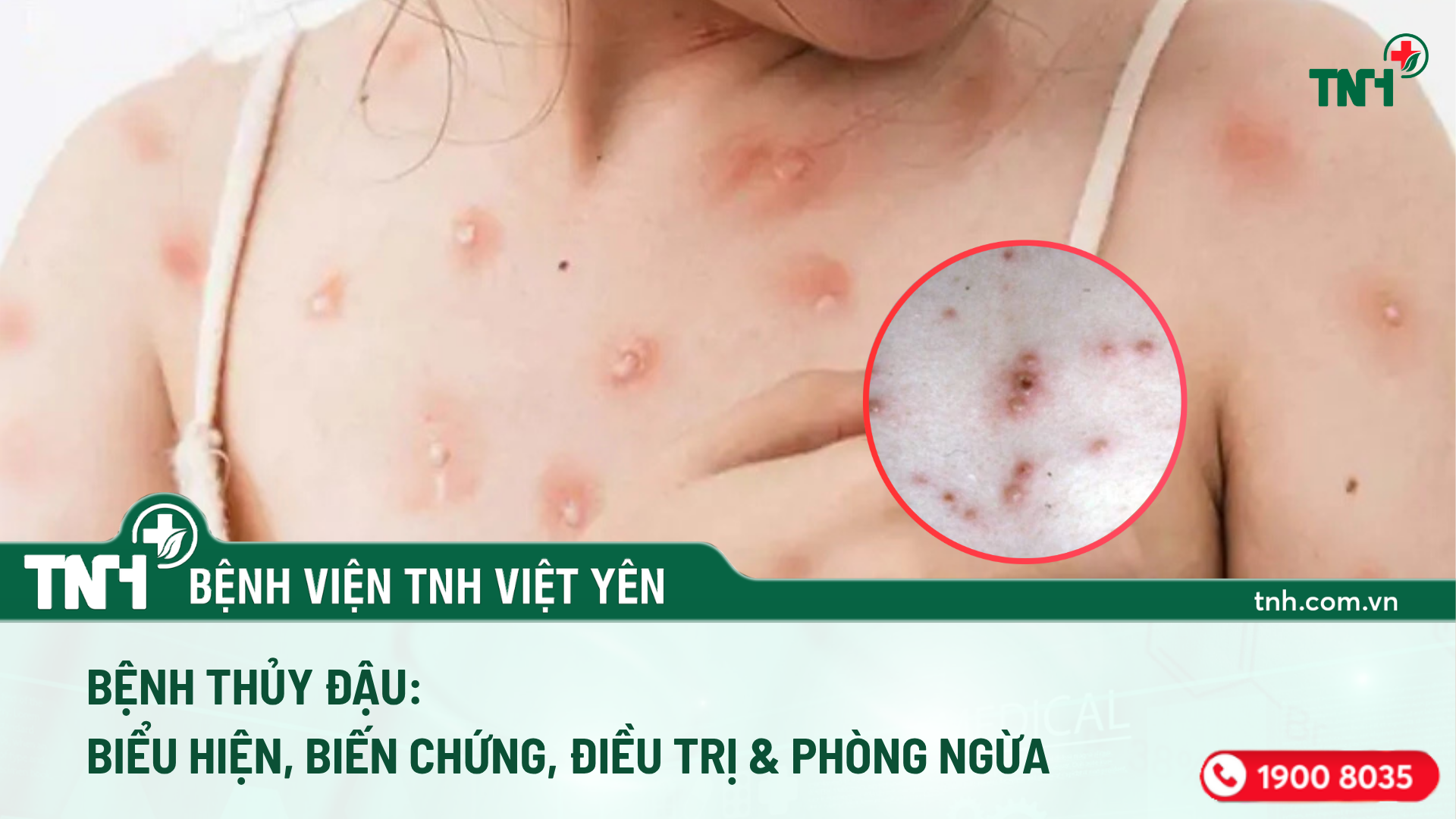
CHICKENPOX – EARLY RECOGNITION AND PROPER MANAGEMENT TO PREVENT COMPLICATIONS
A highly contagious disease that should not be underestimated
Chickenpox is an infectious disease caused by the Varicella Zoster Virus (VZV). It spreads mainly through the respiratory route when the virus is shed from the nose and throat of an infected person. It can also be transmitted through direct contact with fluid from skin blisters.
This disease is highly contagious and can easily cause outbreaks, especially in households and schools. It is more common during winter and spring.
1. Clinical manifestations
After an average incubation period of about 14 days (range: 10–23 days), patients may develop:
- Fever, headache, and fatigue before the rash appears
- Red spots that quickly progress to papules and then fluid-filled vesicles
- Small vesicles (2–3 mm), clear, superficial, with a red halo and central depression—often described as “dew drops on a rose petal”
- Vesicles may become pustules and then scab over
- Lesions may also appear on mucous membranes (eyes, mouth), causing shallow ulcers
- Different types of lesions (papules, vesicles, pustules, and crusts) may appear simultaneously
2. Possible complications
If not properly managed, chickenpox can lead to serious complications:
- Skin infections: Due to secondary bacterial infection (e.g., staphylococcus, streptococcus)
- Internal complications: Pneumonia, acute glomerulonephritis, encephalitis/meningitis
High-risk groups:
- Children
- Immunocompromised individuals (HIV/AIDS, transplant recipients, chemotherapy patients, long-term immunosuppressive therapy)
- Pregnant women: Infection in early pregnancy may cause miscarriage, stillbirth, or congenital abnormalities
3. Treatment approach
General principles:
- Early detection and prompt treatment
- Support overall health and immunity
- Use antiviral medications as prescribed
- Manage complications promptly
Treatment options:
Depending on disease severity, patients may be treated as outpatients or inpatients:
- Antiviral medications: Should be used within the first 24 hours after rash onset (oral or intravenous as prescribed)
- Management of complications: If pneumonia, skin infection, or other issues occur
- Supportive care: Fever reduction, itch relief, nutritional support
- Skin care: Antiseptic solutions for lesions; topical antibiotics may be used to prevent secondary infection
4. Prevention
- Avoid contact with infected individuals
- Isolate patients until full recovery
- Vaccination against chickenpox
Examination and consultation
Dermatology Department – TNH Viet Yen Hospital
📞 Hotline: 1900 8035
Working hours:
- Monday to Sunday
- Morning: 07:00 – 11:30
- Afternoon: 13:00 – 16:30
TNH Hospital System:
- TNH Viet Yen Hospital – Bac Ninh
- TNH Pho Yen Hospital – Thai Nguyen
- TNH Lang Son Hospital – Lang Son
- Thai Nguyen International Hospital – Thai Nguyen