







 Book an appointment
WEATHER CHANGES – A FACTOR THAT CAN WORSEN JOINT PAIN
 Posted date: 13/10/2026
 Posted by: Nông Đức Thắng


Quick view of main content
Why Do Weather Changes Make Joint Pain Worse?
Intra-Articular Injections – A Treatment Option for Certain Joint Conditions
Proactive Joint Care During Seasonal Changes
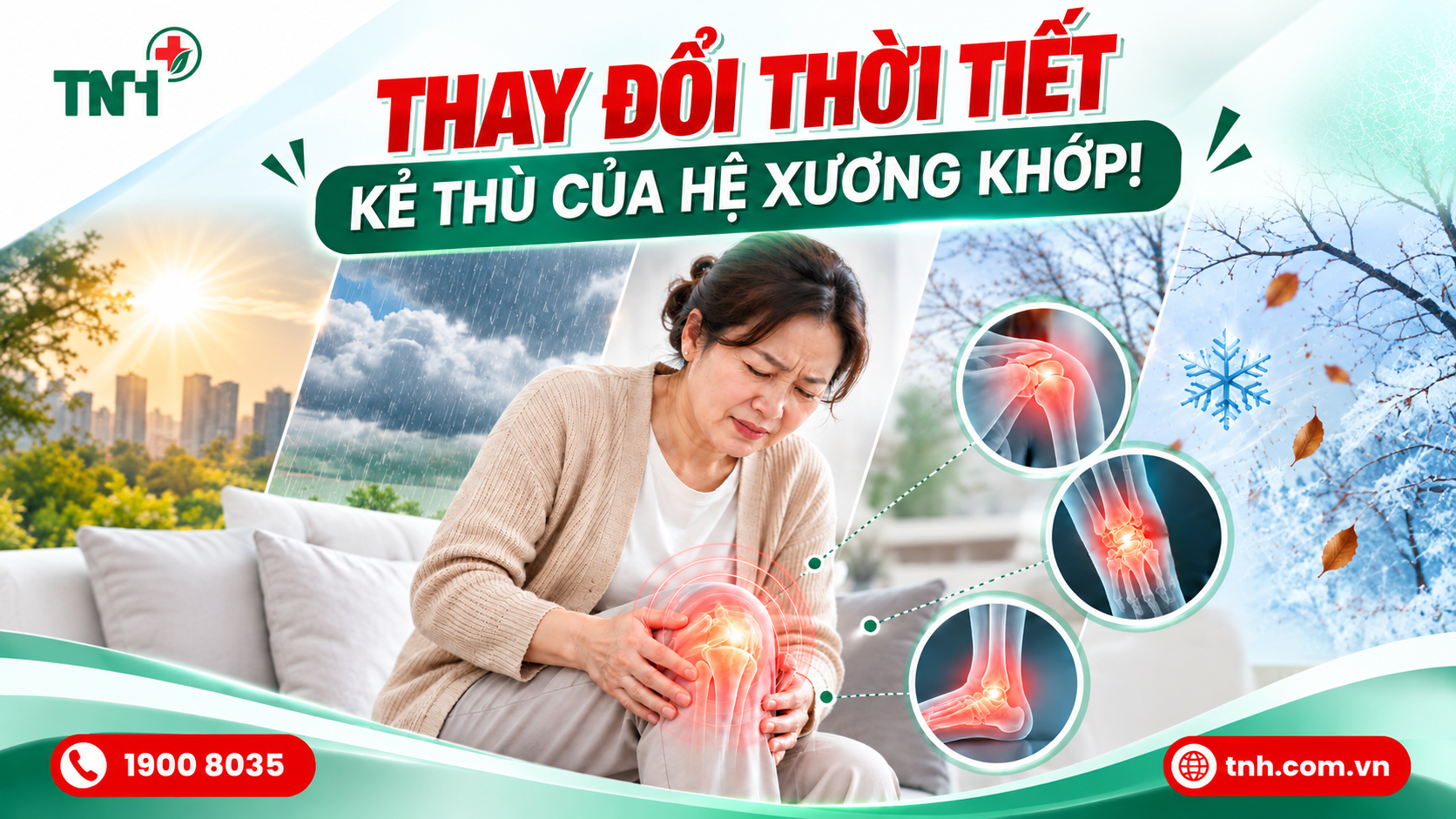
Changes in weather, particularly sudden drops in temperature or seasonal transitions, can make joint pain more noticeable, especially among older adults and individuals with existing musculoskeletal conditions. Persistent joint pain not only causes discomfort but can also significantly affect mobility and quality of life.
Why Do Weather Changes Make Joint Pain Worse?
Many people experience increased joint pain and stiffness when temperatures drop, humidity rises, or atmospheric pressure changes.
Some studies suggest that fluctuations in temperature, humidity, and atmospheric pressure may be associated with pain severity in individuals with musculoskeletal disorders. Cold weather may also contribute to muscle stiffness, reduced physical activity, and increased joint discomfort. However, the effects of weather vary from person to person, and the underlying mechanisms are still being investigated.
Common symptoms include:
- Joint pain: Pain may persist or worsen during movement, particularly in weight-bearing joints such as the knees and hips.
- Joint stiffness: Patients may experience difficulty bending or extending their joints, especially after prolonged rest or upon waking in the morning.
- Joint swelling and tenderness: Some individuals may develop swelling, tenderness, or pain when touching or moving the affected joint.
- Limited mobility: Daily activities such as walking, standing up, sitting down, climbing stairs, or gripping objects may become increasingly difficult.
These symptoms may be particularly noticeable in people with osteoarthritis, inflammatory arthritis, or a history of joint injuries when weather conditions change.
Intra-Articular Injections – A Treatment Option for Certain Joint Conditions
At the Department of Internal Medicine, TNH Lang Son Hospital, patients experiencing joint pain, swelling, inflammation, or restricted mobility undergo clinical examinations and assessments to determine the underlying cause and identify appropriate treatment options.
For certain musculoskeletal conditions, when clinically indicated, doctors may recommend intra-articular injections to help manage symptoms and improve joint function.
An intra-articular injection is a medical procedure in which medication is administered directly into the joint space. Depending on the underlying condition, severity of joint damage, and the patient's overall health, doctors select the most appropriate medication and treatment approach.
This procedure may offer several benefits:
- Pain relief and inflammation control: Certain intra-articular medications can help reduce inflammatory responses and relieve joint pain in appropriately selected patients.
- Improved joint mobility: By reducing pain and inflammation, treatment may help patients move their joints more comfortably and support functional rehabilitation.
- Targeted treatment: Medication is delivered directly into the joint space, allowing localized therapeutic effects and, in some cases, reducing the need for systemic medications.
However, intra-articular injections are not suitable for every patient and do not completely replace other treatment methods. Their effectiveness depends on the type of medication used, the underlying condition, and the extent of joint damage.
The procedure also carries potential risks, including joint infection, bleeding, and post-injection reactions. Therefore, patients should undergo a thorough medical evaluation and receive appropriate indications from a qualified doctor before treatment.
Proactive Joint Care During Seasonal Changes
To minimize joint discomfort associated with changing weather conditions, individuals are encouraged to adopt appropriate preventive measures, including keeping their bodies warm, maintaining gentle physical activity, exercising according to their physical condition, and managing a healthy body weight.
In addition, following prescribed treatment plans and avoiding the unsupervised use of painkillers or other medical interventions are essential for protecting long-term joint health.
Individuals experiencing recurrent joint pain, swelling, morning stiffness, or progressively restricted mobility should seek medical attention to identify the underlying cause and receive appropriate treatment. In particular, sudden severe joint pain accompanied by swelling, redness, warmth, or fever requires urgent medical evaluation.
With its team of doctors and treatment approaches provided according to clinical indications, the Department of Internal Medicine at TNH Lang Son Hospital is committed to supporting patients throughout the examination, monitoring, and treatment of musculoskeletal conditions, with the goal of relieving pain, improving mobility, and enhancing quality of life.
Do not let joint pain interfere with your daily activities. Seek timely medical attention and appropriate treatment to maintain mobility and protect your long-term health.
For consultation and appointment scheduling at TNH Lang Son Hospital, please contact our hotline at 1900 8035.
TNH HOSPITAL GROUP JOINT STOCK COMPANY
Hotline: 1900 8035
Website: https://tnh.com.vn
TNH Hospital System:
- TNH Lang Son Hospital: Block 10, Nhi Thanh Street, Tam Thanh Ward, Lang Son.
- Thai Nguyen International Hospital: No. 328, Luong Ngoc Quyen Street, Phan Dinh Phung Ward, Thai Nguyen.
- TNH Pho Yen Hospital: Tran Nguyen Han Street, Truong Thinh Residential Group, Van Xuan Ward, Thai Nguyen.
- TNH Viet Yen Hospital: Nguyen The Nho Street, Viet Yen Ward, Bac Ninh.