






 Book an appointment
PRETERM LABOR RISK SCREENING – PROACTIVE CARE FOR A SAFE AND HEALTHY PREGNANCY
 Posted date: 19/06/2026
 Posted by: Nông Đức Thắng

Quick view of main content
Factors That Increase the Risk of Preterm Labor
Warning Signs Expectant Mothers Should Watch For
Effects of Premature Birth on Newborns
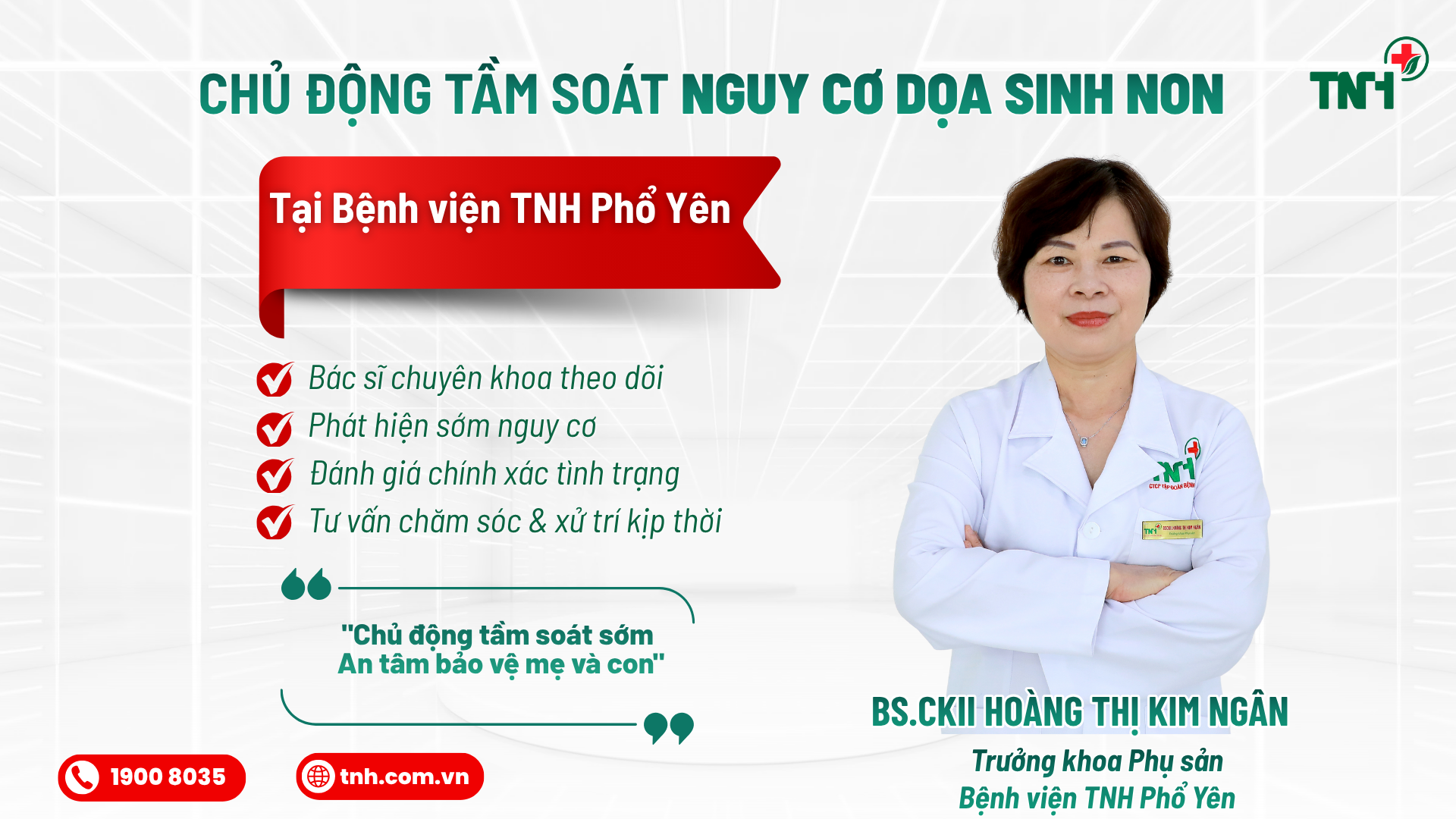
Preterm Labor Risk Screening at TNH Pho Yen Hospital
Early Screening for a Safer Pregnancy
Preterm labor refers to the onset of labor signs between the 22nd and before the 37th week of pregnancy. It is one of the most concerning obstetric complications, as it can increase the risk of premature birth and significantly affect a newborn’s health and development.
Factors That Increase the Risk of Preterm Labor
The risk of preterm labor may be associated with various maternal and fetal conditions, including:
- Premature rupture of membranes (PROM)
- Multiple pregnancy (twins or more)
- Polyhydramnios
- Fetal abnormalities
- Uterine malformations
- Maternal conditions such as hypertension during pregnancy and urinary tract infections
In addition, lifestyle factors such as poor nutrition, excessive physical workload, smoking, alcohol consumption, and the use of stimulants may also increase the likelihood of preterm birth.
Warning Signs Expectant Mothers Should Watch For
During pregnancy, it is important for expectant mothers to pay close attention to any unusual symptoms. Common warning signs of threatened preterm labor include:
- Persistent dull abdominal pain or recurrent contractions
- Lower abdominal pressure or discomfort, sometimes accompanied by diarrhea
- Watery vaginal discharge or mucus mixed with blood
- Uterine contractions
If any of these symptoms occur, pregnant women should seek medical attention promptly for evaluation and appropriate management.
Effects of Premature Birth on Newborns
Premature infants are at higher risk of health complications because many of their organs have not yet fully developed. Common complications include:
- Respiratory distress, pneumonia, and bronchopulmonary dysplasia
- Difficulty maintaining body temperature
- Cardiovascular disorders
- Digestive problems and poor feeding
- Jaundice and anemia
The risk of mortality is significantly higher in preterm infants, especially those born before 32 weeks of gestation or weighing less than 1,500 grams at birth.
Preterm Labor Risk Screening at TNH Pho Yen Hospital
To help expectant mothers identify risks early and receive appropriate care, the Department of Obstetrics and Gynecology at TNH Pho Yen Hospital offers comprehensive preterm labor risk screening services. Through specialized assessments, mothers can receive a thorough evaluation of their pregnancy and potential risks.
Benefits of screening include:
- Early detection of potential risks, even before obvious symptoms appear
- Assessment of cervical status, uterine contractions, and fetal well-being
- Close pregnancy monitoring by experienced obstetric specialists
- Personalized consultation on pregnancy care and timely intervention when needed
Early Screening for a Safer Pregnancy
Threatened preterm labor can occur in any pregnancy. Regular prenatal check-ups and timely risk screening play a crucial role in detecting potential complications early, helping to protect both maternal and fetal health.
If any signs suggestive of preterm labor occur, expectant mothers should not ignore them and should visit a healthcare facility for prompt medical evaluation and guidance.
Take proactive steps with early screening today to ensure a safer pregnancy journey and give your baby the healthiest possible start in life.