







 Book an appointment
SỎI ỐNG TUYẾN NƯỚC BỌT – ĐỪNG CHỦ QUAN VỚI NHỮNG CƠN ĐAU ÂM Ỉ VÙNG MIỆNG
 Posted date: 24/04/2026
 Posted by: Nông Đức Thắng

Quick view of main content
What are salivary gland duct stones?
When is intervention necessary?
Potential complications if left untreated
How can it be detected early?
Warning signs to watch for
Expert advice
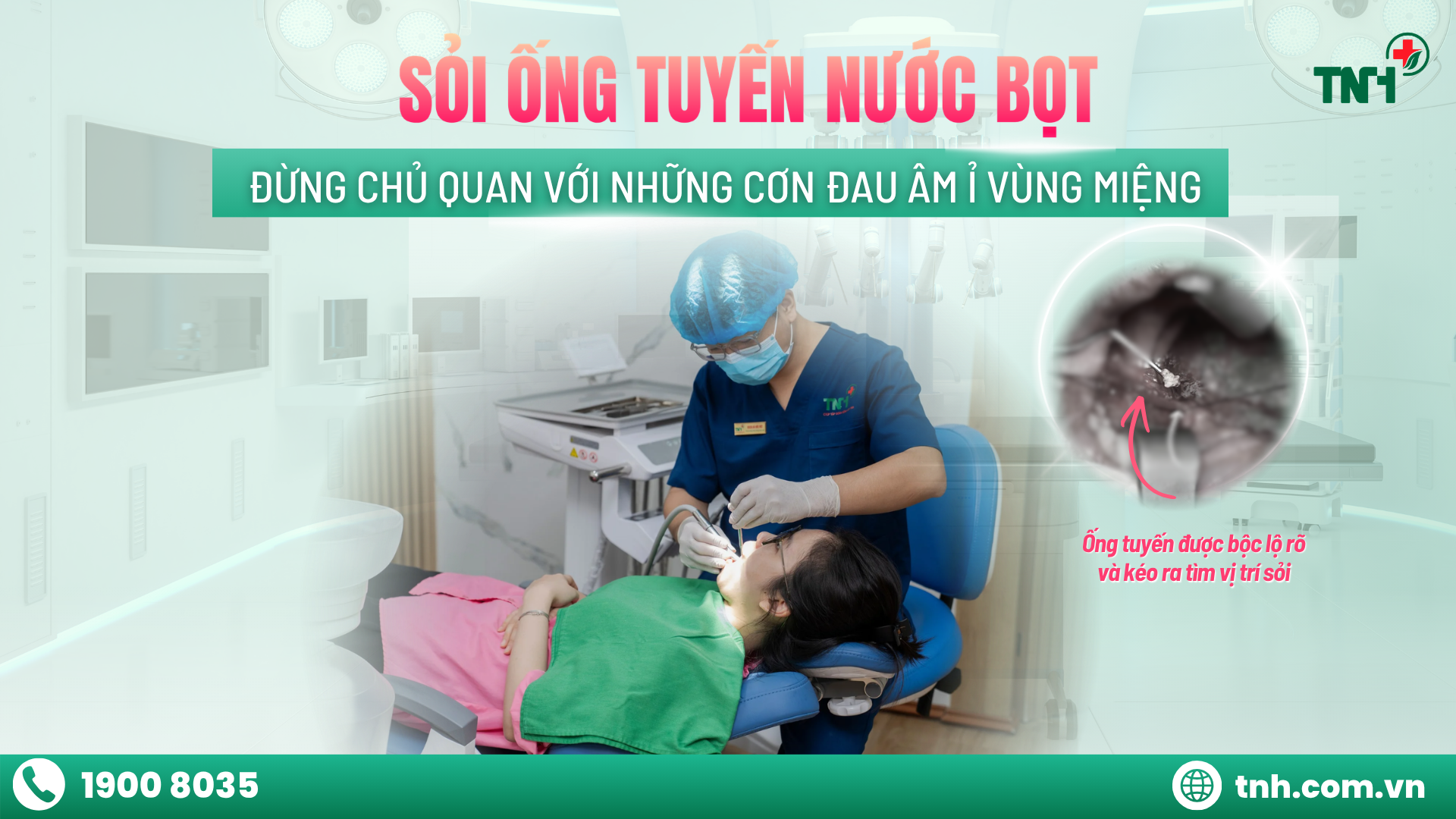
SALIVARY GLAND DUCT STONES – DON’T IGNORE PERSISTENT DULL PAIN IN THE MOUTH
Salivary gland duct stones (sialolithiasis) are a relatively common condition, yet often overlooked due to their mild and non-specific early symptoms. However, if not detected and treated in time, they can lead to serious complications affecting both health and quality of life.
What are salivary gland duct stones?
Salivary stones form when minerals accumulate within the salivary ducts, causing blockage of saliva flow. When saliva cannot circulate normally, patients may experience swelling and pain, especially during meals when salivary glands are more active.
When is intervention necessary?
In cases where the stone is located superficially and can be palpated, treatment is usually simple and quick. However, when the stone is deeply located within the duct and cannot be detected through routine examination, intervention becomes more complex and requires advanced techniques.
Recently, the Department of Odonto-Stomatology at Thai Nguyen International Hospital successfully treated a case involving a deeply located salivary stone. Using a surgical technique to expose the duct and carefully trace its pathway, doctors accurately identified and safely removed the stone, even though it was located near the gland hilum.
Potential complications if left untreated
If not managed promptly, salivary gland stones can lead to:
- Salivary gland abscess
- Infection spreading to adjacent areas
- More seriously, airway compression or extensive maxillofacial abscess
How can it be detected early?
Salivary gland stones can be effectively diagnosed using modern imaging methods such as ultrasound or computed tomography (CT scan), helping doctors determine the exact size and location of the stone for appropriate treatment planning.
Warning signs to watch for
Patients should seek medical attention if they experience:
- Swelling and pain in the submandibular area or inside the mouth
- Increased pain during meals
- Dry mouth or reduced saliva secretion
Expert advice
Early detection and timely treatment not only help relieve symptoms quickly but also prevent serious complications. Therefore, patients are encouraged to visit reputable medical facilities as soon as any abnormal signs appear.
Department of Odonto-Stomatology – Thai Nguyen International Hospital is always ready to accompany you in maintaining optimal oral health.
Contact Information:
TNH Hospital Group
Hotline: 1900 8035
Website: https://tnh.com.vn
Hospital System:
- Thai Nguyen International Hospital – 328 Luong Ngoc Quyen Street, Phan Dinh Phung Ward, Thai Nguyen City
- TNH Pho Yen Hospital – Tran Nguyen Han Street, Van Xuan Ward, Pho Yen City, Thai Nguyen
- TNH Viet Yen Hospital – Nguyen The Nho Street, Viet Yen Ward, Bac Ninh
- TNH Lang Son Hospital – 189 Ben Bac Street, Tam Thanh Ward, Lang Son City