







 Book an appointment
RETINOSCOPY – AN IMPORTANT TECHNIQUE FOR ACCURATE REFRACTIVE ERROR ASSESSMENT
 Posted date: 21/10/2026
 Posted by: Nông Đức Thắng


Quick view of main content
What Is Retinoscopy?
The Role of Retinoscopy in Diagnosing Refractive Errors
When Is Retinoscopy Recommended?
Regular Eye Examinations – A Proactive Approach to Long-Term Vision Protection
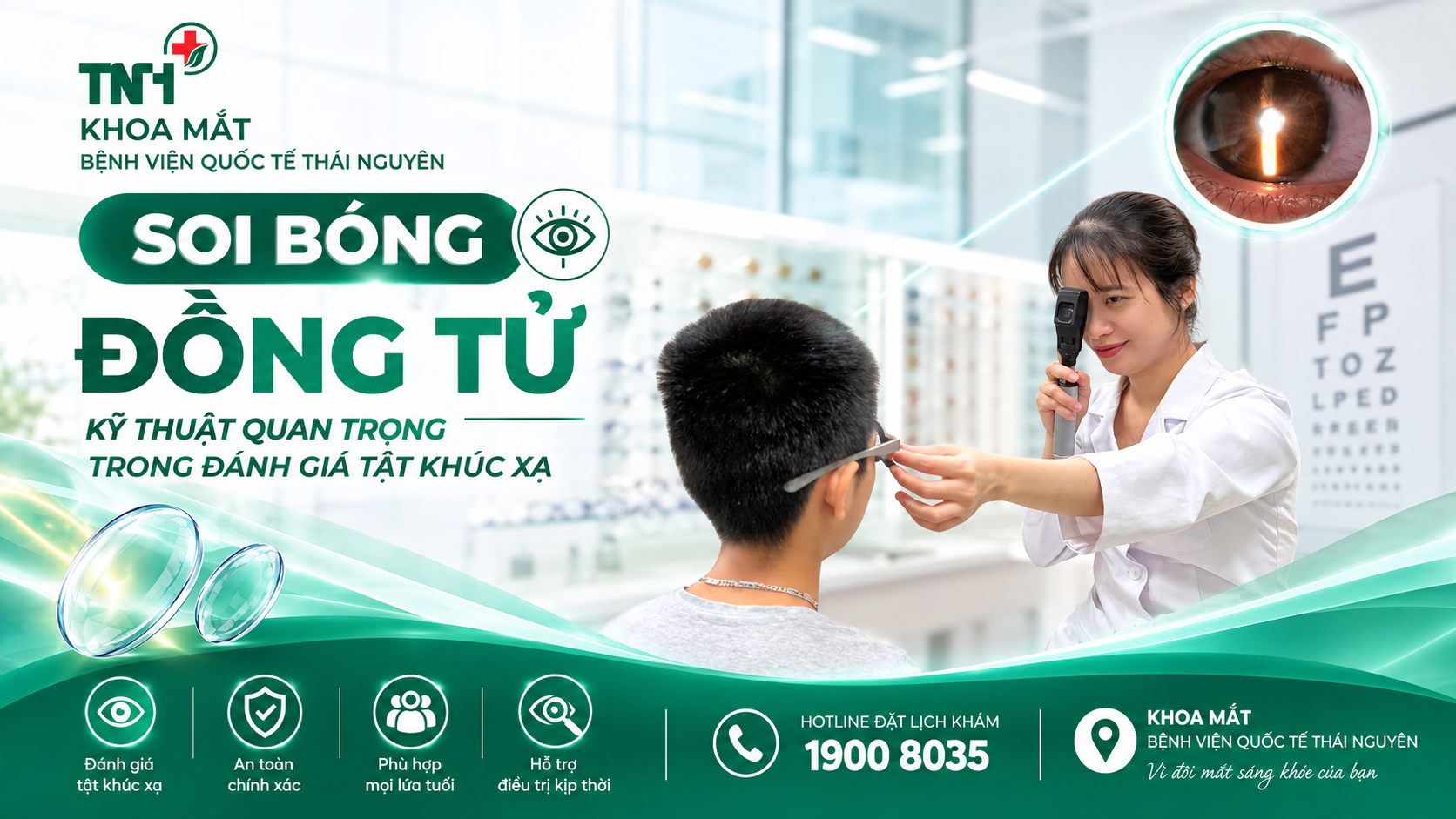
In ophthalmic examinations, alongside automated refraction, retinoscopy is an important technique that enables ophthalmologists to objectively assess refractive status, particularly in children and patients who have difficulty cooperating during eye examinations. Combining appropriate examination methods helps improve diagnostic accuracy for myopia, hyperopia, and astigmatism, while supporting effective vision correction.
What Is Retinoscopy?
Retinoscopy is an objective refraction technique used in ophthalmic examinations to identify refractive errors, including myopia (nearsightedness), hyperopia (farsightedness), and astigmatism, as well as determine their severity.
The procedure involves using a specialized retinoscope to observe the movement of light reflected from the retina through the pupil. By combining these observations with trial lenses, ophthalmologists can assess refractive status without relying entirely on the patient's verbal responses.
Retinoscopy is a safe, painless, and relatively quick procedure. It plays a valuable role in refractive assessment, particularly for young children and patients who have difficulty undergoing conventional refraction tests.
The Role of Retinoscopy in Diagnosing Refractive Errors
Although automated refractometers are widely used because of their speed and convenience, their results still need to be evaluated and compared with other examination findings to ensure an appropriate diagnosis.
Retinoscopy offers several important benefits:
Objective refractive assessment: It helps ophthalmologists identify myopia, hyperopia, and astigmatism, even in patients who cannot fully cooperate during an eye examination.
Verification of automated refraction results: Retinoscopy provides additional information that allows ophthalmologists to cross-check findings and improve the reliability of refractive assessments.
Support for appropriate eyeglass prescriptions: Retinoscopy findings serve as an important reference when combined with subjective refraction and visual acuity testing, helping ophthalmologists recommend suitable vision correction.
Particularly beneficial for children's eye examinations: Young children have strong accommodative ability, which may affect refractive measurements. When clinically indicated, ophthalmologists may administer cycloplegic eye drops to temporarily relax accommodation, allowing for a more accurate assessment and reducing the risk of incorrect eyeglass prescriptions.
With these advantages, retinoscopy plays an important role in comprehensive eye examinations, supporting the accurate detection and assessment of refractive errors.
When Is Retinoscopy Recommended?
Retinoscopy is not required for every eye examination. Depending on the patient's age, ability to cooperate, visual condition, and initial examination findings, ophthalmologists will determine the most appropriate refractive assessment method.
This technique is particularly valuable for children, patients who have difficulty cooperating during refraction tests, and cases requiring further evaluation to clarify automated refraction results.
Accurately identifying refractive errors not only supports appropriate eyeglass prescriptions but also helps minimize the impact of uncorrected or improperly corrected refractive errors on vision and quality of life.
Regular Eye Examinations – A Proactive Approach to Long-Term Vision Protection
Refractive errors such as myopia, hyperopia, and astigmatism can occur at any age and are of particular concern among school-aged children. Without timely detection and appropriate correction, these conditions may affect learning, daily activities, and overall quality of life.
Therefore, regular eye examinations at healthcare facilities with specialized ophthalmology services are recommended to assess visual acuity, evaluate refractive status, and receive appropriate guidance on vision correction.
At the Department of Ophthalmology – Thai Nguyen International Hospital, patients receive comprehensive eye examinations, visual assessments, and consultations on appropriate refractive testing methods based on ophthalmologists' clinical indications. These services contribute to the early detection of visual abnormalities and effective eye health management.
Taking proactive steps to check your vision today is an important investment in maintaining healthy eyesight for the future.
TNH HOSPITAL GROUP JOINT STOCK COMPANY
Hotline: 1900 8035
Website: tnh.com.vn
TNH Hospital Network:
- Thai Nguyen International Hospital: No. 328 Luong Ngoc Quyen Street, Phan Dinh Phung Ward, Thai Nguyen Province.
- TNH Pho Yen Hospital: Tran Nguyen Han Street, Truong Thinh Residential Area, Van Xuan Ward, Thai Nguyen Province.
- TNH Viet Yen Hospital: Nguyen The Nho Street, Viet Yen Ward, Bac Ninh Province.
- TNH Lang Son Hospital: Block 10, Nhi Thanh Street, Tam Thanh Ward, Lang Son Province.