







 Book an appointment
SUPERNUMERARY TEETH IN CHILDREN – SEEMINGLY HARMLESS BUT POTENTIALLY RISKY
 Posted date: 27/10/2026
 Posted by: Nông Đức Thắng


Quick view of main content
What are supernumerary teeth?
How can supernumerary teeth affect children?
Do supernumerary teeth need to be removed?
When should parents take their child to the dentist?
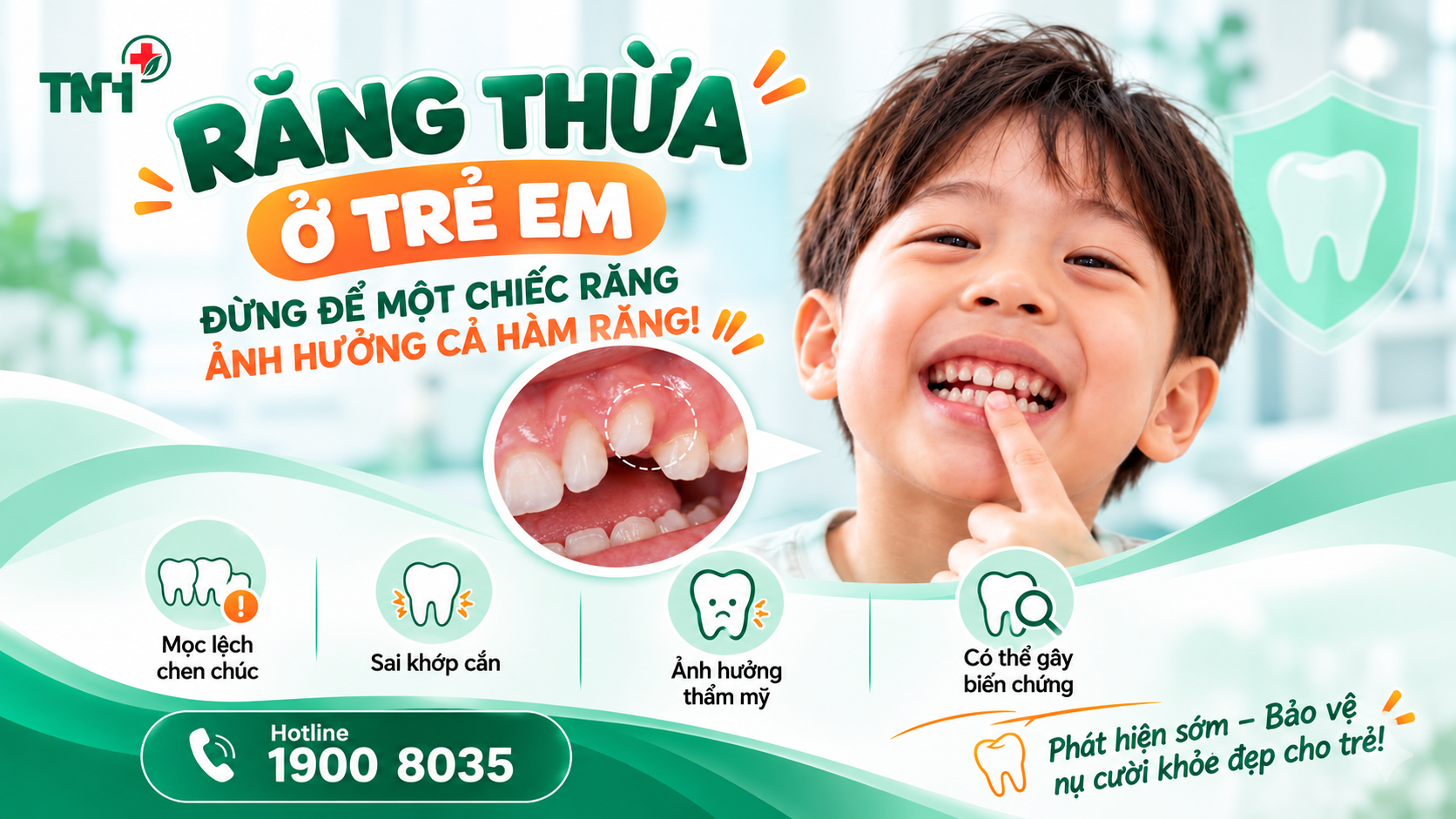
Delayed tooth eruption, crowded teeth, or teeth with an unusual shape may be signs of supernumerary teeth in children. Although not every case causes serious problems, if left undetected or improperly monitored, supernumerary teeth may interfere with normal tooth eruption, affect the bite, and compromise a child’s oral health.
What are supernumerary teeth?
Supernumerary teeth are extra teeth that develop in addition to the normal number of teeth—20 primary teeth and 32 permanent teeth. They can occur anywhere in the dental arch but are most commonly found in the upper front region. In some cases, supernumerary teeth remain impacted within the jawbone and are only detected during a dental examination or on an X-ray.
The development of supernumerary teeth may be associated with genetic factors, abnormalities in tooth germ development, or certain congenital syndromes.
How can supernumerary teeth affect children?
In addition to affecting appearance, supernumerary teeth may cause a range of problems involving oral health and dental development, including:
- Interference with permanent tooth eruption: Supernumerary teeth may delay or prevent the eruption of permanent teeth or cause them to erupt in an abnormal position.
- Dental crowding and malocclusion: Extra teeth may reduce available space in the dental arch, resulting in crowded or misaligned teeth and potentially affecting chewing function.
- Aesthetic concerns: Teeth that erupt in abnormal positions or have unusual shapes may affect dental alignment and the appearance of a child’s smile.
- Risk of complications: In some cases, impacted supernumerary teeth may be associated with complications such as cyst formation around the tooth or damage to adjacent teeth.
Do supernumerary teeth need to be removed?
Not all supernumerary teeth need to be removed. Management depends on their position, shape, direction of eruption, and their impact on adjacent teeth and jaw development.
Following a clinical examination and any necessary diagnostic imaging, the dentist may recommend an appropriate treatment plan, which may include:
- Removal of the supernumerary tooth: This may be recommended when the extra tooth interferes with the eruption of permanent teeth, causes crowding or malocclusion, or affects oral function and appearance.
- Regular monitoring: If the supernumerary tooth is not currently causing significant problems, periodic dental examinations may be recommended to monitor the development of the teeth and jaw.
When should parents take their child to the dentist?
Parents should take their child to a dental or Oral and Maxillofacial specialist if they notice delayed tooth eruption, misaligned or crowded teeth, or teeth with an unusual shape. Depending on the individual case, the dentist may recommend an X-ray to determine the position and shape of the supernumerary tooth and assess its impact on surrounding teeth.
Early detection and appropriate intervention can help reduce the risk of complications, support the proper eruption and alignment of permanent teeth, and contribute to healthy chewing function and a confident smile.
TNH HOSPITAL GROUP JOINT STOCK COMPANY
Hotline: 1900 8035
Website: tnh.com.vn
TNH Hospital System:
- TNH Pho Yen Hospital: Tran Nguyen Han Street, Truong Thinh Residential Group, Van Xuan Ward, Thai Nguyen.
- Thai Nguyen International Hospital: No. 328 Luong Ngoc Quyen Street, Phan Dinh Phung Ward, Thai Nguyen.
- TNH Viet Yen Hospital: Nguyen The Nho Street, Viet Yen Ward, Bac Ninh.
- TNH Lang Son Hospital: Block 10, Nhi Thanh Street, Tam Thanh Ward, Lang Son.