







 Book an appointment
IMPACTED WISDOM TEETH – POTENTIAL COMPLICATIONS YOU SHOULD NOT IGNORE
 Posted date: 12/11/2026
 Posted by: Nông Đức Thắng


Quick view of main content
What Are Impacted Wisdom Teeth?
Potential Complications of Impacted Wisdom Teeth
Should Impacted Wisdom Teeth Be Removed?
Wisdom Tooth Examination and Extraction at Thai Nguyen International Hospital
Proactive Dental Examinations Help Protect Long-Term Oral Health
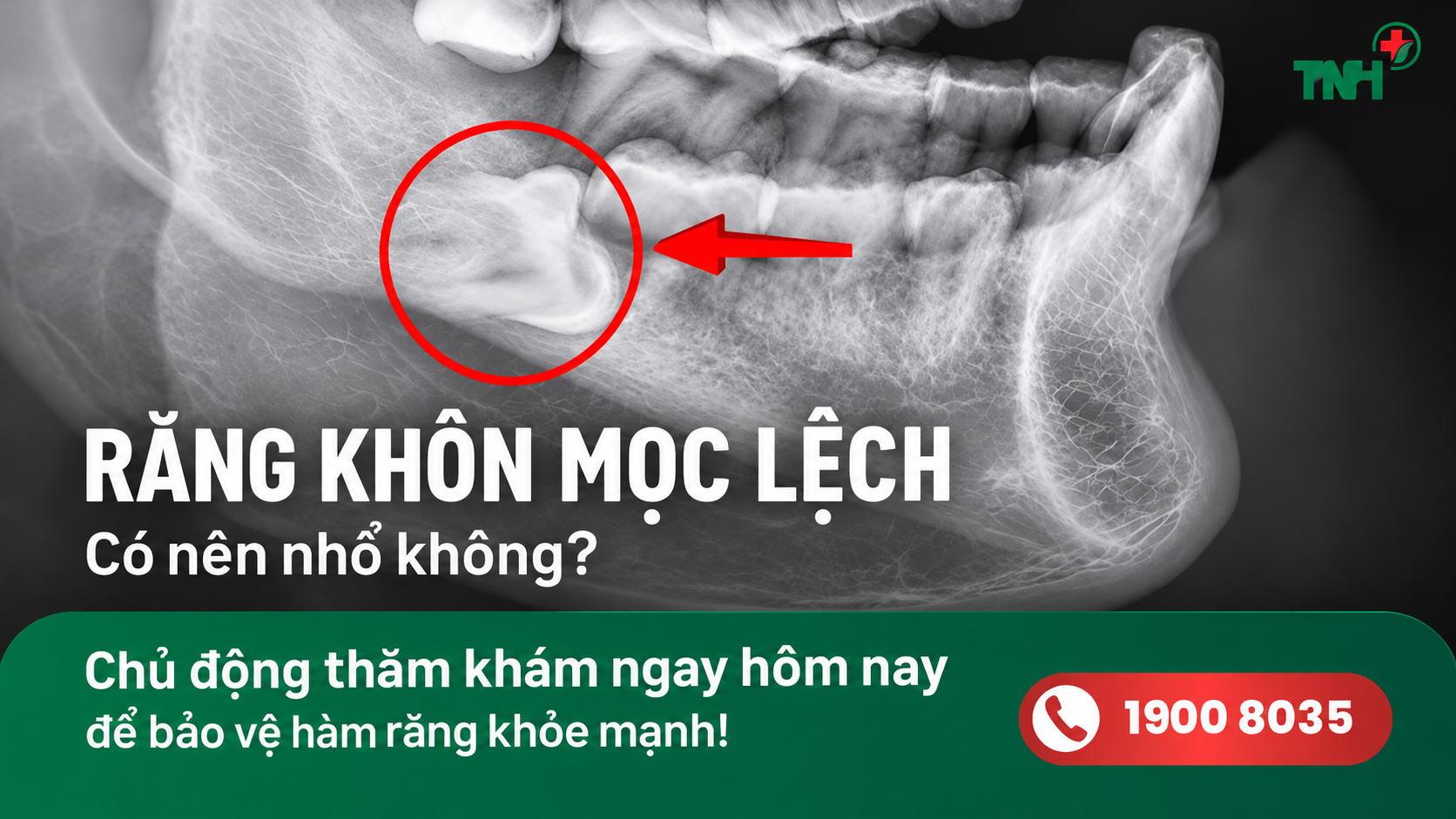
Impacted or improperly positioned wisdom teeth are common dental conditions that may cause pain, inflammation, and oral health problems if not properly diagnosed and managed. In particular, wisdom teeth that erupt in abnormal positions may damage adjacent teeth and lead to various complications. Early dental examination, accurate assessment, and timely intervention play an important role in maintaining long-term oral health.
What Are Impacted Wisdom Teeth?
Wisdom teeth, also known as third molars, are the last permanent teeth to develop, typically erupting between the ages of 17 and 25. Because they emerge after the other permanent teeth, there may be insufficient space in the jaw for them to erupt normally. As a result, wisdom teeth may grow at an angle, remain impacted beneath the gums or jawbone, or partially emerge through the gum tissue.
Impacted wisdom teeth may tilt toward the adjacent second molars, grow horizontally, or remain trapped within the jawbone. These conditions can make oral hygiene more difficult and increase the risk of infection and damage to surrounding dental structures.
Potential Complications of Impacted Wisdom Teeth
Not all impacted wisdom teeth cause complications. However, when wisdom teeth grow in abnormal positions, are difficult to clean, or repeatedly cause inflammation, patients may experience several oral health problems.
Pericoronitis and persistent pain: When a wisdom tooth partially erupts, food particles and bacteria can accumulate beneath the surrounding gum tissue, causing inflammation, swelling, pain, difficulty opening the mouth, and discomfort during chewing.
Tooth decay and damage to adjacent second molars: Wisdom teeth that grow at an angle or press against neighboring teeth may create areas that are difficult to clean. This increases the risk of tooth decay, periodontal disease, and damage to the adjacent second molar. If left untreated, dental decay may progress and lead to pulpitis.
Development of dentigerous cysts: In some cases, impacted wisdom teeth may be associated with cyst formation within the jawbone, potentially causing bone loss and damage to surrounding structures.
Abscesses and maxillofacial infections: Persistent inflammation may result in abscess formation, causing swelling and pain. In severe cases, the infection may spread to surrounding facial and jaw tissues.
Additionally, impacted wisdom teeth may sometimes damage periodontal tissues or adjacent teeth. However, there is insufficient evidence to conclude that impacted wisdom teeth directly cause dental crowding or malocclusion.
These complications can not only cause pain and discomfort but may also have long-term consequences for oral health if not detected and managed appropriately.
Should Impacted Wisdom Teeth Be Removed?
This is a common concern among patients who discover that their wisdom teeth are growing in abnormal positions. In fact, not all impacted wisdom teeth require extraction.
Wisdom tooth extraction is generally considered when the tooth causes pain, recurrent inflammation, dental decay, damage to adjacent teeth, or other related dental conditions. For wisdom teeth that do not cause symptoms or show signs of disease, dentists will carefully assess whether regular monitoring or intervention is more appropriate.
When clinically indicated, wisdom tooth extraction may provide several benefits:
- Eliminating the source of persistent pain and recurrent inflammation.
- Reducing the risk of damage to adjacent second molars and surrounding tissues.
- Preventing or managing complications associated with impacted or improperly positioned wisdom teeth.
- Supporting long-term oral health and maintaining normal chewing function.
The appropriate timing for extraction should be determined by a dental specialist based on clinical findings, diagnostic imaging, and individual risk factors.
Early intervention, when indicated, may help prevent certain complications. However, wisdom tooth extraction is still a surgical procedure with potential risks and requires careful evaluation before treatment.
Wisdom Tooth Examination and Extraction at Thai Nguyen International Hospital
At the Department of Odonto-Stomatology, Thai Nguyen International Hospital, patients receive dental examinations, assessments of wisdom tooth conditions, and personalized treatment recommendations, with an emphasis on safety and long-term oral health.
The examination and treatment process focuses on the following aspects:
Comprehensive examination and assessment: Dentists evaluate the patient's oral health, examine the position and eruption direction of wisdom teeth, and recommend diagnostic imaging when necessary to determine the most appropriate treatment approach.
Individualized treatment consultation: Depending on the degree of impaction, presence of infection, and potential risks to surrounding structures, dentists provide recommendations regarding monitoring, treatment, or extraction when clinically indicated.
Procedures performed by dental specialists: Wisdom tooth extraction is performed in accordance with professional clinical protocols, with particular attention to pain management, minimizing potential complications, and ensuring patient safety.
Transparent treatment costs and dental insurance support: Patients receive information about treatment expenses and guidance on dental insurance coverage or direct billing arrangements, where applicable.
In addition, patients are provided with post-extraction care instructions, oral hygiene guidance, and follow-up recommendations to support proper healing and recovery.
Proactive Dental Examinations Help Protect Long-Term Oral Health
Impacted wisdom teeth may remain asymptomatic for extended periods or cause recurrent episodes of pain and inflammation, affecting daily activities and overall quality of life.
Therefore, patients should not ignore symptoms such as pain in the back of the jaw, swollen gums, difficulty opening the mouth, or discomfort while chewing.
Seeking timely dental examinations at a healthcare facility with a specialized Odonto-Stomatology department can help identify abnormalities early, assess the risk of complications, and determine appropriate treatment options.
Proactive dental care plays an important role in protecting adjacent teeth, preventing avoidable complications, and maintaining long-term oral health.
CONTACT INFORMATION
TNH HOSPITAL GROUP JOINT STOCK COMPANY
Hotline: 1900 8035
Website: https://tnh.com.vn
TNH Hospital Network:
- Thai Nguyen International Hospital: No. 328, Luong Ngoc Quyen Street, Phan Dinh Phung Ward, Thai Nguyen, Vietnam.
- TNH Pho Yen Hospital: Tran Nguyen Han Street, Truong Thinh Residential Area, Van Xuan Ward, Thai Nguyen, Vietnam.
- TNH Viet Yen Hospital: Nguyen The Nho Street, Viet Yen Ward, Bac Ninh, Vietnam.
- TNH Lang Son Hospital: Block 10, Nhi Thanh Street, Tam Thanh Ward, Lang Son, Vietnam.