







 Book an appointment
Gallbladder Polyps – Small but Should Not Be Ignored
 Posted date: 06/08/2026
 Posted by: Nông Đức Thắng


Quick view of main content
Gallbladder polyps often cause no symptoms
Not every gallbladder polyp requires surgery
Laparoscopic cholecystectomy – The standard treatment
Diagnosis and treatment at TNH Viet Yen Hospital
Do not ignore even small abnormalities
TNH HOSPITAL GROUP JOINT STOCK COMPANY
Hospital System
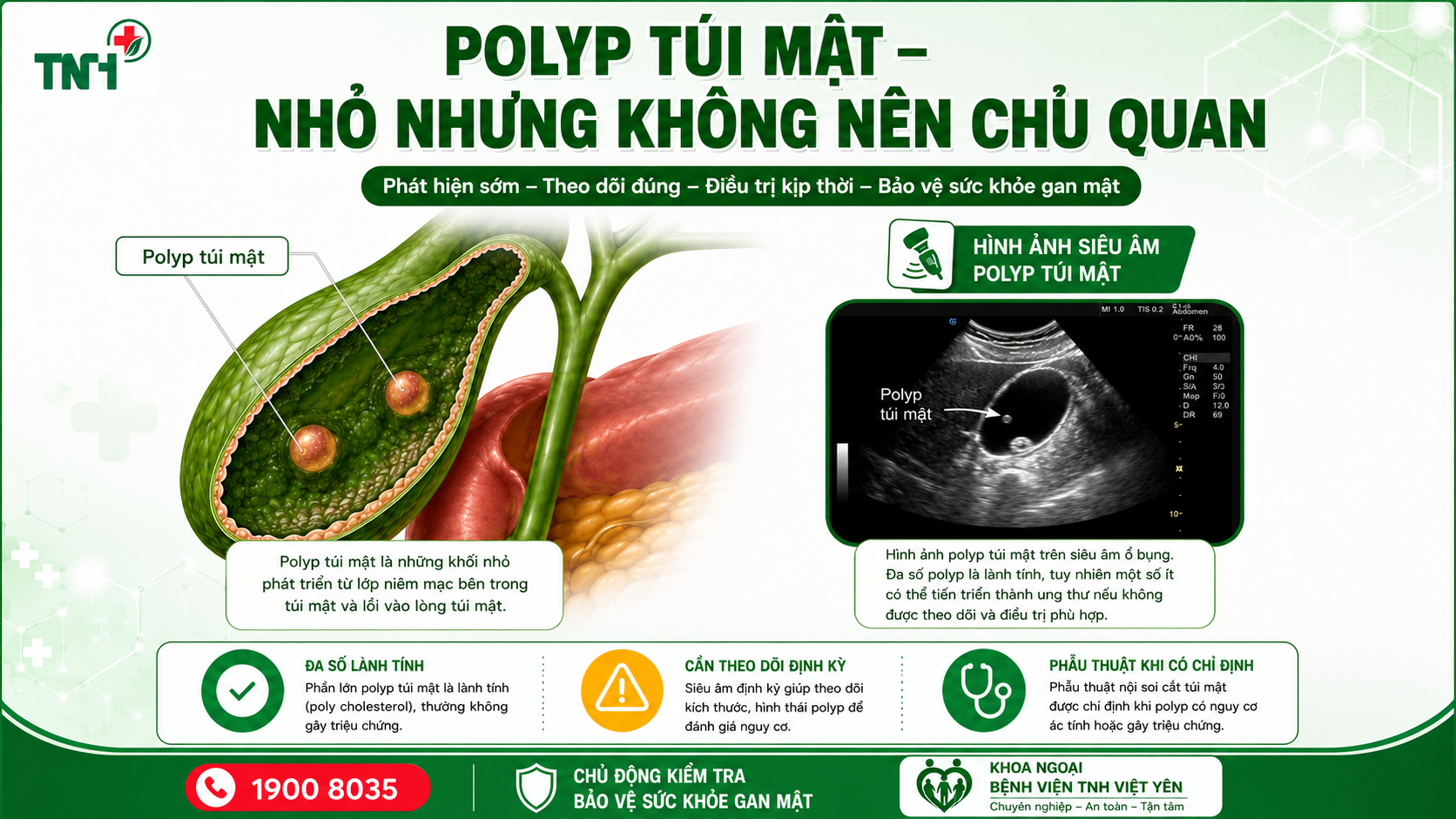
Have you recently had a health check-up and been told that you have a gallbladder polyp? There is no need to panic, but it is also important not to ignore it.
Gallbladder polyps are small growths that arise from the inner lining of the gallbladder. Most are benign; however, a small proportion may develop into cancer if they are not monitored and treated at the appropriate time. Therefore, early detection and regular follow-up are very important for protecting hepatobiliary health.
Gallbladder polyps often cause no symptoms
An important point is that most patients have no obvious symptoms. Gallbladder polyps are often discovered incidentally during abdominal ultrasound examinations performed as part of routine health check-ups.
Some patients may experience:
- Dull pain in the right upper abdomen.
- Bloating or indigestion, especially after eating fatty foods.
- Nausea or discomfort in the upper abdomen.
When a polyp is associated with gallbladder inflammation or gallstones, symptoms may become more pronounced and can include severe pain, fever, or jaundice, in which case prompt medical evaluation is necessary.
Not every gallbladder polyp requires surgery
Many people worry that the presence of a gallbladder polyp means immediate surgery is necessary. In reality, treatment decisions are based on the size and characteristics of the polyp.
Surgery is generally considered when:
- The polyp is 10 mm or larger.
- The polyp increases in size rapidly during follow-up.
- There are features suspicious for malignancy.
- The polyp causes symptoms.
- It is associated with gallstones or cholecystitis.
In other cases, periodic ultrasound follow-up is usually recommended to monitor changes over time.
Laparoscopic cholecystectomy – The standard treatment
When treatment is indicated, laparoscopic cholecystectomy is currently considered the standard approach because it offers several advantages:
- Less postoperative pain.
- Small incisions and better cosmetic results.
- Faster recovery.
- Shorter hospital stay.
- Earlier return to daily activities and work.
Choosing the appropriate timing for surgery helps reduce the risk of complications and improve treatment outcomes.
Diagnosis and treatment at TNH Viet Yen Hospital
The Department of General Surgery – TNH Viet Yen Hospital provides examination, follow-up, and treatment for hepatobiliary diseases using modern medical equipment and a team of experienced physicians.
Patients receive:
- Specialist consultation and evaluation.
- Accurate ultrasound assessment of gallbladder lesions.
- Periodic follow-up according to individualized treatment plans.
- Safe and effective medical or surgical treatment when necessary.
Do not ignore even small abnormalities
Many hepatobiliary diseases progress silently and are detected only through routine health examinations. Do not overlook even small abnormalities. Regular health check-ups are the key to early detection, timely treatment, and long-term protection of your health.
For consultation and support, please send a message via the official Fanpage or contact the Hotline 1900 8035.
TNH HOSPITAL GROUP JOINT STOCK COMPANY
Hotline: 1900 8035
Website: https://tnh.com.vn
Hospital System
- TNH Viet Yen Hospital: Nguyen The Nho Street, Viet Yen Ward, Bac Ninh Province.
- Thai Nguyen International Hospital: 328 Luong Ngoc Quyen Street, Phan Dinh Phung Ward, Thai Nguyen Province.
- TNH Lang Son Hospital: Block 10, Nhi Thanh Street, Tam Thanh Ward, Lang Son Province.
- TNH Pho Yen Hospital: Tran Nguyen Han Street, Chua Residential Group, Van Xuan Ward, Thai Nguyen Province.