







 Book an appointment
Arthroscopic Anterior Cruciate Ligament (ACL) Reconstruction – An Effective Solution for Restoring Knee Stability
 Posted date: 08/07/2026
 Posted by: Nông Đức Thắng

Quick view of main content
What Is the Anterior Cruciate Ligament (ACL)?
Common Signs and Symptoms of an ACL Injury
Arthroscopic ACL Reconstruction – A Modern Treatment Option
Not Every ACL Injury Requires Surgery
ACL Injury Treatment at Thai Nguyen International Hospital
Medical Recommendations
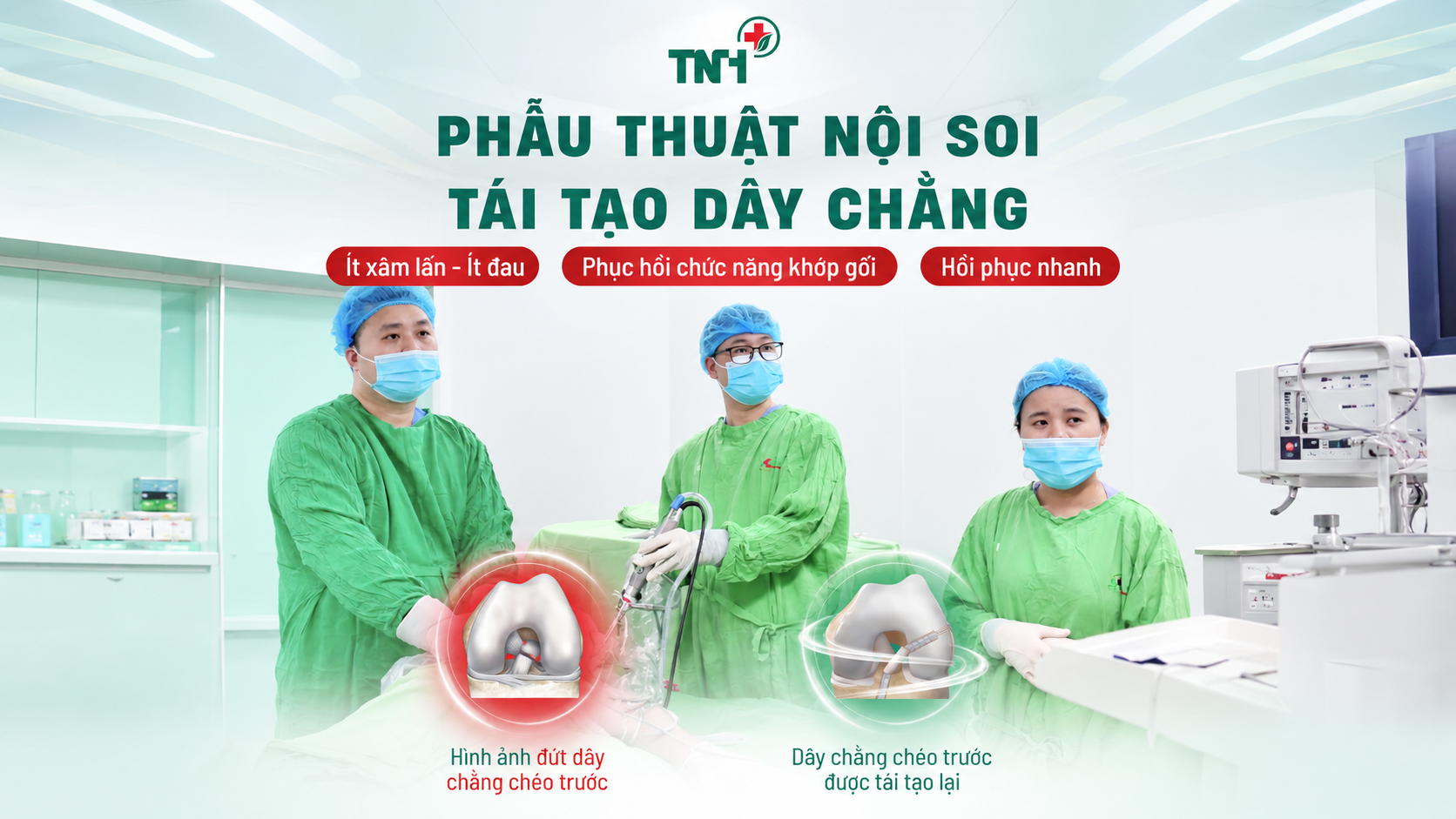
The knee is one of the body's most important joints, playing a vital role in daily movement and physical activity. However, it is also highly susceptible to injury, particularly among athletes, physically active individuals, and those involved in accidents. Among knee injuries, anterior cruciate ligament (ACL) tears are one of the most common conditions and can significantly affect mobility if not diagnosed and treated promptly.
What Is the Anterior Cruciate Ligament (ACL)?
The anterior cruciate ligament (ACL) is a key ligament located within the knee joint. It plays an essential role in maintaining knee stability by preventing the tibia from sliding forward and controlling excessive rotational movements of the knee.
When the ACL is torn or ruptured, the knee loses its stability, making it difficult to walk, run, jump, or change direction. Without appropriate treatment, the injury may lead to damage to the meniscus and articular cartilage, increasing the risk of early knee osteoarthritis.
Common Signs and Symptoms of an ACL Injury
After a knee injury, individuals should seek medical evaluation if they experience any of the following symptoms:
- Rapid swelling of the knee following the injury.
- A "popping" sound or sensation at the time of injury.
- Pain and limited knee movement.
- A feeling that the knee is unstable, buckles easily, or gives way during turning movements.
- Difficulty walking or fully bending and straightening the knee.
Early diagnosis allows physicians to accurately assess the severity of the injury and determine the most appropriate treatment plan, helping to prevent long-term complications.
Arthroscopic ACL Reconstruction – A Modern Treatment Option
For patients with a complete ACL tear or significant knee instability, arthroscopic ACL reconstruction is considered the preferred treatment to restore knee function and stability.
Using minimally invasive arthroscopic techniques, this procedure offers several advantages, including:
- Smaller incisions and reduced postoperative pain.
- Reconstruction of the ACL using either the patient's own tendon (autograft) or a donor tendon (allograft), depending on individual circumstances.
- Effective restoration of knee stability.
- Less damage to surrounding healthy tissues.
- Faster recovery compared with conventional open surgery.
Following surgery, each patient receives a personalized rehabilitation program. With proper adherence to rehabilitation exercises and medical guidance, most patients are able to return to daily activities and sports within approximately 6 to 12 months.
Not Every ACL Injury Requires Surgery
Surgery is not necessary for every ACL injury. Patients with mild ligament injuries, relatively stable knees, and lower physical activity demands may be successfully treated with conservative management, including rest, medication as prescribed, and a structured physical rehabilitation program.
The most appropriate treatment approach is determined by the orthopedic specialist based on the severity of the injury, the patient's age, occupation, activity level, and overall health condition.
ACL Injury Treatment at Thai Nguyen International Hospital
At Thai Nguyen International Hospital, patients receive comprehensive evaluation by experienced orthopedic specialists supported by advanced diagnostic equipment, ensuring accurate diagnosis and individualized treatment planning.
The treatment process includes:
- Comprehensive orthopedic examination and functional knee assessment.
- Magnetic Resonance Imaging (MRI) to accurately identify the location and extent of the injury.
- Development of a personalized treatment plan based on the patient's condition.
- Arthroscopic surgery performed by experienced orthopedic surgeons, with collaboration from leading specialists from Viet Duc University Hospital and Hanoi Medical University for selected cases.
- Individualized postoperative rehabilitation programs designed to help patients regain mobility and return to normal activities as safely and efficiently as possible.
Medical Recommendations
Orthopedic specialists advise patients not to underestimate knee injuries, especially when symptoms such as swelling, pain, instability, or difficulty walking occur after trauma. Continuing physical activity before the knee has fully stabilized may worsen the injury and prolong recovery.
Early diagnosis, appropriate treatment, and strict adherence to a rehabilitation program are the keys to restoring knee stability, regaining function, and safely returning to daily life, work, and sports.