







 Book an appointment
FLEXIBLE BRONCHOSCOPY – AN EFFECTIVE TOOL FOR THE DIAGNOSIS AND TREATMENT OF RESPIRATORY DISEASES
 Posted date: 29/10/2026
 Posted by: Nông Đức Thắng


Quick view of main content
What Is Flexible Bronchoscopy?
The Role of Flexible Bronchoscopy in Diagnosis and Treatment
How Is Flexible Bronchoscopy Performed?
When Should Flexible Bronchoscopy Be Considered?
Proactive Respiratory Health Screening and Timely Medical Care
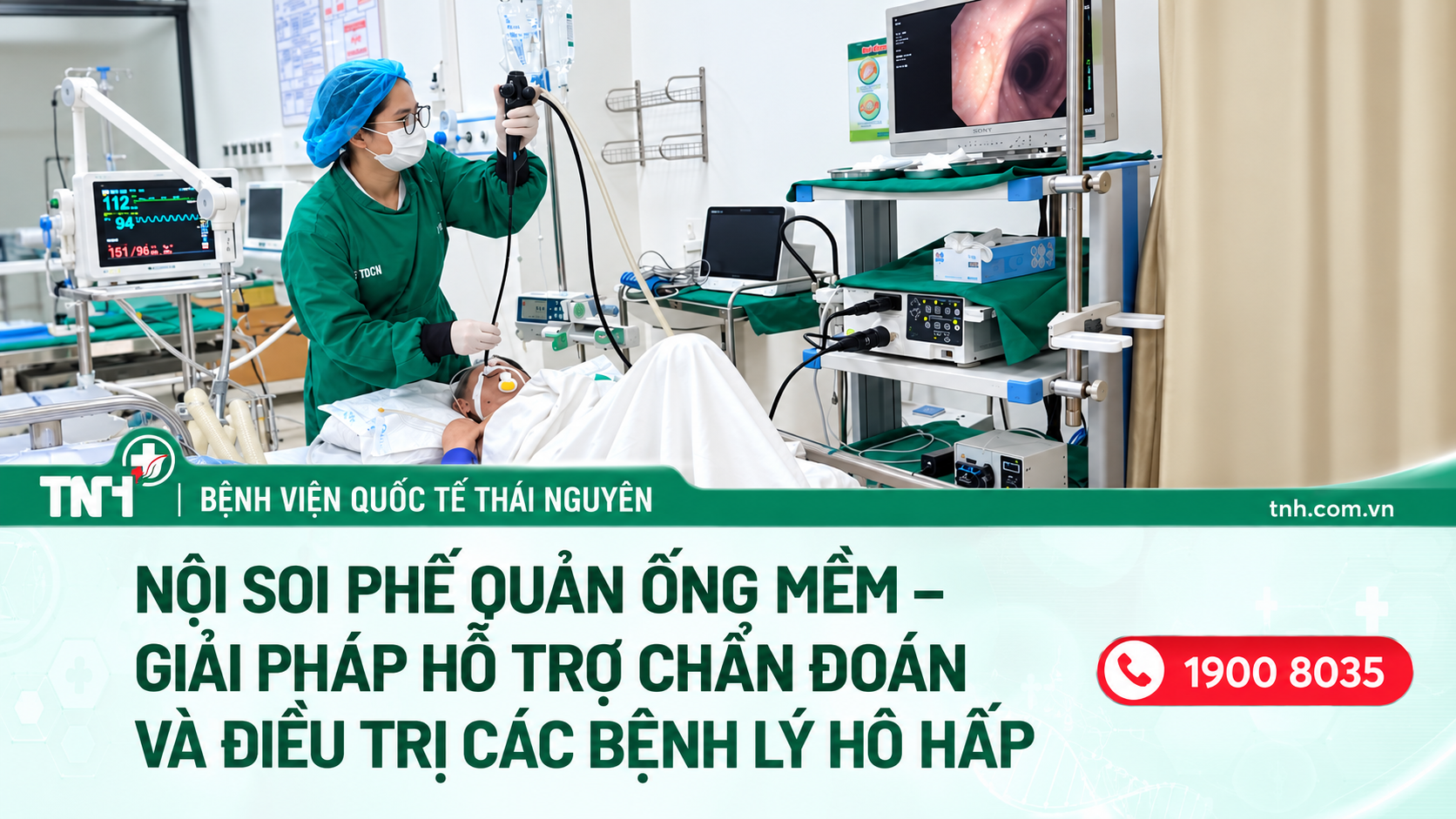
Flexible bronchoscopy is an important medical procedure that plays a significant role in diagnosing and supporting the treatment of various respiratory diseases. By allowing direct visualization of the trachea and bronchi, this technique helps physicians detect abnormalities, identify underlying causes of respiratory conditions, and determine appropriate treatment strategies, contributing to improved respiratory healthcare outcomes.
What Is Flexible Bronchoscopy?
Flexible bronchoscopy is a medical procedure that uses a thin, flexible tube equipped with a camera and a light source to directly examine the inside of the airways, from the trachea to the bronchial branches.
Images captured during the procedure are displayed on a monitor in real time, enabling physicians to assess the condition of the airway lining, identify abnormalities, and determine areas requiring further investigation.
In addition to its diagnostic value, flexible bronchoscopy allows physicians to perform certain procedures, including collecting specimens for laboratory testing, obtaining tissue biopsies, and carrying out therapeutic interventions when clinically indicated.
This technique is particularly valuable in clinical practice for patients with complex respiratory conditions, persistent symptoms, or diseases whose underlying causes cannot be identified through conventional examinations.
The Role of Flexible Bronchoscopy in Diagnosis and Treatment
By providing direct visualization of the airways, flexible bronchoscopy offers several important benefits in the diagnosis, assessment, and management of respiratory diseases.
Detection and Assessment of Airway Abnormalities
Flexible bronchoscopy enables physicians to identify abnormalities in the trachea and bronchi, including inflammation, airway narrowing, and suspicious lesions or tumors. When necessary, tissue samples can be collected through biopsy for histopathological examination, helping determine the nature of the lesions and guide appropriate treatment decisions.
Diagnosis of Respiratory Infections
In cases where the cause of a respiratory infection remains unclear, flexible bronchoscopy allows physicians to collect bronchial washing or bronchoalveolar lavage samples for laboratory analysis.
These examinations may help identify infectious agents such as Mycobacterium tuberculosis, fungi, and other pathogens responsible for pneumonia and respiratory infections.
Investigation of Persistent Respiratory Symptoms
Symptoms such as persistent unexplained coughing, coughing up blood (hemoptysis), or other undiagnosed airway abnormalities may require further evaluation through flexible bronchoscopy.
The procedure allows physicians to directly examine the airways, detect underlying lesions, and investigate potential causes of symptoms, thereby supporting the development of appropriate treatment plans.
Support for Therapeutic Interventions
Beyond its diagnostic applications, flexible bronchoscopy can also be used for certain therapeutic procedures, such as removing airway foreign bodies, clearing mucus plugs that obstruct the bronchi, and performing other specialized interventions.
These procedures are carried out according to the patient's clinical condition, the physician's assessment, and the medical facility's technical capabilities.
How Is Flexible Bronchoscopy Performed?
To ensure patient safety and procedural effectiveness, flexible bronchoscopy follows a structured medical process that includes pre-procedure assessment, bronchoscopy, and post-procedure monitoring.
Before the Procedure
The patient undergoes a medical examination during which the physician reviews their medical history, assesses respiratory and cardiovascular function, and evaluates potential risk factors.
Depending on the patient's condition, additional tests may be required. The physician also provides instructions regarding fasting before the procedure and explains the examination process.
During the Procedure
Local anesthesia is typically administered to the nose, throat, and airways to minimize discomfort. In some cases, sedative medication may also be given when clinically appropriate.
The physician gently inserts the flexible bronchoscope through the nose or mouth and advances it into the trachea and bronchi to examine the airways.
If abnormalities are detected, the physician may collect fluid samples, perform a biopsy, or carry out other necessary procedures.
Throughout the examination, vital signs such as heart rate, blood pressure, and blood oxygen saturation are monitored to maintain patient safety.
After the Procedure
Following bronchoscopy, the patient continues to be monitored for respiratory status, vital signs, and any potential post-procedure complications.
The physician provides instructions regarding eating, drinking, daily activities, and when normal routines can be resumed, depending on the patient's condition.
When Should Flexible Bronchoscopy Be Considered?
Flexible bronchoscopy may be recommended in certain clinical situations, including persistent unexplained coughing, coughing up blood, suspected tracheal or bronchial lesions, prolonged or recurrent pneumonia, suspected airway foreign bodies, or the need to obtain specimens to identify the cause of respiratory disease.
However, not every patient experiencing persistent coughing, shortness of breath, or other respiratory symptoms requires bronchoscopy.
The decision to perform this procedure must be based on the patient's clinical condition, examination findings, relevant diagnostic tests, and the assessment of a qualified medical specialist.
Although flexible bronchoscopy is widely used in respiratory medicine, it may carry certain risks, including reduced blood oxygen levels, bleeding, bronchospasm, and other potential complications.
Therefore, patients should undergo a thorough pre-procedure assessment and receive appropriate monitoring throughout the examination.
Proactive Respiratory Health Screening and Timely Medical Care
Respiratory diseases may develop gradually, with early symptoms that are often mild or nonspecific. Ignoring persistent coughing, coughing up blood, shortness of breath, or other unusual respiratory symptoms may delay diagnosis and treatment.
With the support of advanced diagnostic techniques such as flexible bronchoscopy, physicians can obtain a more comprehensive assessment of the airways, identify underlying causes of respiratory conditions, and select suitable treatment approaches.
Individuals experiencing unusual respiratory symptoms, particularly those that persist or recur, are encouraged to seek medical attention at healthcare facilities with respiratory specialists. Early detection, accurate diagnosis, and timely treatment are essential for reducing the risk of complications and protecting long-term respiratory health.
TNH HOSPITAL GROUP JOINT STOCK COMPANY
Hotline: 1900 8035
Website: https://tnh.com.vn
TNH Hospital Network:
- Thai Nguyen International Hospital: No. 328, Luong Ngoc Quyen Street, Phan Dinh Phung Ward, Thai Nguyen, Vietnam.
- TNH Pho Yen Hospital: Tran Nguyen Han Street, Truong Thinh Residential Group, Van Xuan Ward, Thai Nguyen, Vietnam.
- TNH Viet Yen Hospital: Nguyen The Nho Street, Viet Yen Ward, Bac Ninh, Vietnam.
- TNH Lang Son Hospital: Block 10, Nhi Thanh Street, Tam Thanh Ward, Lang Son, Vietnam.