







 Book an appointment
TRIGGER FINGER – DON’T LET YOUR FINGER “LOCK” EVERY TIME YOU MOVE IT
 Posted date: 11/08/2026
 Posted by: Nông Đức Thắng


Quick view of main content
What Is Trigger Finger?
Symptoms You Should Not Ignore
When Should You See a Doctor?
Is Surgery Always Necessary?
Don’t Wait Until the Finger Becomes Permanently Locked
Contact Information
TNH Hospital System
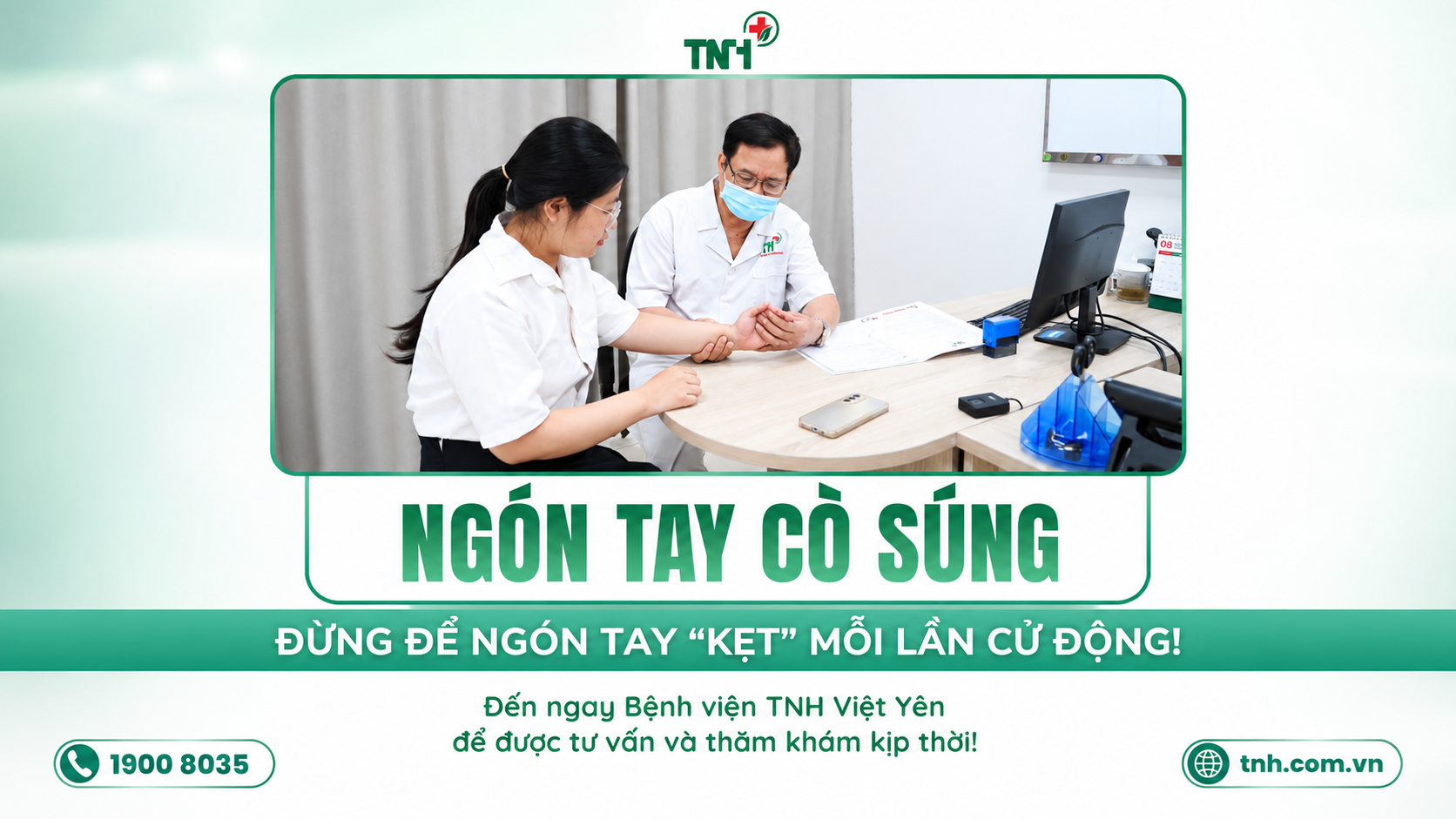
Have you ever woken up with a stiff finger that is difficult to straighten? Do you notice a catching sensation or a “click” when bending and straightening your finger? Sometimes the finger may become stuck in a bent position and you have to use the other hand to straighten it.
These may be signs of Trigger Finger, a common hand condition that can significantly affect daily activities and work if not diagnosed and treated early.
What Is Trigger Finger?
Normally, the flexor tendons glide smoothly through a system of tendon sheaths and pulleys in the palm. When the tendon sheath or the A1 pulley becomes thickened and narrowed, the tendon cannot move freely through this area, causing the finger to catch, lock, or suddenly snap when it is straightened.
Trigger finger most commonly affects the thumb, middle finger, and ring finger. The condition is more common in people with diabetes, rheumatoid arthritis, or those who frequently perform repetitive gripping or grasping activities.
Symptoms You Should Not Ignore
Common symptoms include:
- Finger stiffness, especially in the morning.
- Pain at the base of the finger in the palm.
- A catching, clicking, or locking sensation during finger movement.
- The finger becoming stuck in a bent position and requiring assistance from the other hand to straighten it.
Symptoms may initially occur occasionally, but over time the locking can become more frequent and the pain may worsen.
When Should You See a Doctor?
You should seek medical evaluation if you experience:
- Persistent finger pain and stiffness.
- Frequent catching, clicking, or locking during movement.
- Increasing difficulty straightening the finger.
- The finger becoming locked in a bent position.
- Symptoms that interfere with work, gripping, or daily activities.
Early evaluation helps determine the severity of the condition and allows timely treatment before it progresses.
Is Surgery Always Necessary?
Not all cases require surgery. Depending on the severity, treatment may include:
- Activity modification and rest.
- Temporary splinting.
- Pain-relieving or anti-inflammatory medication as prescribed.
- Local corticosteroid injection to reduce inflammation and improve tendon movement.
For persistent, recurrent, or severe locking cases, the doctor may recommend A1 pulley release surgery, which creates more space for the tendon to glide smoothly.
Don’t Wait Until the Finger Becomes Permanently Locked
Trigger finger is often highly treatable when diagnosed early. If you notice unusual symptoms in your hand or fingers, seek medical attention promptly for appropriate evaluation and treatment.
The Department of General Surgery – TNH Viet Yen Hospital provides examination and treatment for surgical conditions, trauma, and hand disorders with an experienced medical team and modern equipment.
For consultation or support, please send a message to our Fanpage or contact the Hotline 1900 8035.
Contact Information
TNH Hospital Group Joint Stock Company
- Hotline: 1900 8035
- Website: https://tnh.com.vn
TNH Hospital System
- TNH Viet Yen Hospital: Nguyen The Nho Street, Viet Yen Ward, Bac Ninh Province, Vietnam.
- Thai Nguyen International Hospital: 328 Luong Ngoc Quyen Street, Phan Dinh Phung Ward, Thai Nguyen Province, Vietnam.
- TNH Lang Son Hospital: Block 10, Nhi Thanh Street, Tam Thanh Ward, Lang Son Province, Vietnam.
- TNH Pho Yen Hospital: Tran Nguyen Han Street, Chua Residential Area, Van Xuan Ward, Thai Nguyen Province, Vietnam.