







 Book an appointment
Pelvic Pressure and Urinary Leakage? Don't Ignore Pelvic Organ Prolapse
 Posted date: 25/07/2026
 Posted by: Nông Đức Thắng

Quick view of main content
What Is Pelvic Organ Prolapse?
Common Signs and Symptoms
Effective Treatment at TNH Pho Yen Hospital
Early Examination Is the Best Way to Protect Your Health
TNH Hospital Group Joint Stock Company
Hospital System
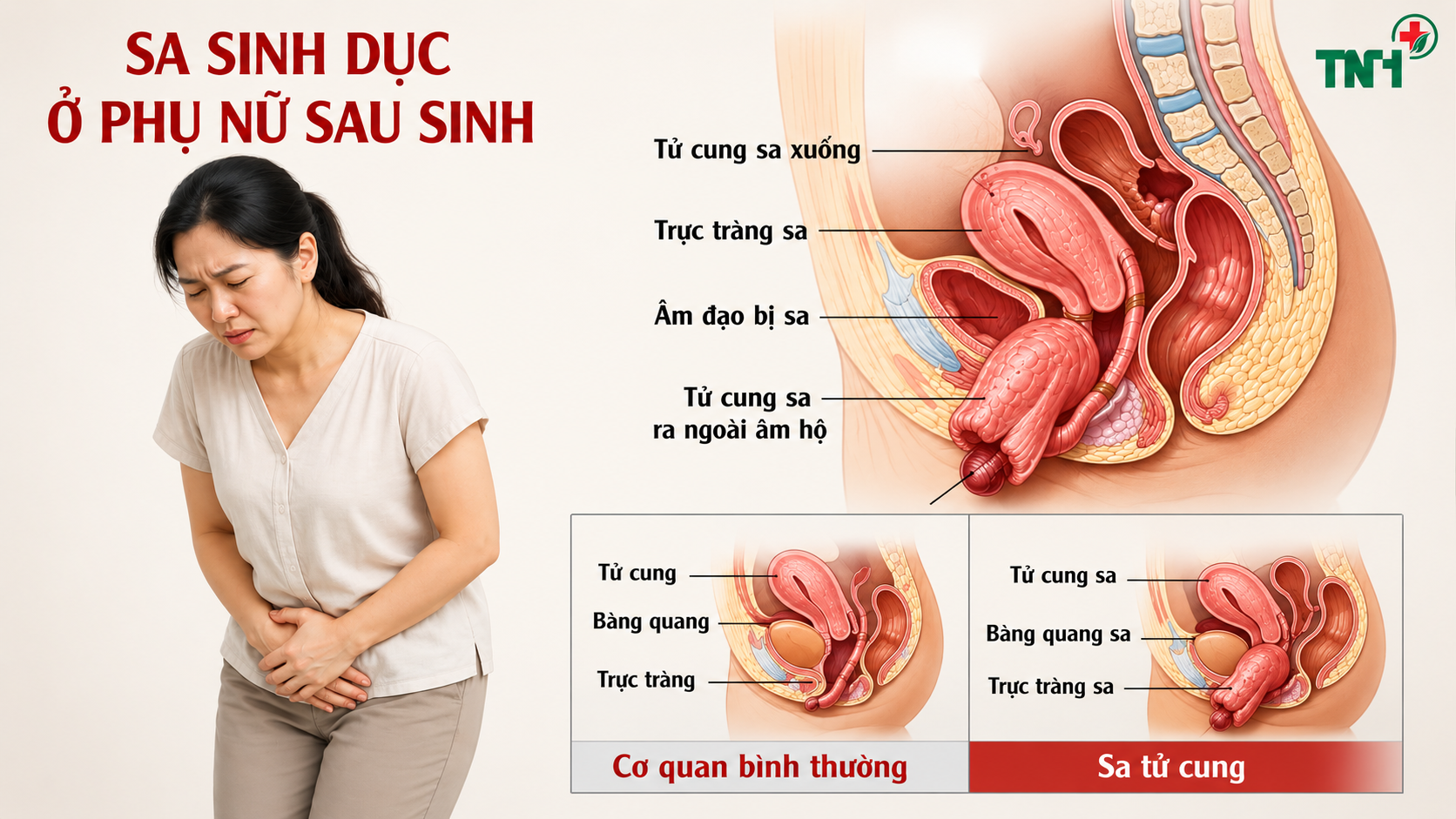
Pelvic pressure, lower back pain, or urinary leakage after childbirth or during middle age should not simply be considered a normal part of aging. These symptoms may indicate pelvic organ prolapse (POP), a common gynecological condition that many women silently endure due to embarrassment or the misconception that it is a natural consequence of childbirth.
If left undiagnosed and untreated, pelvic organ prolapse can progressively worsen, affecting daily activities, overall health, sexual function, and quality of life.
What Is Pelvic Organ Prolapse?
Pelvic organ prolapse occurs when the pelvic support muscles and ligaments weaken, causing the uterus to descend into the vagina or even protrude outside the vaginal opening. In many cases, the condition also involves the bladder (cystocele) and rectum (rectocele) prolapsing into the vaginal canal.
Pelvic organ prolapse is most commonly seen in women who have had multiple vaginal deliveries, postmenopausal women, or those who frequently perform heavy physical labor. In its early stages, the condition may cause few or no noticeable symptoms. However, as it progresses, it can lead to urinary and bowel dysfunction, significantly affecting daily life and long-term health.
In severe cases, pelvic organ prolapse may result in ulceration of the prolapsed tissue, infection, hydronephrosis, intestinal obstruction, and often requires surgical treatment.
Common Signs and Symptoms
Women should seek medical evaluation if they experience one or more of the following symptoms:
- A feeling of pelvic pressure, heaviness, or fullness that worsens after prolonged standing or heavy lifting.
- Lower back pain.
- A sensation of a bulge or a foreign body in the vagina.
- Urinary incontinence, difficulty urinating, or incomplete bladder emptying.
- Recurrent urinary tract infections.
- Inflammation or ulceration of the prolapsed tissue, causing vaginal discharge, irritation, or pain.
- Constipation, difficulty with bowel movements, or fecal incontinence.
- Pain or discomfort during sexual intercourse.
In particular, if you notice a bulge protruding from the vagina, you should seek medical attention as soon as possible for timely diagnosis and treatment.
Effective Treatment at TNH Pho Yen Hospital
According to Dr. Hoang Thi Kim Ngan, Specialist Level II, Head of the Department of Obstetrics and Gynecology at TNH Pho Yen Hospital, pelvic organ prolapse can be treated effectively when detected early and managed with the appropriate treatment approach.
TNH Pho Yen Hospital currently performs Manchester and Crossen surgical procedures for the treatment of pelvic organ prolapse. Depending on the severity of the condition, the patient's age, reproductive plans, and overall health, physicians conduct a comprehensive assessment to determine the most suitable treatment strategy.
Appropriate treatment not only relieves symptoms and restores pelvic function but also helps minimize the risk of recurrence and shortens postoperative recovery time.
Early Examination Is the Best Way to Protect Your Health
Pelvic organ prolapse is a treatable condition, especially when diagnosed early. Women who have given birth, are approaching menopause or are postmenopausal, and those with other risk factors should not ignore unusual symptoms.
Seeking medical care promptly at the first signs of pelvic organ prolapse is the best way to protect your gynecological health, improve your quality of life, and prevent serious complications.
TNH Hospital Group Joint Stock Company
Hotline: 1900 8035
Website: tnh.com.vn
Hospital System
- TNH Pho Yen Hospital: Tran Nguyen Han Street, Chua Residential Area, Van Xuan Ward, Thai Nguyen Province, Vietnam.
- Thai Nguyen International Hospital: 328 Luong Ngoc Quyen Street, Phan Dinh Phung Ward, Thai Nguyen Province, Vietnam.
- TNH Viet Yen Hospital: Nguyen The Nho Street, Viet Yen Ward, Bac Ninh Province, Vietnam.
- TNH Lang Son Hospital: Block 10, Nhi Thanh Street, Tam Thanh Ward, Lang Son Province, Vietnam.