







 Book an appointment
POST-STROKE HEMIPLEGIA – EARLY REHABILITATION TO IMPROVE MOBILITY
 Posted date: 18/09/2026
 Posted by: Nông Đức Thắng


Quick view of main content
Common symptoms after a stroke
Early and appropriate rehabilitation after stroke
Making the most of the recovery period after stroke
Post-stroke rehabilitation at TNH Pho Yen Hospital
Recognizing stroke symptoms early for timely emergency treatment
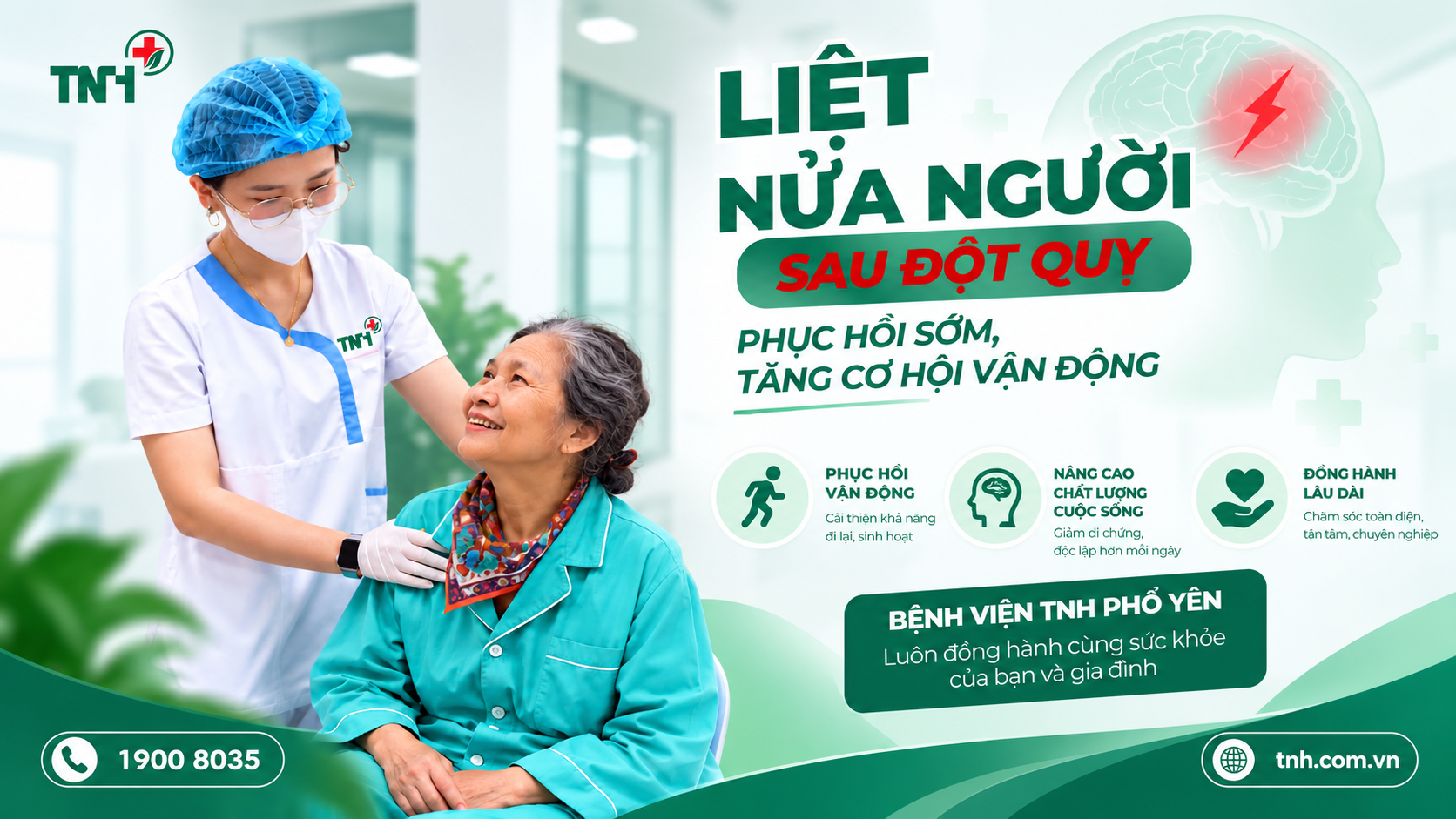
Hemiplegia is one of the common consequences of stroke, directly affecting a patient’s mobility, sensation, and ability to perform daily activities. It occurs when areas of the brain responsible for motor and sensory functions are damaged due to a blocked or ruptured blood vessel.
Following emergency treatment and acute stroke management, rehabilitation plays an important role in helping patients gradually regain mobility, improve independence, and return to everyday activities.
Common symptoms after a stroke
Depending on the location and severity of brain damage, patients may experience one or more of the following symptoms:
- Weakness or paralysis of the arm and leg on one side of the body, making it difficult to grasp objects, change positions, stand, or walk.
- Dizziness, loss of balance, and impaired coordination.
- Facial drooping, slurred speech, or difficulty speaking; some patients may also experience chewing and swallowing difficulties or choking while eating and drinking.
- Numbness, reduced sensation, or loss of sensation on the affected side of the body.
These complications can affect not only mobility but also a patient’s ability to care for themselves, perform daily activities, and maintain their quality of life.
Early and appropriate rehabilitation after stroke
Recovery after stroke varies from person to person and depends on factors such as the location and extent of brain damage, the patient’s overall health, underlying medical conditions, the timing of rehabilitation, and adherence to the rehabilitation program.
Therefore, each patient should undergo a comprehensive assessment so that an individualized treatment and rehabilitation plan can be developed. Depending on the patient’s condition, treatment may include:
- Medical management: Controlling blood pressure, blood glucose, cholesterol levels, and other related conditions to support recovery and help reduce the risk of recurrent stroke.
- Traditional medicine: Acupuncture, massage, acupressure, and other appropriate therapies as medically indicated.
- Physical therapy and rehabilitation: Exercises to improve mobility, muscle strength, balance, coordination, and essential skills for daily activities.
Making the most of the recovery period after stroke
The first few months after a stroke are an important period for functional recovery. In particular, the first three months are often a period of significant recovery potential, although improvement may continue for much longer and varies among individuals.
Starting rehabilitation early, once the patient is medically stable, and maintaining regular, appropriate exercises can help improve mobility, reduce complications associated with immobility, and increase independence in daily life.
Post-stroke rehabilitation at TNH Pho Yen Hospital
At TNH Pho Yen Hospital, stroke patients receive medical examinations, comprehensive assessments, and individualized treatment and rehabilitation recommendations.
The coordination of Internal Medicine, Traditional Medicine, and Rehabilitation helps provide support throughout different stages of recovery, with the goal of improving mobility, increasing independence, and gradually helping patients return to their daily activities.
In addition to hospital-based treatment, patients and their families are also provided with guidance on appropriate exercises to continue at home, supporting long-term rehabilitation.
Recognizing stroke symptoms early for timely emergency treatment
If someone suddenly develops symptoms such as facial drooping, weakness or paralysis of an arm or leg, difficulty speaking, loss of balance, or other sudden neurological abnormalities, they should be taken to a medical facility as quickly as possible.
Timely emergency care and treatment are crucial for limiting brain damage, reducing the risk of complications, and creating better conditions for post-stroke recovery and rehabilitation.
TNH HOSPITAL GROUP JOINT STOCK COMPANY
Hotline: 1900 8035
Website: tnh.com.vn
Hospital Network:
TNH Pho Yen Hospital – Tran Nguyen Han Street, Truong Thinh Residential Group, Thai Nguyen
TNH Lang Son Hospital – Block 10, Nhi Thanh Street, Tam Thanh Ward, Lang Son
Thai Nguyen International Hospital – 328 Luong Ngoc Quyen Street, Phan Dinh Phung Ward, Thai Nguyen
TNH Viet Yen Hospital – Nguyen The Nho Street, Viet Yen Ward, Bac Ninh