







 Book an appointment
Esophageal Cancer Detected at an Early Stage Through Routine Health Check-Up Despite No Symptoms
 Posted date: 10/06/2026
 Posted by: Nông Đức Thắng

Quick view of main content
Detecting Early Lesions with Advanced Endoscopic Technology
ESD – An Effective Treatment for Early-Stage Esophageal Cancer
Regular Endoscopic Screening Plays a Vital Role in Early Cancer Detection
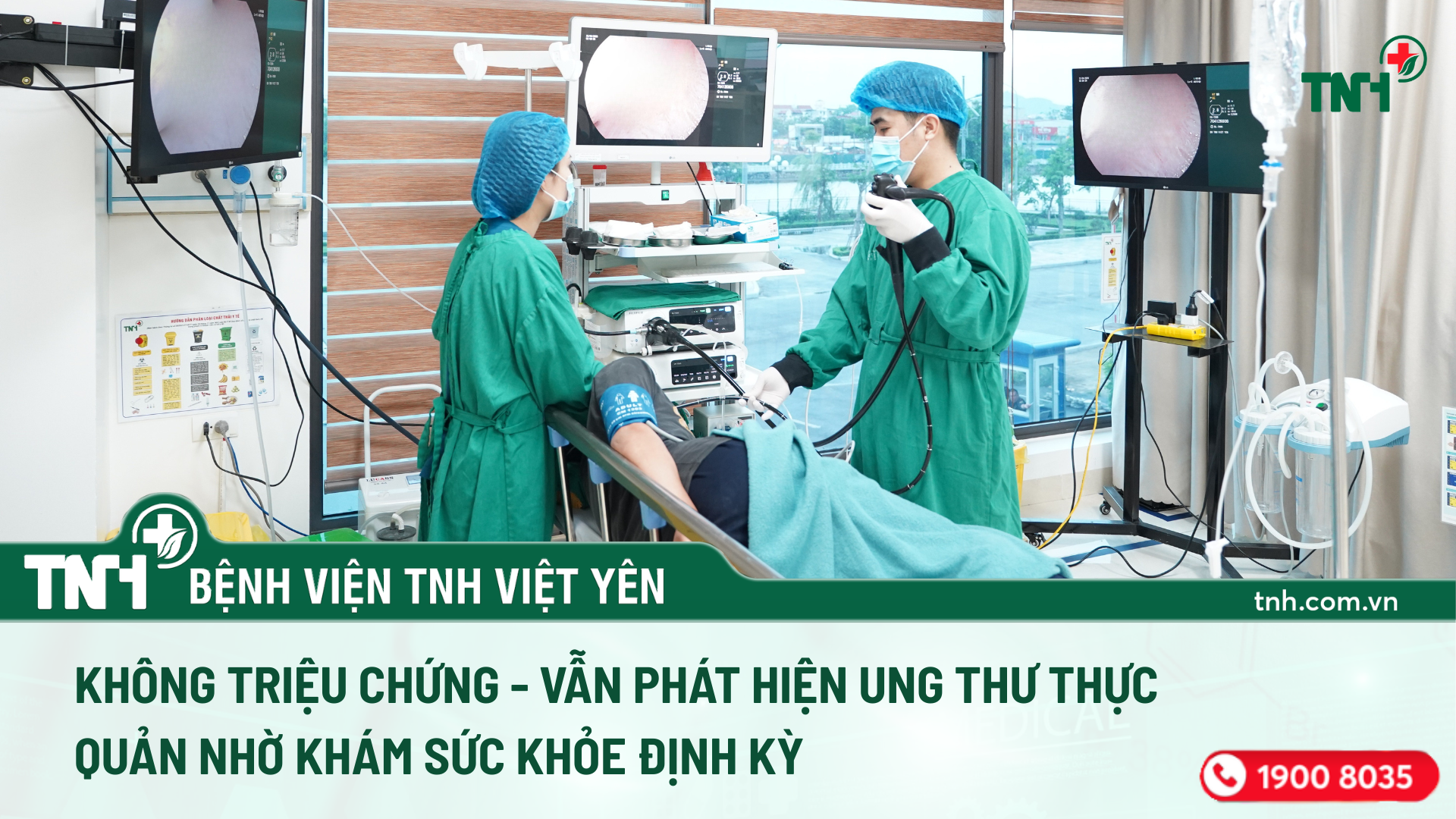
Esophageal cancer is one of the most serious gastrointestinal diseases and often develops silently without noticeable symptoms in its early stages. As a result, many cases are only diagnosed when the disease has progressed, making treatment more challenging. However, regular health check-ups can help detect the disease early, significantly improving treatment outcomes and prognosis.
Recently, at TNH Viet Yen Hospital, a 65-year-old male patient underwent a routine comprehensive health examination. During a gastrointestinal endoscopy, Dr. Doan Manh Dung, Specialist Level I, Deputy Head of the Functional Exploration Department, identified three flat lesions in the esophagus. These lesions are particularly difficult to detect and can easily be overlooked during conventional endoscopic examinations.
Detecting Early Lesions with Advanced Endoscopic Technology
The patient underwent examination using the Fujifilm EV 7000 endoscopy system, an advanced platform equipped with cutting-edge technologies such as Blue Light Imaging (BLI), Linked Color Imaging (LCI), and magnification endoscopy capable of enlarging images up to 320 times (ME). These technologies enabled detailed visualization and assessment of the lesions, allowing physicians to identify signs suggestive of early-stage esophageal cancer during the procedure.
Following a multidisciplinary consultation, the patient was indicated for Endoscopic Submucosal Dissection (ESD), an advanced endoscopic technique designed to completely remove early-stage lesions without the need for open surgery.
ESD – An Effective Treatment for Early-Stage Esophageal Cancer
Endoscopic Submucosal Dissection (ESD) is a highly advanced minimally invasive procedure widely used in the treatment of precancerous lesions and early-stage gastrointestinal cancers.
Key advantages of ESD include:
- Preservation of the esophagus without the need for organ removal.
- Complete removal of early-stage cancerous lesions.
- Minimal invasiveness with a high level of safety.
- Faster recovery and shorter hospital stay.
- High treatment success and cure rates.
The procedure was successfully performed by Dr. Doan Manh Dung and the Functional Exploration Department team at TNH Viet Yen Hospital.
Following the intervention, the patient regained full consciousness, remained in stable condition, recovered rapidly, and was able to resume light oral intake after 12 hours.
Regular Endoscopic Screening Plays a Vital Role in Early Cancer Detection
According to medical experts, esophageal cancer may develop over many years without causing obvious symptoms. By the time signs such as difficulty swallowing, unexplained weight loss, or chest discomfort appear, the disease may already have reached a more advanced stage.
Routine gastrointestinal endoscopic screening using modern imaging technologies enables physicians to detect even the smallest abnormalities at an early stage. Early diagnosis allows for timely intervention with minimally invasive treatments, leading to better outcomes and reducing the physical and financial burden on patients.
TNH Viet Yen Hospital encourages individuals to undergo regular health examinations and gastrointestinal endoscopic screening as recommended by healthcare professionals, particularly those over the age of 40 or individuals with risk factors for gastrointestinal diseases.
Do not wait until symptoms appear before seeking medical attention. Early detection remains the key to effective treatment and long-term health protection for both individuals and their families.
For consultation and appointment scheduling, please contact our hotline at 1900 8035.