






 Book an appointment
STROKE RESPONSE GUIDE – REMEMBER THE F.A.S.T. RULE
 Posted date: 20/08/2026
 Posted by: Nông Đức Thắng


Quick view of main content
RECOGNIZING A STROKE WITH THE F.A.S.T. RULE
WHAT TO DO WHEN A STROKE IS SUSPECTED
WHAT NOT TO DO
RECOGNIZE EARLY – SEEK EMERGENCY CARE PROMPTLY
TNH HOSPITAL GROUP JOINT STOCK COMPANY
Hospital System
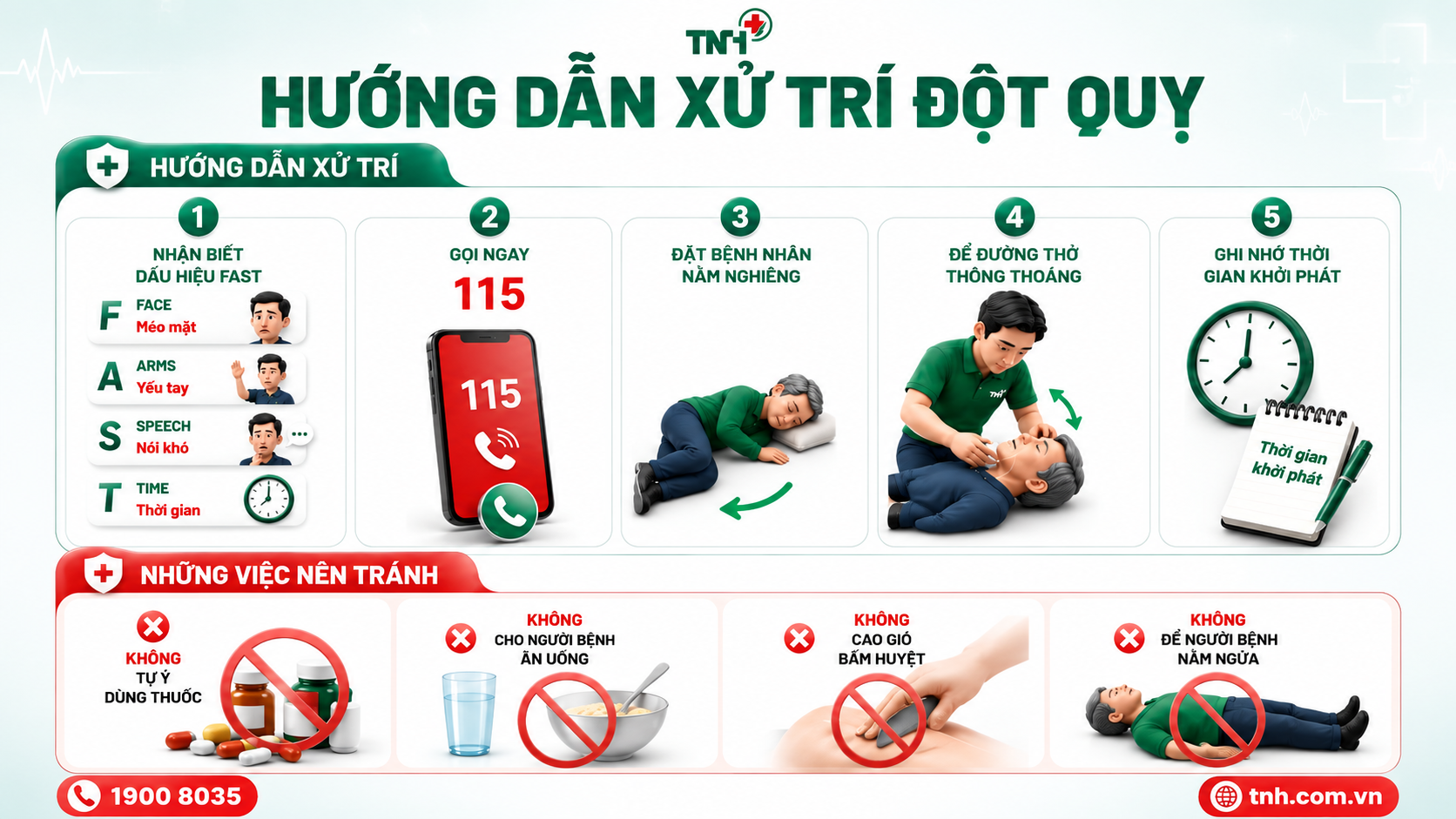
Stroke is a serious medical emergency that can happen to anyone and may lead to severe consequences if it is not recognized and treated promptly. Early recognition of warning signs and getting the patient to a medical facility as quickly as possible can play a crucial role in improving the chances of survival and recovery.
RECOGNIZING A STROKE WITH THE F.A.S.T. RULE
When you suspect that someone may be having a stroke, remember the F.A.S.T. rule to identify the warning signs quickly:
F – Face: Look for facial asymmetry, such as a drooping mouth or one side of the face appearing uneven.
A – Arms: Look for numbness, weakness, or paralysis in an arm or leg, especially on one side of the body.
S – Speech: Watch for difficulty speaking, slurred speech, inability to speak, or difficulty understanding what others are saying.
T – Time: If any of these signs appear, call emergency services immediately or take the patient to the nearest hospital as quickly as possible.
Time is especially important in stroke care. The sooner a patient receives emergency assessment and treatment, the greater the opportunity to limit damage and improve recovery.
WHAT TO DO WHEN A STROKE IS SUSPECTED
If someone shows signs of a possible stroke, family members or bystanders should remain calm and take appropriate action:
- Call emergency services immediately or arrange for the patient to be taken promptly to a medical facility capable of providing emergency stroke care.
- Keep the patient in a safe position and avoid unnecessary movement.
- Keep the airway clear, loosen tight clothing, and monitor the patient's breathing and level of consciousness while waiting for emergency assistance.
- Remember the time when the symptoms first appeared or the last time the patient was known to be completely well. This information is very important in helping doctors assess the patient and determine the most appropriate treatment.
WHAT NOT TO DO
When a stroke is suspected, avoid actions that may delay emergency care or put the patient at further risk:
- Do not wait for the symptoms to disappear before going to the hospital.
- Do not give the patient food, drinks, or medication unless instructed by a healthcare professional.
- Do not rely on traditional remedies such as coin rubbing or acupressure as a treatment for stroke.
- Do not place the patient in a position that may increase the risk of choking or aspiration. Keep the patient in a safe position while monitoring their condition and waiting for medical assistance.
RECOGNIZE EARLY – SEEK EMERGENCY CARE PROMPTLY
Stroke is a medical emergency that requires immediate action. Remembering the F.A.S.T. rule can help you recognize warning signs early and make timely decisions. Do not wait for symptoms to improve on their own, as every minute of delay may affect the patient's chances of treatment and recovery.
TNH Lang Son Hospital provides 24/7 emergency services and is ready to receive and support patients in emergency situations, helping deliver safe and effective healthcare services to people in Lang Son and surrounding areas.
For consultation and timely support, please contact Hotline 1900 8035.
TNH HOSPITAL GROUP JOINT STOCK COMPANY
Hotline: 1900 8035
Website: TNH Hospital Group
Hospital System
- TNH Lang Son Hospital: Block 10, Nhi Thanh Street, Tam Thanh Ward, Lang Son.
- Thai Nguyen International Hospital: No. 328, Luong Ngoc Quyen Street, Phan Dinh Phung Ward, Thai Nguyen.
- TNH Pho Yen Hospital: Tran Nguyen Han Street, Chua Residential Area, Van Xuan Ward, Thai Nguyen.
- TNH Viet Yen Hospital: Nguyen The Nho Street, Viet Yen Ward, Bac Ninh.