







 Book an appointment
Glaucoma – The Silent Thief of Sight
 Posted date: 17/07/2026
 Posted by: Nông Đức Thắng

Quick view of main content
What Is Glaucoma?
Common Types of Glaucoma
Open-Angle Glaucoma
Acute Angle-Closure Glaucoma
Who Is at Higher Risk?
How Can Glaucoma Be Prevented?
Treatment Options for Glaucoma
Glaucoma Care at TNH Pho Yen Hospital
Contact Information
Our Hospital Network
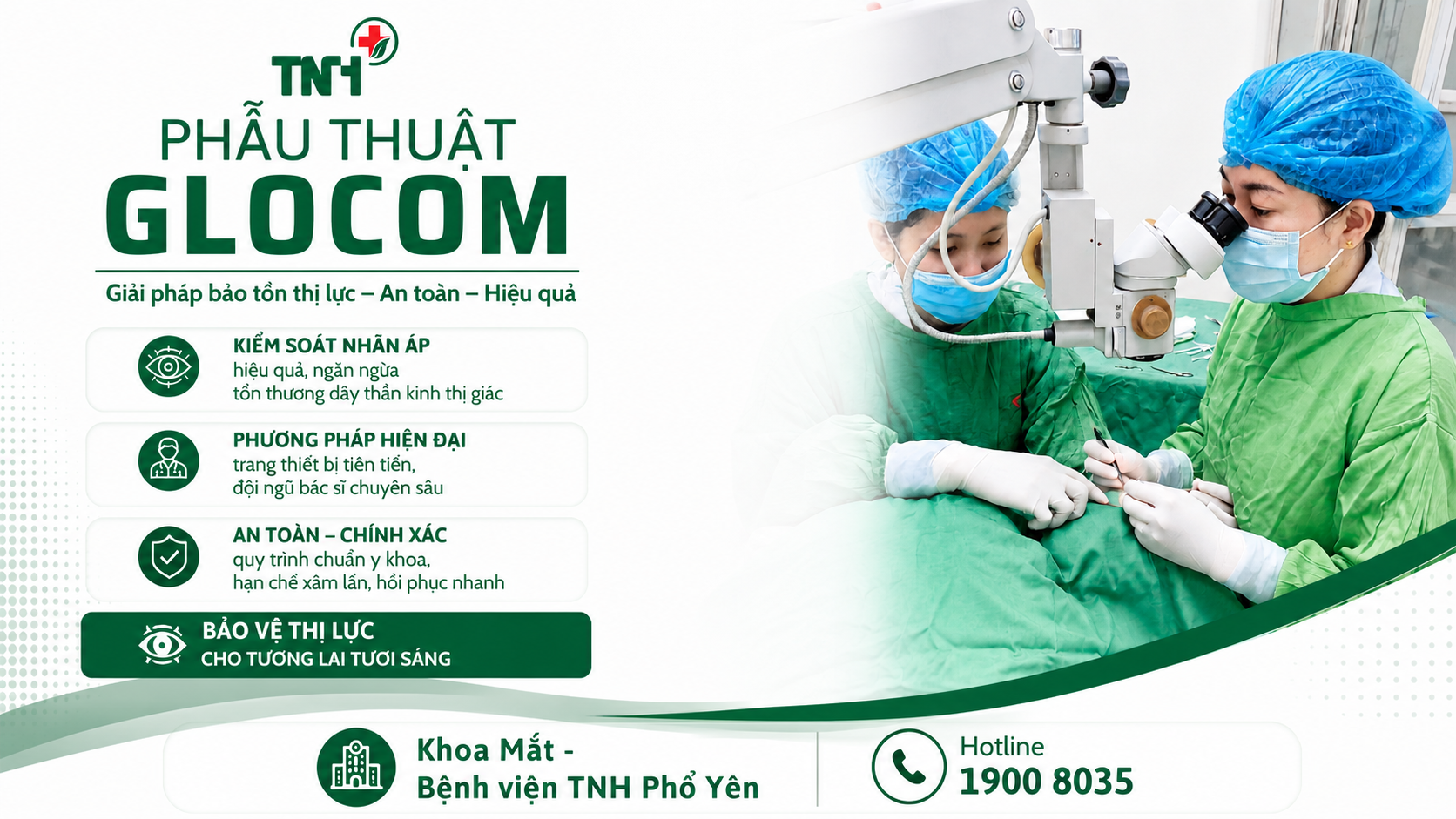
Glaucoma is one of the leading causes of irreversible blindness worldwide. What makes this condition particularly concerning is that it often progresses silently, with little or no noticeable symptoms in its early stages.
By the time vision loss becomes apparent, the optic nerve may have already sustained permanent damage. Since vision lost to glaucoma cannot be restored, early detection and timely treatment are essential to preserving eyesight.
What Is Glaucoma?
The eye continuously produces a clear fluid called aqueous humor, which helps maintain a healthy intraocular pressure (IOP). When the drainage of this fluid is impaired, intraocular pressure may rise, causing damage to the optic nerve.
Over time, this damage gradually reduces vision. Without proper diagnosis and treatment, glaucoma can eventually lead to permanent blindness.
Common Types of Glaucoma
The two most common forms of glaucoma are open-angle glaucoma and acute angle-closure glaucoma.
Open-Angle Glaucoma
Open-angle glaucoma is the most common type and typically develops slowly. Most patients experience no noticeable symptoms in the early stages.
As the disease progresses, peripheral (side) vision gradually deteriorates, causing the visual field to narrow. In advanced stages, patients may retain only central vision, often described as "tunnel vision."
Acute Angle-Closure Glaucoma
Unlike open-angle glaucoma, acute angle-closure glaucoma develops suddenly and is considered a medical emergency.
Common symptoms include:
- Severe eye pain
- Red eye
- Blurred vision
- Seeing halos around lights
- Headache
- Nausea and vomiting
Anyone experiencing these symptoms should seek immediate medical attention at an ophthalmology department to prevent permanent vision loss.
Who Is at Higher Risk?
Although glaucoma can affect anyone, the risk is higher among individuals who:
- Are 40 years of age or older.
- Have a family history of glaucoma.
- Have severe myopia (nearsightedness) or hyperopia (farsightedness).
- Have diabetes, hypertension, or other chronic diseases.
- Use corticosteroid medications for an extended period.
- Have experienced previous eye injuries.
- Have undergone eye surgery or have other ocular conditions.
Individuals in these high-risk groups should undergo regular comprehensive eye examinations, even if they have no symptoms.
How Can Glaucoma Be Prevented?
While glaucoma cannot always be prevented, its progression and vision loss can often be minimized through early detection and appropriate management.
The following measures are recommended:
- Have regular comprehensive eye examinations, especially after the age of 40 or if you have risk factors.
- Monitor intraocular pressure and optic nerve health as recommended by your ophthalmologist.
- Effectively manage chronic conditions such as diabetes and hypertension.
- Avoid using corticosteroid medications without medical supervision.
- Wear protective eyewear during work or sports activities that may cause eye injuries.
- Follow your prescribed treatment plan and attend regular follow-up appointments if diagnosed with glaucoma.
Treatment Options for Glaucoma
The primary goal of glaucoma treatment is to lower intraocular pressure, slow disease progression, and preserve the remaining vision.
Depending on the type and severity of the disease, treatment may include:
- Prescription eye drops or oral medications to reduce intraocular pressure.
- Laser therapy.
- Glaucoma surgery to improve aqueous humor drainage.
- Other individualized treatment options as recommended by an ophthalmologist.
It is important to remember that vision already lost due to glaucoma cannot be restored. Therefore, early diagnosis and timely treatment remain the most effective ways to prevent irreversible vision loss.
Glaucoma Care at TNH Pho Yen Hospital
The Department of Ophthalmology at TNH Pho Yen Hospital provides comprehensive screening, diagnosis, and treatment for glaucoma and other eye diseases.
With experienced ophthalmologists and advanced diagnostic equipment, the department offers:
- Intraocular pressure measurement.
- Comprehensive optic nerve evaluation.
- Early detection of glaucoma-related damage.
- Personalized treatment planning.
- Long-term follow-up to help preserve vision and reduce the risk of blindness.
Don't let glaucoma silently steal your sight. Schedule regular eye examinations and take proactive steps to protect your vision today.
Contact Information
TNH Hospital Group Joint Stock Company
Hotline: 1900 8035
Website: https://tnh.com.vn
Our Hospital Network
- TNH Pho Yen Hospital
- Tran Nguyen Han Street, Chua Residential Area, Van Xuan Ward, Thai Nguyen Province, Vietnam.
- Thai Nguyen International Hospital
- 328 Luong Ngoc Quyen Street, Phan Dinh Phung Ward, Thai Nguyen Province, Vietnam.
- TNH Viet Yen Hospital
- Nguyen The Nho Street, Viet Yen Ward, Bac Ninh Province, Vietnam.
- TNH Lang Son Hospital
- Block 10, Nhi Thanh Street, Tam Thanh Ward, Lang Son Province, Vietnam.