







 Book an appointment
DOG AND CAT ROUNDWORMS – AN “UNINVITED GUEST” YOU SHOULDN’T IGNORE!
 Posted date: 24/08/2026
 Posted by: Nông Đức Thắng


Quick view of main content
How Are Dog and Cat Roundworms Transmitted to Humans?
How Can You Prevent Infection?
Seek Medical Advice If You Suspect an Infection
Our Hospital Network
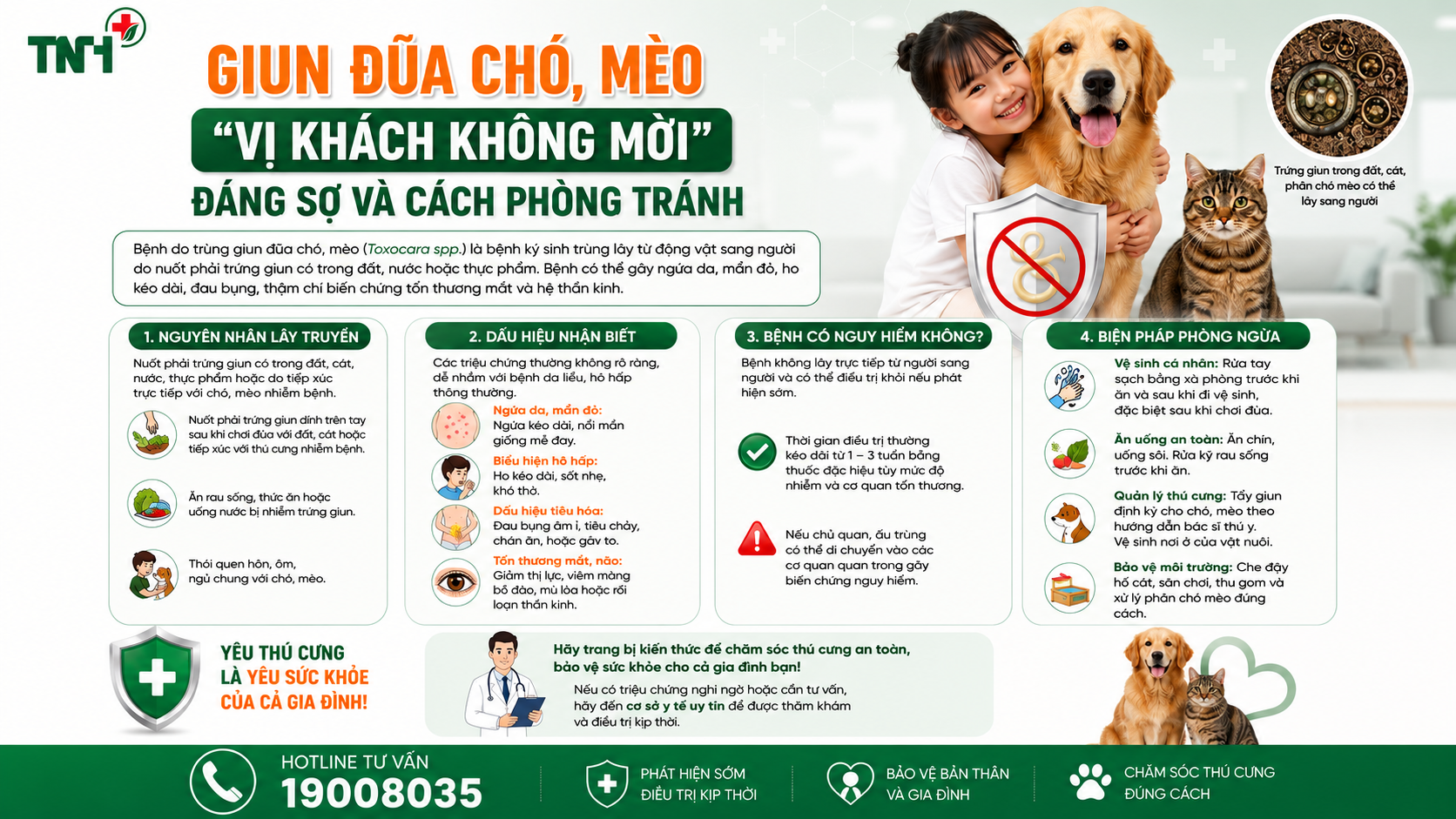
Keeping dogs and cats as pets brings joy and companionship to many families. However, without proper hygiene, care, and regular deworming, pets may carry parasites that can be transmitted to humans, including Toxocara spp., the roundworms commonly found in dogs and cats.
How Are Dog and Cat Roundworms Transmitted to Humans?
Roundworm eggs can survive in soil, sand, water, food, or environments contaminated with dog or cat feces. People may become infected by accidentally ingesting the eggs through contaminated hands, unwashed food, or contact with contaminated environments.
Once inside the human body, the eggs can develop into larvae and migrate to different organs. Depending on the location and severity of infection, symptoms may include itchy skin, rashes, persistent cough, abdominal pain, and digestive problems. In some cases, the larvae may migrate to the eyes or nervous system and cause serious health complications.
How Can You Prevent Infection?
Preventing dog and cat roundworm infection starts with simple everyday habits:
- Wash your hands thoroughly with soap after playing with pets, handling soil or sand, and before eating.
- Eat thoroughly cooked food and drink safe water, and wash raw vegetables and fruits carefully before consumption.
- Deworm dogs and cats regularly according to appropriate veterinary guidance.
- Keep pet living areas clean and collect and dispose of pet feces properly to reduce contamination of soil and water.
- Teach children good hand hygiene, especially after outdoor activities or contact with pets.
Seek Medical Advice If You Suspect an Infection
The symptoms of Toxocara infection are often non-specific and may resemble those of other conditions. Therefore, if you experience persistent unusual symptoms or suspect possible exposure, do not self-medicate or take deworming medication without medical advice. Visit a healthcare facility for proper examination, testing, diagnosis, and appropriate treatment recommendations.
Taking good care of your pets not only keeps them healthy but also helps protect you and your entire family.
For further consultation, please message our Fanpage or contact the Hotline at 1900 8035 for assistance.
TNH HOSPITAL GROUP JOINT STOCK COMPANY
Hotline: 1900 8035
Website: tnh.com.vn
Our Hospital Network
- TNH Viet Yen Hospital: Nguyen The Nho Street, Viet Yen Ward, Bac Ninh.
- Thai Nguyen International Hospital: 328 Luong Ngoc Quyen Street, Phan Dinh Phung Ward, Thai Nguyen.
- TNH Lang Son Hospital: Block 10, Nhi Thanh Street, Tam Thanh Ward, Lang Son.
- TNH Pho Yen Hospital: Tran Nguyen Han Street, Chua Residential Group, Van Xuan Ward, Thai Nguyen.