







 Book an appointment
GIA TĂNG BỆNH DẠ DÀY THỰC QUẢN SAU TẾT
 Posted date: 07/03/2026
 Posted by: Nông Đức Thắng

Quick view of main content
Increase in Gastroesophageal and Gastric Diseases After the Lunar New Year: Warning from TNH Viet Yen Hospital
Gastroesophageal Reflux Disease Should Not Be Ignored
Common Symptoms of Gastroesophageal Reflux
Gastrointestinal Endoscopy – An Effective Diagnostic Method
Expert Recommendation
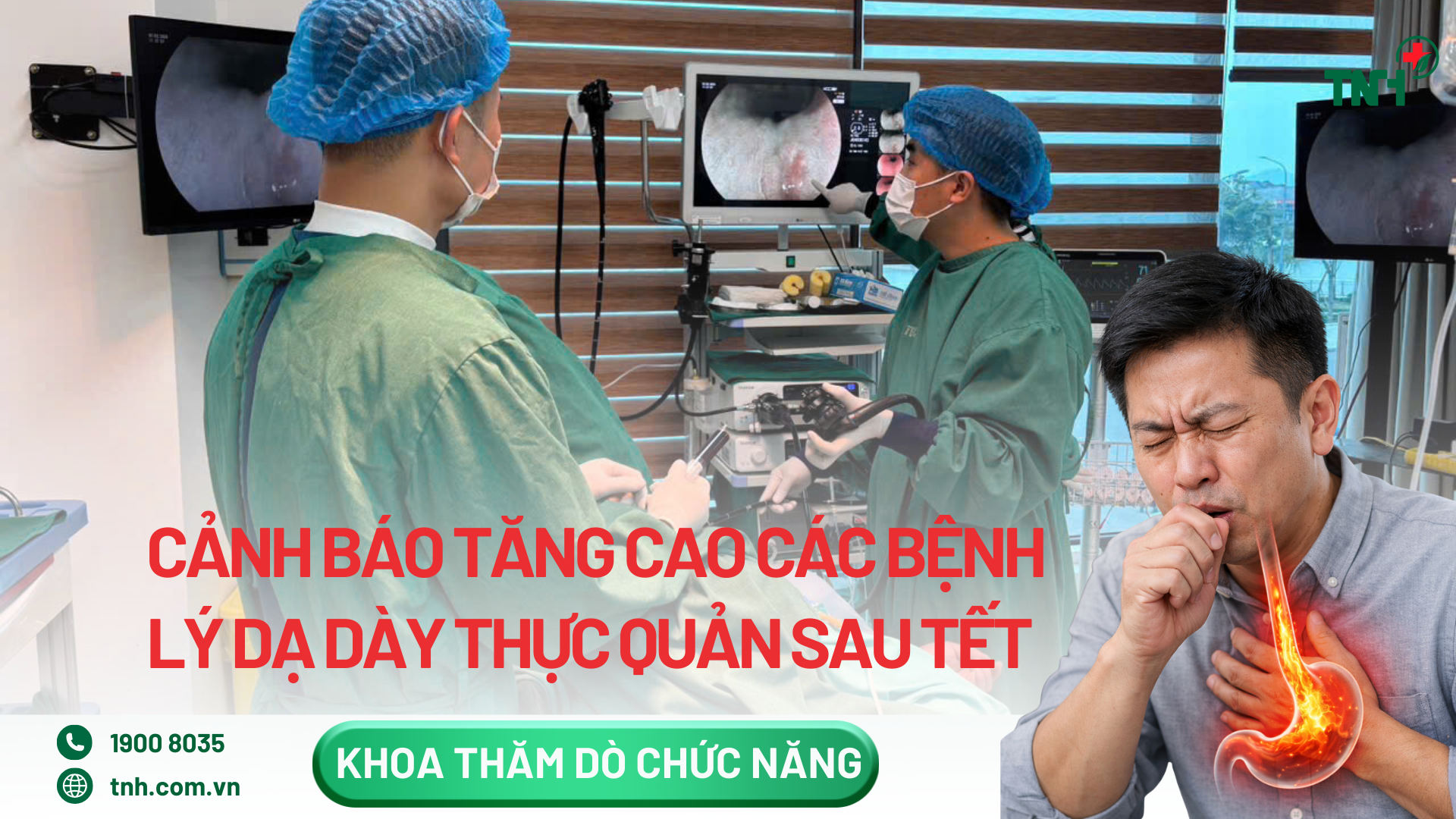
Increase in Gastroesophageal and Gastric Diseases After the Lunar New Year: Warning from TNH Viet Yen Hospital
Following the Lunar New Year holiday, the Functional Exploration Department at TNH Viet Yen Hospital has recorded a significant increase in the number of patients seeking medical examination for gastroesophageal reflux disease (GERD) and acute or chronic gastritis.
According to physicians, the main causes are unhealthy eating habits such as consuming excessive fatty foods, alcohol, and irregular daily routines during the holiday period. These factors place a heavy burden on the digestive system and increase the risk of developing or worsening gastric and esophageal conditions.
Gastroesophageal Reflux Disease Should Not Be Ignored
Gastroesophageal reflux occurs when stomach acid flows back into the esophagus, irritating and damaging the esophageal lining. If this condition persists without proper treatment, it may lead to serious complications such as esophagitis, esophageal narrowing, changes in the esophageal lining cells, and an increased risk of esophageal cancer.
Common Symptoms of Gastroesophageal Reflux
Recognizing GERD can sometimes be challenging because its symptoms may resemble those of other conditions. Common signs include:
- Belching: Occurs frequently, even when the stomach is empty.
- Heartburn: A burning sensation in the stomach or lower chest that may spread to the neck or throat, often accompanied by a sour taste in the mouth.
- Acid regurgitation: Sour-tasting food or liquid rising from the stomach to the throat, typically after meals and often worse at night.
- Nausea and vomiting: May occur after overeating or lying down immediately after meals.
- Burning sensation or tightness in the chest.
- Excessive salivation, difficulty swallowing, or a feeling of a lump in the throat.
Gastrointestinal Endoscopy – An Effective Diagnostic Method
At the Functional Exploration Department of TNH Viet Yen Hospital, modern gastroduodenal endoscopy equipment combined with an experienced medical team enables:
- Clear observation of lesions in the stomach, esophagus, and duodenum.
- Early detection of ulcers, polyps, inflammation, or suspicious malignant lesions.
- Rapid testing for Helicobacter pylori (H. pylori) – the leading cause of gastric ulcers.
- A safe and comfortable endoscopy procedure with advanced intravenous anesthesia, helping reduce discomfort for patients.
Expert Recommendation
According to Dr. Doan Manh Dung, Specialist Level I – Head of the Functional Exploration Department, TNH Viet Yen Hospital, to reduce the risk of gastroesophageal reflux, people should:
- Avoid eating within three hours before bedtime.
- Divide meals into smaller portions and avoid overeating.
- Limit spicy, greasy foods and alcoholic beverages.
- Elevate the head of the bed while sleeping to reduce reflux.
- Do not stop medications without medical advice.
The doctor also advises that individuals should seek medical attention immediately if they experience symptoms such as difficulty swallowing, choking, or persistent chest pain. If digestive symptoms continue after the holiday period, early gastrointestinal endoscopy is recommended to detect and treat conditions promptly, helping protect digestive health from the beginning of the year.