







 Book an appointment
Child Drowning: The Golden 5 Minutes That Can Save a Life
 Posted date: 17/07/2026
 Posted by: Nông Đức Thắng

Quick view of main content
Why Are the First Five Minutes So Important?
What Should You Do If You Find a Drowning Child?
Step 1: Call for Help
Step 2: Remove the Child from the Water
Step 3: Assess the Child
First Aid Based on the Child's Condition
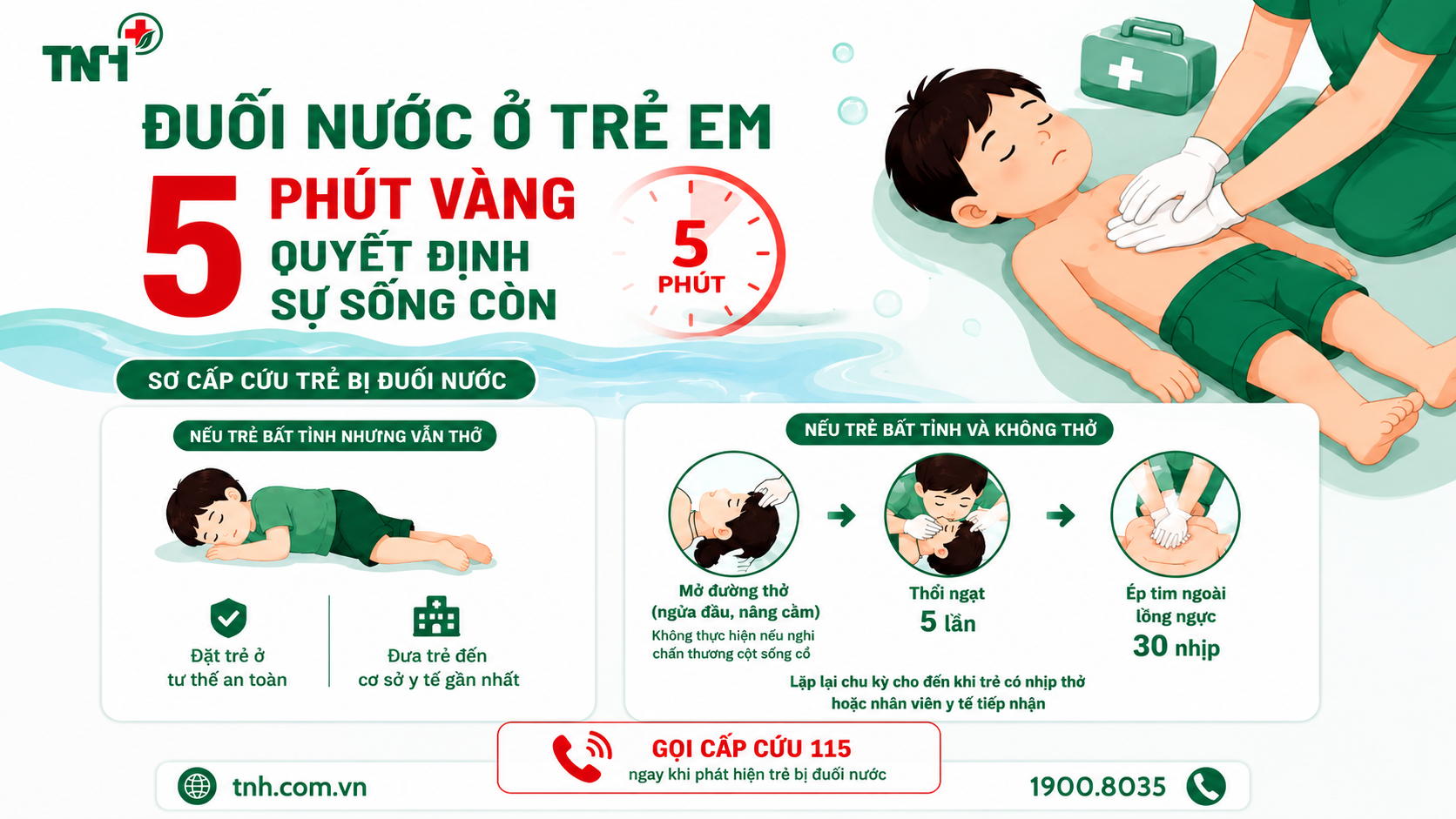
If the Child Is Unconscious but Still Breathing
If the Child Is Unconscious and Not Breathing
Common Mistakes to Avoid
Even If the Child Recovers, Medical Evaluation Is Still Necessary
Preventing Child Drowning
Contact Information
Our Hospital Network
Drowning is one of the leading causes of death among children, particularly those aged 5 to 14 years. According to the World Health Organization (WHO), drowning is a preventable cause of injury-related death, yet it continues to claim thousands of young lives every year.
The encouraging news is that many drowning victims can survive if they receive prompt and appropriate first aid during the first few critical minutes. Learning the correct emergency response can make the difference between life and death.
Why Are the First Five Minutes So Important?
After breathing stops, the brain can survive without oxygen for only about five minutes before irreversible damage begins to occur.
Every second counts. Early recognition of drowning and immediate, appropriate resuscitation significantly increase a child's chances of survival while reducing the risk of permanent brain injury.
What Should You Do If You Find a Drowning Child?
If a child is suspected of drowning, remain calm and follow these essential steps:
Step 1: Call for Help
Alert people nearby for assistance and immediately call the emergency medical service (115 in Vietnam).
Step 2: Remove the Child from the Water
Quickly and safely remove the child from the water while ensuring your own safety.
Step 3: Assess the Child
Check whether the child is:
- Conscious or unconscious.
- Breathing or not breathing.
A rapid assessment will help determine the appropriate first aid.
First Aid Based on the Child's Condition
If the Child Is Unconscious but Still Breathing
If the child is breathing spontaneously:
- Place the child in the recovery position to help keep the airway open and reduce the risk of aspiration.
- Continue monitoring breathing closely.
- Transport the child to the nearest medical facility as soon as possible for further evaluation and observation.
If the Child Is Unconscious and Not Breathing
Begin cardiopulmonary resuscitation (CPR) immediately.
- Open the airway using the head tilt–chin lift maneuver (do not perform this if a cervical spine injury is suspected).
- Check for breathing.
- Start CPR:
- Give 5 rescue breaths.
- Perform 30 chest compressions.
- Continue repeating the CPR cycle until the child resumes breathing or emergency medical personnel take over.
The sooner CPR is started, the greater the chance of survival and the lower the risk of long-term neurological damage.
Common Mistakes to Avoid
During first aid, certain incorrect practices can delay lifesaving treatment or worsen the child's condition.
Avoid the following:
- Do not carry the child upside down over your shoulder or run while doing so. This does not remove water from the lungs and may cause stomach contents to enter the airway, increasing the risk of aspiration while delaying CPR.
- Do not stop CPR unless the child has resumed breathing or trained healthcare professionals have taken over.
Even If the Child Recovers, Medical Evaluation Is Still Necessary
A child who appears alert after a drowning incident should still be taken to a healthcare facility for examination.
Respiratory complications and other delayed effects of oxygen deprivation may develop several hours after the incident. Medical observation is essential to ensure the child's safety.
Preventing Child Drowning
Most drowning incidents can be prevented through proper supervision and water safety education.
Parents and caregivers should:
- Closely supervise children whenever they are near water.
- Teach children swimming and water safety skills from an early age.
- Learn basic first aid and CPR so they are prepared to respond effectively in an emergency.
Being prepared can save a child's life.
Contact Information
TNH Hospital Group Joint Stock Company
Hotline: 1900 8035
Website: https://tnh.com.vn
Our Hospital Network
- TNH Viet Yen Hospital
- Nguyen The Nho Street, Viet Yen Ward, Bac Ninh Province, Vietnam.
- Thai Nguyen International Hospital
- 328 Luong Ngoc Quyen Street, Phan Dinh Phung Ward, Thai Nguyen Province, Vietnam.
- TNH Lang Son Hospital
- Block 10, Nhi Thanh Street, Tam Thanh Ward, Lang Son Province, Vietnam.
- TNH Pho Yen Hospital
- Tran Nguyen Han Street, Chua Residential Area, Van Xuan Ward, Thai Nguyen Province, Vietnam.