







 Book an appointment
DON’T LET YOUR CHILD “RUN OUT OF BREATH” EVERY NIGHT: RECOGNIZING PEDIATRIC SLEEP APNEA EARLY
 Posted date: 05/08/2026
 Posted by: Nông Đức Thắng

Quick view of main content
How Does Sleep Apnea Affect Children?
Tonsillectomy and Adenoidectomy: An Effective Treatment Option
Do Not Ignore Warning Signs
Timely Treatment Supports Healthy Development
TNH HOSPITAL GROUP JOINT STOCK COMPANY
Hospital System
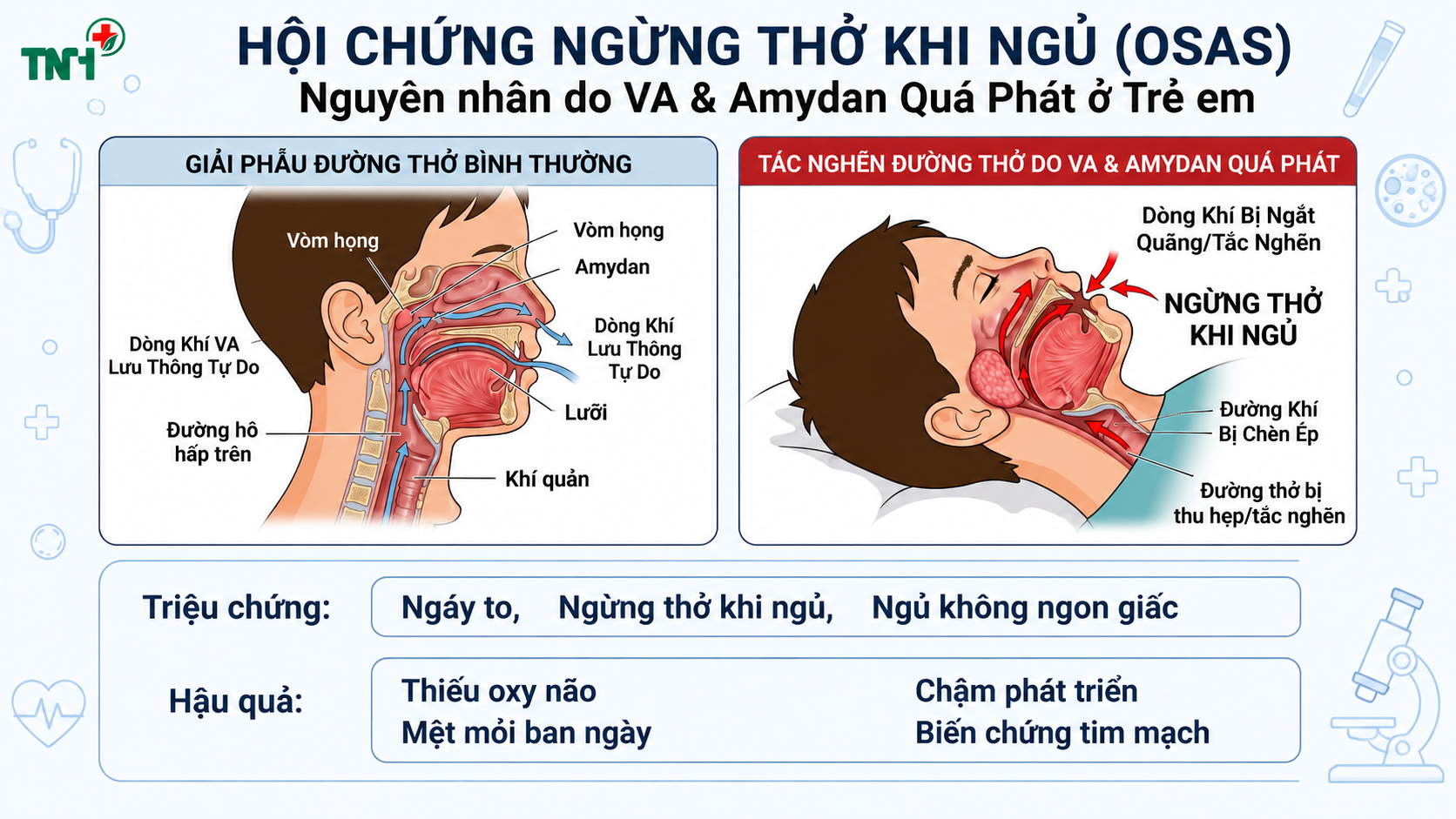
Many parents believe that snoring is a sign that a child is sleeping well. However, if a child snores frequently, sleeps with the mouth open, or has brief pauses in breathing during sleep, these may be warning signs of obstructive sleep apnea (OSA)—a condition that often develops silently but can have long-term effects on a child’s physical health, cognitive development, and overall growth.
How Does Sleep Apnea Affect Children?
When the airway becomes blocked during sleep, the oxygen supply to the brain and body decreases. As a result, children may experience:
- Reduced concentration, memory, and learning ability, affecting school performance.
- Irritability, hyperactivity, daytime sleepiness, or behavioral changes.
- Slower growth in height and weight and an increased risk of cardiovascular disease later in life.
Clinical studies indicate that more than 80% of pediatric sleep apnea cases are associated with enlarged adenoids and tonsils. When these tissues become excessively enlarged, the airway narrows, causing loud snoring and repeated interruptions of breathing throughout sleep.
Tonsillectomy and Adenoidectomy: An Effective Treatment Option
For children whose sleep apnea is caused by enlarged adenoids or tonsils, surgery can remove the source of airway obstruction and provide significant benefits, including:
- Opening the airway and reducing or eliminating snoring and apnea episodes.
- Restoring normal sleep, which supports better growth in height and weight.
- Improving concentration, learning ability, and emotional and behavioral stability.
- Preventing facial changes related to long-term mouth breathing (adenoid facies).
With modern Coblator or Plasma technology, the procedure typically takes only 15–20 minutes, causes minimal pain and bleeding, allows rapid recovery, and does not impair the child’s immune system.
Do Not Ignore Warning Signs
Parents should take their child to an Ear, Nose, and Throat (ENT) specialist if the child has one or more of the following symptoms:
- Persistent snoring or restless sleep.
- Sleeping with the mouth open.
- Frequent startling or waking during the night.
- Breathing pauses during sleep.
- Daytime sleepiness, poor concentration at school, or behavioral changes.
Early evaluation helps identify the cause, determine the severity of the condition, and select the most appropriate treatment.
Timely Treatment Supports Healthy Development
The ENT Department – TNH Pho Yen Hospital is staffed by experienced specialists and equipped with modern facilities for the examination, diagnosis, and treatment of ENT disorders in children, including obstructive sleep apnea caused by enlarged adenoids and tonsils.
Timely intervention not only helps children achieve restful sleep but also lays a strong foundation for healthy physical growth, cognitive development, and quality of life in the future.
TNH HOSPITAL GROUP JOINT STOCK COMPANY
Hotline: 1900 8035
Website: https://tnh.com.vn
Hospital System
- TNH Pho Yen Hospital: Tran Nguyen Han Street, Chua Residential Area, Van Xuan Ward, Thai Nguyen.
- Thai Nguyen International Hospital: No. 328 Luong Ngoc Quyen Street, Phan Dinh Phung Ward, Thai Nguyen.
- TNH Viet Yen Hospital: Nguyen The Nho Street, Viet Yen Ward, Bac Ninh.
- TNH Lang Son Hospital: Block 10, Nhi Thanh Street, Tam Thanh Ward, Lang Son.