







 Book an appointment
Do Not Ignore Shoulder Periarthritis – Early Treatment Helps Prevent Joint Stiffness
 Posted date: 05/09/2026
 Posted by: Nông Đức Thắng


Quick view of main content
How Does Shoulder Periarthritis Affect Movement?
The Role of Physical Therapy and Rehabilitation
Treatment Pathway at TNH Viet Yen Hospital
Persistent Shoulder Pain Should Not Be Ignored
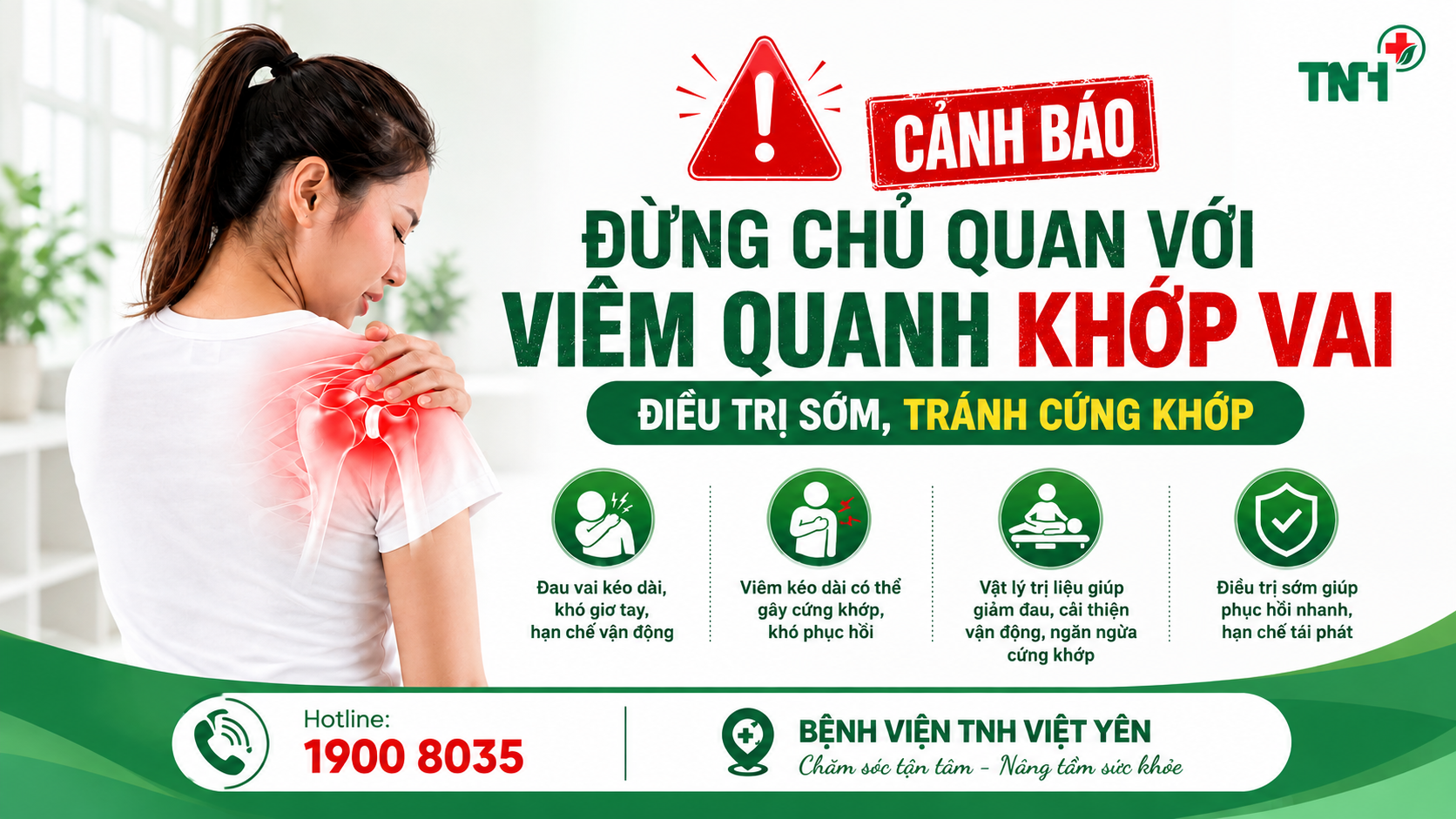
Shoulder pain is a common condition and is often mistaken for discomfort caused by an improper sleeping position, overexertion, or prolonged physical activity. As a result, many people choose to tolerate the pain, massage the affected area, use pain-relief patches, or take painkillers without seeking medical evaluation.
However, if you experience persistent shoulder pain, difficulty raising your arm, limited range of motion, or difficulty getting dressed or reaching for objects overhead, these may be signs of shoulder periarthritis and should be medically evaluated for appropriate treatment.
How Does Shoulder Periarthritis Affect Movement?
Shoulder periarthritis refers to a group of conditions affecting the soft tissues surrounding the shoulder joint, including the tendons, tendon sheaths, bursae, and joint capsule.
In the early stages, patients often experience shoulder pain, particularly during certain movements. As the condition progresses, the shoulder’s range of motion may gradually decrease, making everyday activities such as combing the hair, getting dressed, reaching behind the back, or raising the arm increasingly difficult.
Without appropriate assessment and treatment, some cases may progress to joint capsule contracture, stiffness, and restricted movement, potentially prolonging the recovery process.
The Role of Physical Therapy and Rehabilitation
Physical therapy and rehabilitation are commonly used in the management of musculoskeletal conditions, including shoulder pain and restricted shoulder movement.
Depending on the underlying cause and severity of the condition, doctors and physical therapists may develop an individualized treatment program to:
- Help relieve pain and inflammation through appropriate physical therapy modalities.
- Maintain and gradually improve the shoulder joint’s range of motion.
- Reduce the risk of joint stiffness and adhesions.
- Support functional recovery and help patients return to daily activities.
- Provide guidance on appropriate exercises, posture, and movement to maintain treatment results and reduce the risk of recurrence.
Exercises should be selected according to each patient’s specific condition. Performing inappropriate exercises or forcing the shoulder to move while experiencing significant pain may aggravate the injury.
Treatment Pathway at TNH Viet Yen Hospital
At the Department of Traditional Medicine and Rehabilitation – TNH Viet Yen Hospital, patients are examined and assessed for their functional condition before an individualized treatment plan is developed.
The treatment process may include:
- Direct consultation and examination with a doctor to determine the cause and severity of the condition.
- Appropriate physical therapy modalities and equipment as medically indicated.
- Therapeutic exercises guided by trained rehabilitation technicians.
- Advice on proper posture during daily activities and work, along with exercises to continue at home.
Combining treatment at the hospital with appropriate home exercises plays an important role in restoring shoulder function.
Persistent Shoulder Pain Should Not Be Ignored
If shoulder pain occurs temporarily after physical activity and quickly improves, it may simply require monitoring. However, if the pain persists, gradually worsens, makes it difficult to raise the arm, or increasingly restricts shoulder movement, you should seek medical evaluation to identify the underlying cause.
Patients should also avoid prolonged self-medication with painkillers or using unverified treatment methods without professional medical advice.
TNH Viet Yen Hospital provides examination and treatment for musculoskeletal conditions, supporting patients in relieving pain, improving mobility, and restoring function according to their individual needs.
For consultation:
Hotline: 1900 8035
Website: tnh.com.vn
TNH HOSPITAL GROUP JSC
TNH Hospital Network: TNH Viet Yen Hospital; Thai Nguyen International Hospital; TNH Lang Son Hospital; TNH Pho Yen Hospital.