







 Book an appointment
DON'T UNDERESTIMATE H. PYLORI – A MAJOR RISK FACTOR FOR GASTRIC ULCERS AND STOMACH CANCER
 Posted date: 10/10/2026
 Posted by: Nông Đức Thắng


Quick view of main content
What Is H. pylori and What Diseases Can It Cause?
When Should H. pylori Infection Be Treated?
Diagnostic Methods for Detecting H. pylori Infection
Why Is Follow-Up Testing Necessary After H. pylori Treatment?
Proactive Medical Examinations for Long-Term Stomach Health
CONTACT INFORMATION
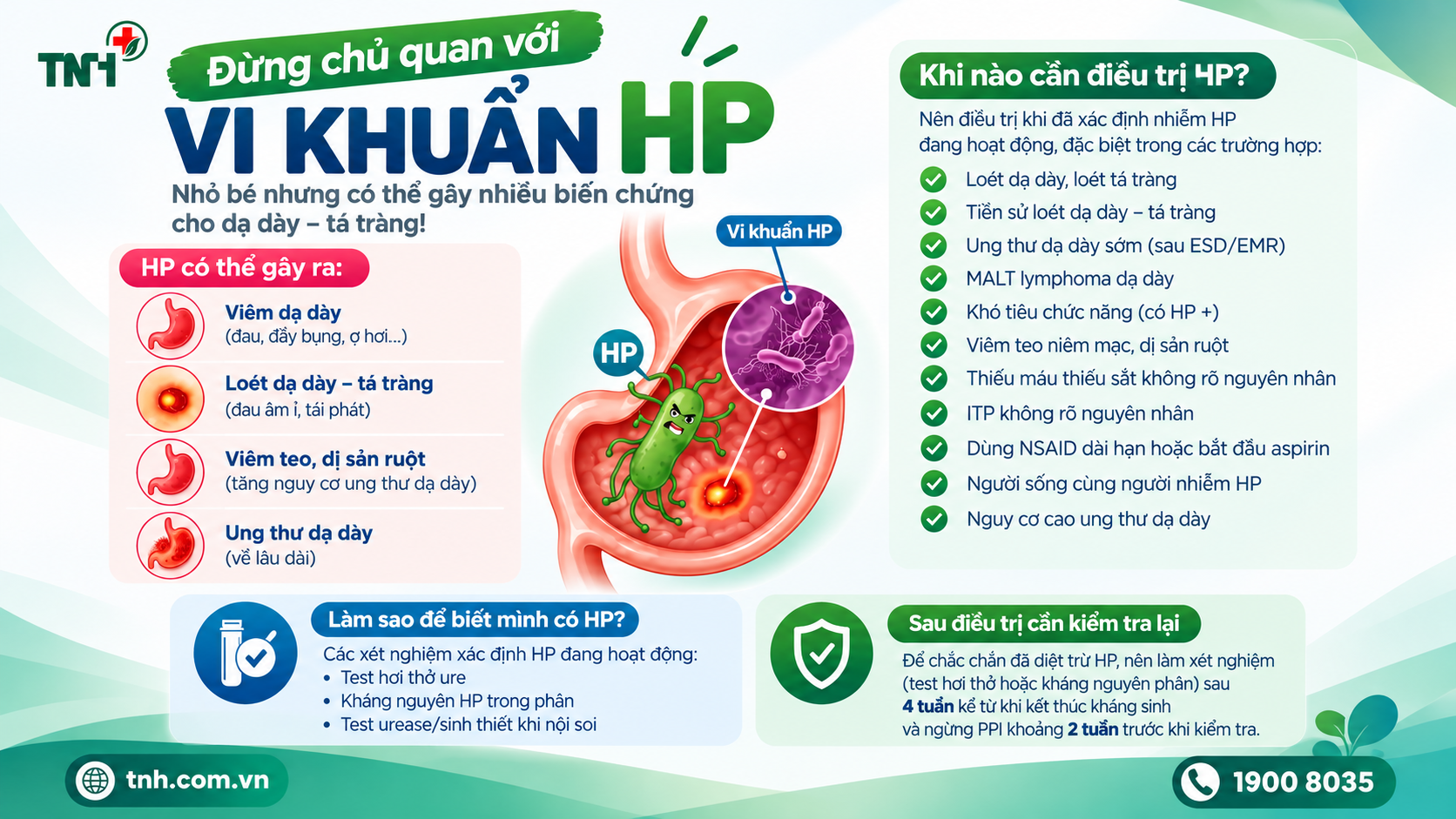
Helicobacter pylori (H. pylori) is one of the major bacterial pathogens responsible for various gastrointestinal diseases, particularly those affecting the stomach and duodenum. Notably, many people infected with H. pylori experience no obvious symptoms, while persistent infection can lead to gastritis, peptic ulcers, and an increased risk of stomach cancer. Therefore, raising awareness, ensuring early detection, and receiving appropriate treatment are essential for maintaining long-term digestive health.
What Is H. pylori and What Diseases Can It Cause?
Helicobacter pylori (H. pylori) is a bacterium capable of surviving in the highly acidic environment of the stomach thanks to its unique adaptive mechanisms. It typically colonizes the protective mucus layer of the stomach lining and can trigger chronic inflammation.
Most people infected with H. pylori do not experience specific symptoms. However, in some cases, the bacterium can damage the gastric mucosa and contribute to several gastrointestinal conditions, including:
- Gastritis: Inflammation of the stomach lining that may cause upper abdominal pain or discomfort, bloating, nausea, and indigestion.
- Peptic ulcers: H. pylori is one of the leading causes of gastric and duodenal ulcers. These ulcers may cause recurrent abdominal pain and potentially serious complications, such as gastrointestinal bleeding or perforation.
- Atrophic gastritis and intestinal metaplasia: These changes in the stomach lining may develop as a result of chronic inflammation and are associated with an increased risk of gastric cancer.
- Stomach cancer: Long-term H. pylori infection is a significant risk factor for gastric cancer. However, not everyone infected with H. pylori will develop cancer.
In addition, H. pylori infection is associated with certain cases of gastric mucosa-associated lymphoid tissue (MALT) lymphoma.
When Should H. pylori Infection Be Treated?
Not all individuals infected with H. pylori experience the same symptoms or medical conditions. Decisions regarding testing and treatment should be made by a healthcare professional based on the patient's overall health, medical history, and individual risk factors.
According to current clinical guidelines, patients with confirmed active H. pylori infection are generally recommended to receive eradication therapy, particularly in the following circumstances:
- Current or previous gastric or duodenal ulcers.
- Atrophic gastritis or intestinal metaplasia.
- Previous endoscopic treatment for early-stage gastric cancer.
- Gastric MALT lymphoma.
- A family history of gastric cancer or other factors indicating a high risk of developing the disease.
- Certain associated medical conditions requiring further evaluation, such as unexplained iron-deficiency anemia or immune thrombocytopenia.
H. pylori eradication therapy typically involves a combination of medications, including antibiotics and acid-suppressing agents, prescribed according to an appropriate treatment regimen.
Patients should avoid self-medicating or reusing previous prescriptions, as inappropriate antibiotic use may contribute to antibiotic resistance and reduce treatment effectiveness.
Diagnostic Methods for Detecting H. pylori Infection
Several diagnostic methods are currently available to identify H. pylori infection. Depending on the patient's symptoms, age, medical history, and clinical indications, doctors may recommend one of the following tests:
Urea Breath Test: This non-invasive test detects active H. pylori infection by measuring the bacterium's ability to break down urea in the stomach.
Stool Antigen Test: This method detects H. pylori antigens in stool samples and can be used both for initial diagnosis and for confirming successful eradication after treatment.
Upper Gastrointestinal Endoscopy with H. pylori Testing: When endoscopy is clinically indicated, doctors may collect gastric mucosal biopsy samples for a rapid urease test or other specialized examinations. These tests help identify the presence of H. pylori while allowing assessment of the stomach lining.
Selecting the appropriate diagnostic method improves diagnostic accuracy and supports doctors in developing an effective treatment plan.
Why Is Follow-Up Testing Necessary After H. pylori Treatment?
One of the most important principles of H. pylori treatment is strict adherence to the prescribed regimen, including taking medications at the correct dosage and for the recommended duration.
However, completing the treatment course does not necessarily mean that the bacterium has been successfully eradicated. Therefore, patients should undergo follow-up testing to confirm successful H. pylori eradication.
Generally, follow-up testing should be performed at least four weeks after completing antibiotic therapy. Patients are also advised to discontinue proton pump inhibitors (PPIs) for at least two weeks before testing, under their doctor's guidance, to reduce the risk of false-negative results.
Commonly recommended methods for confirming eradication include the urea breath test and stool antigen test.
If follow-up results indicate that H. pylori infection persists, the doctor will reassess the patient's condition and recommend an appropriate alternative treatment regimen.
Proactive Medical Examinations for Long-Term Stomach Health
H. pylori infection can remain asymptomatic for many years, and its presence does not always cause noticeable digestive problems. Therefore, individuals should not ignore persistent or recurring gastrointestinal symptoms such as upper abdominal pain, bloating, indigestion, or nausea.
In particular, warning signs such as vomiting blood, passing black or tarry stools, unexplained weight loss, or anemia require prompt medical evaluation to identify the underlying cause.
Proactive medical examinations, early detection, and appropriate H. pylori treatment are important measures for reducing the risk of complications, protecting the stomach lining, and maintaining long-term digestive health.
Individuals seeking gastrointestinal health assessments, H. pylori testing, or consultations for gastric and duodenal conditions can contact the TNH Hospital Network for guidance on medical examinations and suitable diagnostic procedures.
CONTACT INFORMATION
TNH HOSPITAL GROUP JOINT STOCK COMPANY
Hotline: 1900 8035
Website: https://tnh.com.vn
TNH Hospital Network:
- Thai Nguyen International Hospital: No. 328 Luong Ngoc Quyen Street, Phan Dinh Phung Ward, Thai Nguyen Province, Vietnam.
- TNH Pho Yen Hospital: Tran Nguyen Han Street, Truong Thinh Residential Area, Van Xuan Ward, Thai Nguyen Province, Vietnam.
- TNH Viet Yen Hospital: Nguyen The Nho Street, Viet Yen Ward, Bac Ninh Province, Vietnam.
- TNH Lang Son Hospital: Block 10, Nhi Thanh Street, Tam Thanh Ward, Lang Son Province, Vietnam.