







 Book an appointment
DON’T UNDERESTIMATE A CHOKING EPISODE – THE SERIOUS RISK OF ASPIRATION PNEUMONIA
 Posted date: 24/09/2026
 Posted by: Nông Đức Thắng


Quick view of main content
Emergency treatment for severe respiratory failure after food aspiration
Why are stroke patients more prone to choking?
Warning signs to watch for during meals
How to reduce the risk of choking
What should you do if someone chokes?
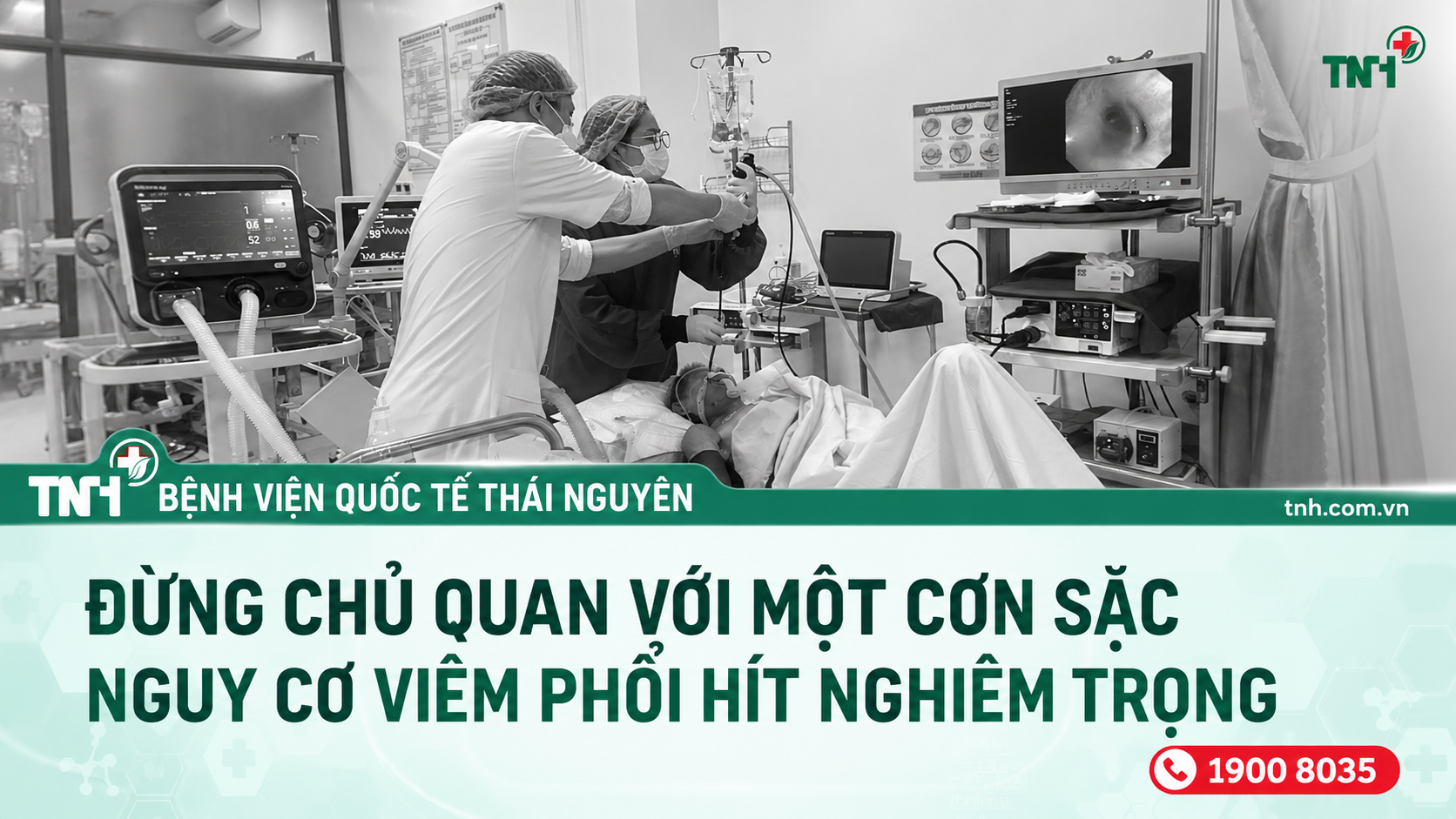
Choking on food can occur in everyday life, particularly among older adults, stroke survivors, and people with swallowing disorders. What may seem like a minor choking episode can become dangerous if food, liquid, or secretions enter the airway, potentially causing airway obstruction, aspiration pneumonia, respiratory failure, and even life-threatening complications.
Recently, Thai Nguyen International Hospital provided emergency treatment for a patient who developed severe respiratory failure after choking while eating.
Emergency treatment for severe respiratory failure after food aspiration
According to the medical team, while eating, the patient suddenly choked on porridge, which came out through the nose and mouth, accompanied by severe shortness of breath. Before this episode, the patient had experienced fatigue, poor appetite, coughing, breathing difficulties, and difficulty walking.
Upon admission, the patient had a decreased level of consciousness, with a Glasgow Coma Scale score of 8, an SpO₂ level of only 80%, rapid breathing, and reduced air entry into the lungs. Given the severity of the respiratory failure, the doctors promptly performed endotracheal intubation to secure and protect the airway.
During the procedure, the medical team observed a large amount of food material and thick sputum coming through the endotracheal tube. The airway was suctioned to remove the aspirated food and secretions, and the patient continued to receive intensive treatment and close monitoring.
This case highlights the potential dangers of food aspiration. When food or liquid enters the respiratory tract, it can cause more than coughing or choking—it may lead to airway obstruction, oxygen deprivation, aspiration pneumonia, and respiratory failure.
Why are stroke patients more prone to choking?
After a stroke, brain damage may affect chewing, swallowing, and the protective reflexes that keep food and liquids out of the airway. Patients may experience weakness of the tongue and throat muscles, reduced sensation in the mouth and throat, or an impaired cough reflex.
Of particular concern is “silent aspiration,” in which food or liquid enters the airway without causing obvious coughing or choking. This can make aspiration difficult to detect early and increase the risk of respiratory complications.
Warning signs to watch for during meals
Caregivers should pay close attention if the patient experiences coughing, choking, or gagging while eating or drinking; food or liquid coming out through the nose; changes in voice or wheezing after meals; difficulty swallowing or food remaining in the mouth for a prolonged period; increased saliva or sputum; shortness of breath after eating; or recurrent fever or respiratory infections without an obvious cause.
If these symptoms occur frequently, the patient should undergo medical evaluation to assess swallowing function and receive appropriate care recommendations.
How to reduce the risk of choking
To help prevent aspiration, especially in older adults, stroke survivors, and people with swallowing difficulties, caregivers should pay attention to the patient’s posture, food consistency, feeding technique, and overall condition.
Patients should be positioned upright while eating whenever appropriate. The texture and consistency of food should be adapted to the individual’s swallowing ability. Food should be given in small amounts and at a slow pace, with close observation throughout the meal.
Avoid feeding patients when they are extremely tired, drowsy, short of breath, or less alert, as their ability to coordinate swallowing and protect the airway may be impaired.
What should you do if someone chokes?
If a patient begins choking, stop feeding immediately. If the patient is lying down, assist them into an appropriate position to help reduce further aspiration. Remove food or foreign material from the mouth only if it is clearly visible and can be safely removed; avoid blindly sweeping the mouth with your fingers.
If the patient can still cough effectively, encourage them to continue coughing to expel the obstruction. If signs of severe airway obstruction occur—such as inability to cough effectively, inability to speak, rapidly worsening breathing difficulty, or bluish discoloration—appropriate first aid for choking should be performed immediately and emergency medical services (115) should be contacted.
A choking episode should never be underestimated. For older adults, stroke survivors, and people with swallowing disorders in particular, early recognition of the risks, proper feeding practices, and timely intervention are essential to preventing aspiration pneumonia and other serious respiratory complications.
If a patient develops shortness of breath, bluish skin or lips, reduced consciousness, or other abnormal respiratory symptoms following a choking episode, they should be taken to a medical facility immediately for prompt evaluation and emergency treatment.
TNH HOSPITAL GROUP JSC
Hotline: 1900 8035
Website: tnh.com.vn