







 Book an appointment
RED EYE CASES ARE INCREASING – TAKE ACTION EARLY TO PROTECT YOUR VISION
 Posted date: 05/08/2026
 Posted by: Nông Đức Thắng

Quick view of main content
Common Causes of Red Eye
Signs and Symptoms
When Should You See a Doctor Immediately?
Effective Prevention Measures
Early Eye Examination Helps Protect Vision
TNH HOSPITAL GROUP JOINT STOCK COMPANY
Hospital System
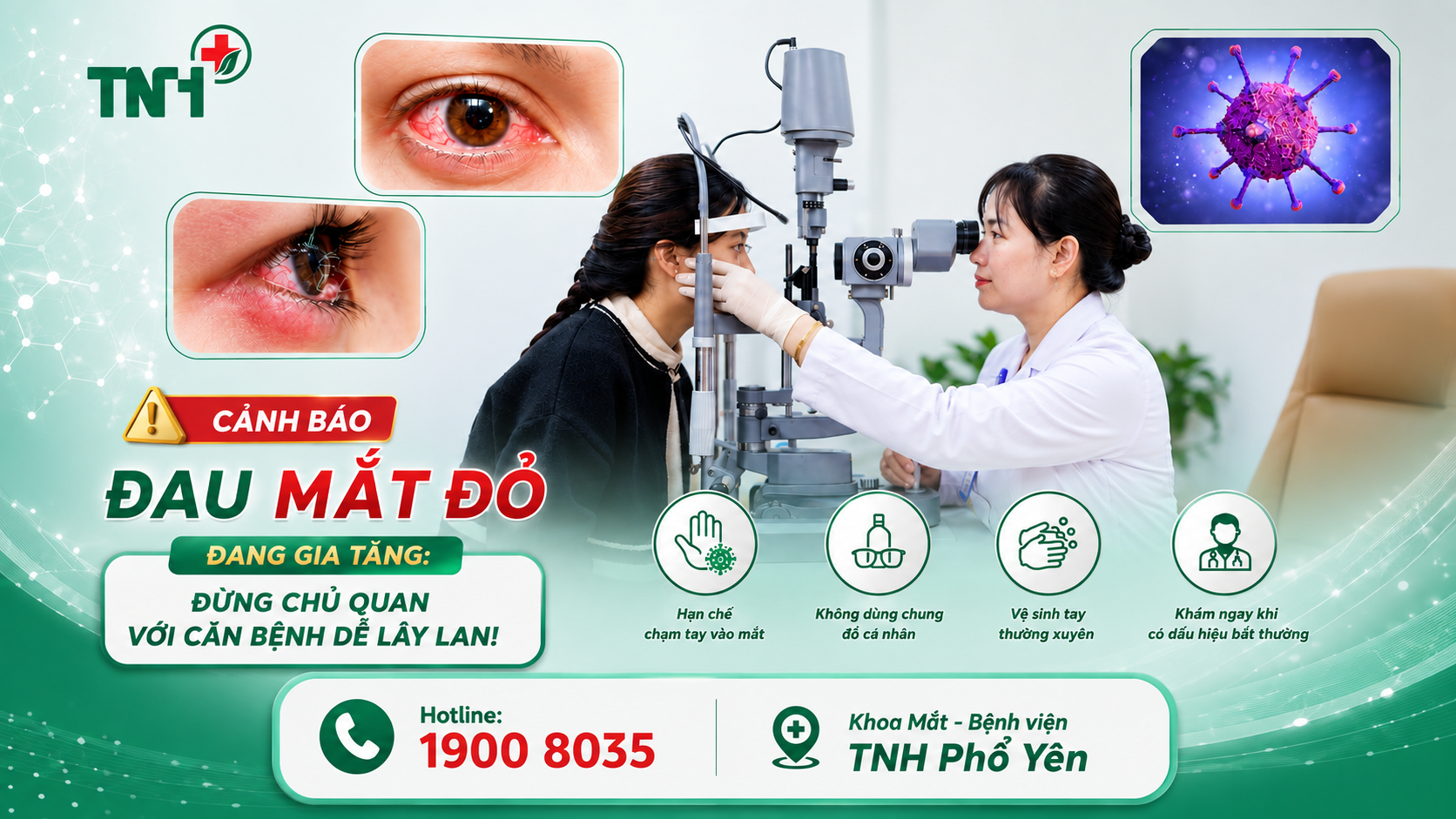
During the seasonal transition period, the number of red eye (conjunctivitis) cases has been increasing in many localities. This condition is highly contagious, can affect people of all ages, and may spread rapidly within the community if preventive measures are not properly implemented. Although most cases recover completely, being careless or self-medicating can increase the risk of complications and may affect vision.
Common Causes of Red Eye
Red eye may result from several causes, including:
- Viruses: The most common cause, transmitted through tears, eye discharge, contaminated hands, or sharing personal items.
- Bacteria: Often associated with yellow or green eye discharge.
- Allergies: Triggered by pollen, dust, animal hair, cosmetics, and other allergens; typically causes itchy eyes and is not contagious.
- Irritants: Such as smoke, dust, chemicals, or foreign bodies entering the eye.
Signs and Symptoms
Seek medical attention if you experience:
- Redness, irritation, or a gritty sensation in the eye.
- Excessive tearing or eye discharge.
- Mild swelling of the eyelids.
- Itching (commonly seen in allergic conjunctivitis).
- Sensitivity to light.
When Should You See a Doctor Immediately?
Prompt medical evaluation is recommended if red eye is accompanied by:
- Severe eye pain.
- Blurred vision or decreased vision.
- Marked sensitivity to light.
- Symptoms that do not improve after 2–3 days or become worse.
Importantly, do not use corticosteroid eye drops without a doctor’s prescription. Inappropriate use may worsen the condition, increase the risk of complications, and cause long-term damage to vision.
Effective Prevention Measures
To reduce the risk of infection and transmission:
- Wash hands frequently and avoid rubbing the eyes with unclean hands.
- Do not share towels, cosmetics, eye drops, or personal items.
- Wear protective eyewear when exposed to dust, smoke, or chemicals.
- Clean the eyes with sterile saline solution when necessary.
- Avoid close contact with infected individuals and disinfect frequently touched surfaces.
- Stay home from school or work if diagnosed with viral conjunctivitis to prevent spreading the infection.
Early Eye Examination Helps Protect Vision
The Ophthalmology Department – TNH Pho Yen Hospital is staffed by experienced ophthalmologists and equipped with modern facilities to provide comprehensive examination, diagnosis, and treatment of eye diseases, from common conditions to specialized ophthalmic disorders. Each patient receives individualized consultation and an appropriate treatment plan to ensure safety and optimal outcomes.
If you notice symptoms of red eye or any unusual eye condition, seek medical evaluation promptly to protect your vision and prevent complications.
Hotline: 1900 8035
TNH HOSPITAL GROUP JOINT STOCK COMPANY
Hotline: 1900 8035
Website: https://tnh.com.vn
Hospital System
- TNH Pho Yen Hospital: Tran Nguyen Han Street, Chua Residential Area, Van Xuan Ward, Thai Nguyen.
- Thai Nguyen International Hospital: No. 328 Luong Ngoc Quyen Street, Phan Dinh Phung Ward, Thai Nguyen.
- TNH Viet Yen Hospital: Nguyen The Nho Street, Viet Yen Ward, Bac Ninh.
- TNH Lang Son Hospital: Block 10, Nhi Thanh Street, Tam Thanh Ward, Lang Son.