







 Book an appointment
GESTATIONAL DIABETES – EARLY SCREENING TO PROTECT BOTH MOTHER AND BABY
 Posted date: 13/07/2026
 Posted by: Nông Đức Thắng

Quick view of main content
What Is Gestational Diabetes?
Who Is at Higher Risk?
Possible Complications
For the Mother
For the Baby
When Should Pregnant Women Be Screened?
Preparing for the Test
How Can You Reduce the Risk of Gestational Diabetes?
Early Screening for a Healthier Pregnancy
Contact Information
Hospital Network
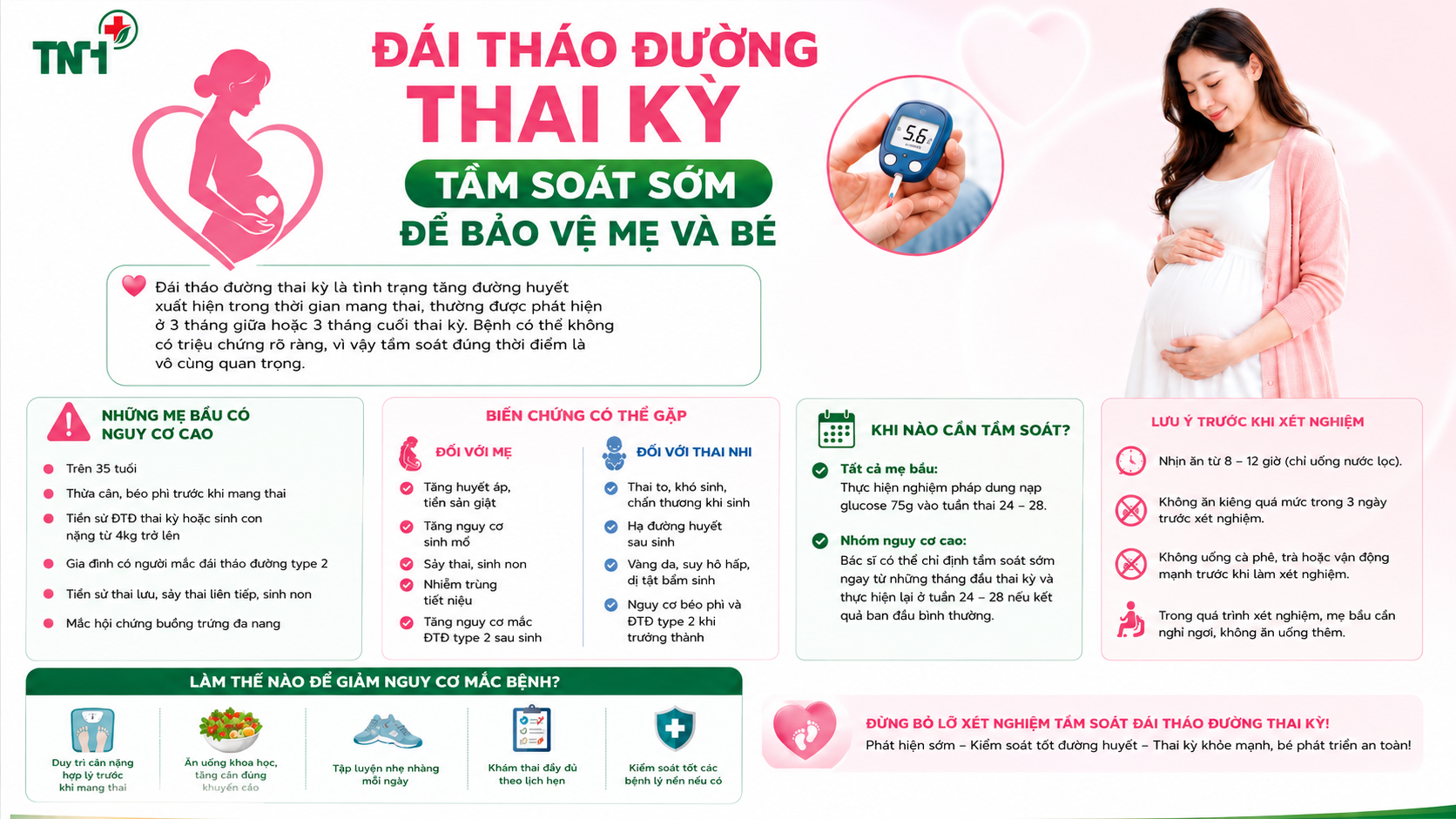
Pregnancy is a remarkable journey, but it also brings significant hormonal and metabolic changes to a woman's body. Among the most common pregnancy-related health conditions is gestational diabetes mellitus (GDM), which can affect the health of both the mother and the baby if not detected and managed promptly.
Early screening plays a vital role in identifying gestational diabetes, allowing healthcare providers to develop an appropriate monitoring and treatment plan to ensure a healthy pregnancy and a safe delivery.
What Is Gestational Diabetes?
Gestational diabetes is a condition characterized by elevated blood glucose levels that are first detected during pregnancy, typically in the second or third trimester. Because it often develops without obvious symptoms, many pregnant women are diagnosed only through routine screening tests.
Without proper management, gestational diabetes can increase the risk of complications during pregnancy and may have long-term health consequences for both mother and child.
Who Is at Higher Risk?
Pregnant women are at increased risk of developing gestational diabetes if they have one or more of the following risk factors:
- Age 35 years or older.
- Overweight or obesity before pregnancy.
- A history of gestational diabetes or previous delivery of a baby weighing 4 kg (8.8 lbs) or more.
- A family history of type 2 diabetes.
- A history of stillbirth, recurrent miscarriage, or preterm birth.
- Polycystic ovary syndrome (PCOS).
Women with these risk factors may be advised by their physician to undergo screening earlier in pregnancy.
Possible Complications
For the Mother
Gestational diabetes may increase the risk of:
- High blood pressure and preeclampsia.
- Cesarean delivery.
- Miscarriage or preterm birth.
- Urinary tract infections.
- Developing type 2 diabetes after pregnancy.
For the Baby
Poorly controlled maternal blood glucose can lead to:
- Fetal macrosomia (large baby), increasing the risk of difficult labor and birth injuries.
- Neonatal hypoglycemia (low blood sugar after birth).
- Jaundice, respiratory distress, or certain congenital abnormalities.
- An increased risk of obesity and type 2 diabetes later in life.
When Should Pregnant Women Be Screened?
According to current medical recommendations, all pregnant women should undergo a 75-gram Oral Glucose Tolerance Test (OGTT) between 24 and 28 weeks of gestation.
For women in high-risk groups, physicians may recommend screening during the first trimester and repeating the test between 24 and 28 weeks if the initial results are normal.
Preparing for the Test
To ensure accurate test results, pregnant women should:
- Fast for 8–12 hours before the test (plain water is permitted).
- Avoid excessive dietary restrictions during the three days before testing.
- Refrain from drinking coffee or tea and avoid strenuous physical activity before the test.
- Remain at rest and avoid eating or drinking during the testing procedure unless instructed otherwise by medical staff.
How Can You Reduce the Risk of Gestational Diabetes?
The risk of gestational diabetes can be reduced by:
- Maintaining a healthy body weight before pregnancy.
- Following a balanced diet and gaining weight within the recommended range during pregnancy.
- Engaging in light physical activity regularly.
- Attending all scheduled prenatal check-ups.
- Properly managing any pre-existing medical conditions.
Early Screening for a Healthier Pregnancy
Don't miss your gestational diabetes screening. Early detection and proper blood glucose management can help ensure a healthier pregnancy, support your baby's optimal development, and reduce the risk of complications during pregnancy, childbirth, and after delivery.
The Department of Obstetrics and Gynecology at TNH Viet Yen Hospital is committed to supporting expectant mothers throughout every stage of pregnancy. With a team of experienced obstetricians, standardized screening protocols, and modern laboratory facilities, the hospital provides comprehensive care for the early detection and effective management of gestational diabetes.
Contact Information
TNH Hospital Group Joint Stock Company
Hotline: 1900 8035
Website: https://tnh.com.vn
Hospital Network
- TNH Viet Yen Hospital
- Nguyen The Nho Street, Viet Yen Ward, Bac Ninh Province, Vietnam
- Thai Nguyen International Hospital
- 328 Luong Ngoc Quyen Street, Phan Dinh Phung Ward, Thai Nguyen Province, Vietnam
- TNH Lang Son Hospital
- Block 10, Nhi Thanh Street, Tam Thanh Ward, Lang Son Province, Vietnam
- TNH Pho Yen Hospital
- Tran Nguyen Han Street, Chua Residential Area, Van Xuan Ward, Thai Nguyen Province, Vietnam