







 Book an appointment
“Chỉ là đau bụng thôi mà…” – Khi cơn đau thoáng qua có thể là cảnh báo sớm của bệnh lý nguy hiểm
 Posted date: 06/05/2026
 Posted by: Nông Đức Thắng

Quick view of main content
“It’s just a stomachache…” – When mild pain can be an early warning sign of serious disease
A real clinical case
Unexpected diagnosis with multiple coexisting conditions
Major surgery with combined techniques
Positive recovery thanks to timely intervention
Expert recommendations
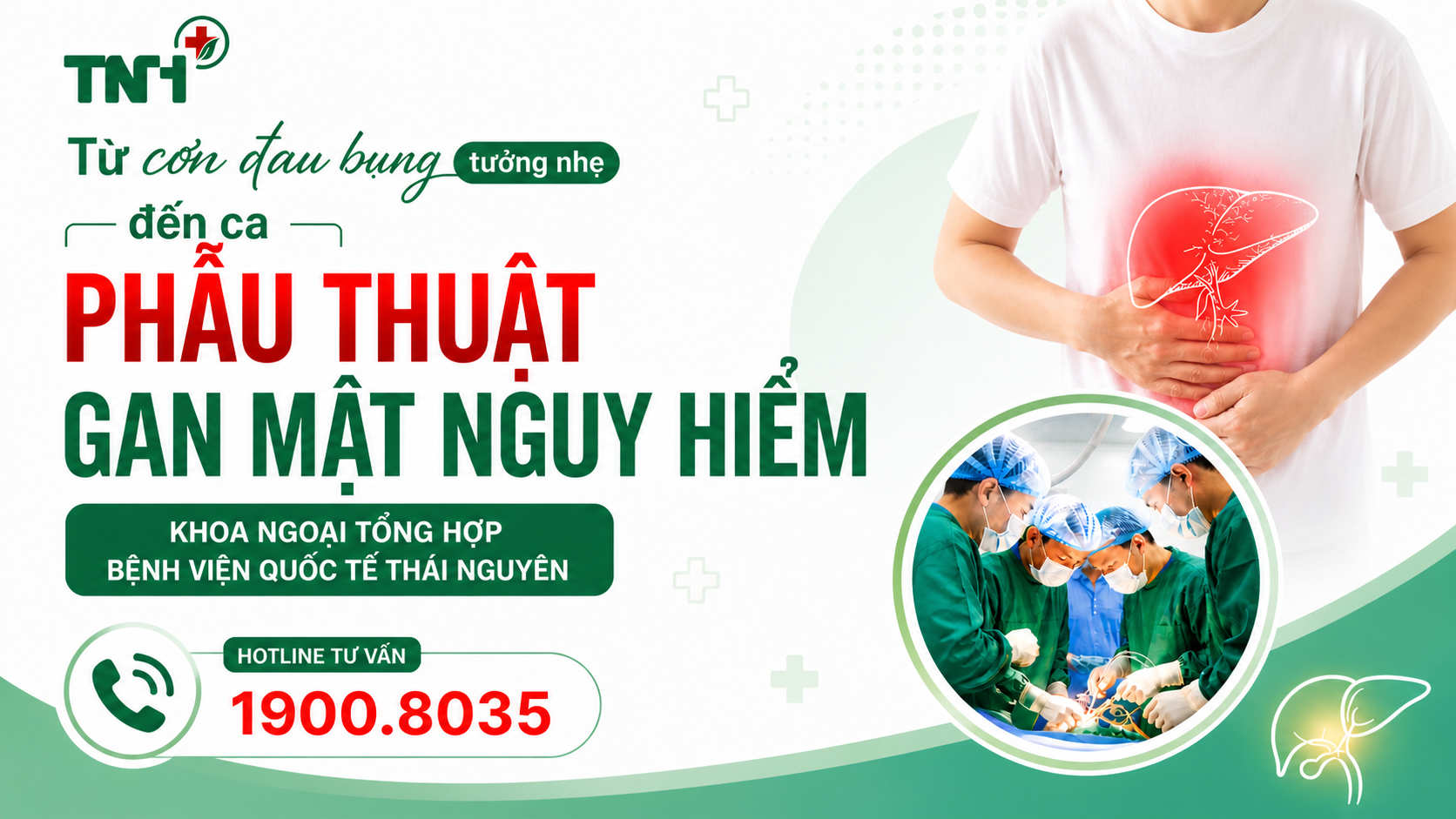
“It’s just a stomachache…” – When mild pain can be an early warning sign of serious disease
Many people tend to underestimate mild, transient abdominal pain, assuming it is merely a common digestive issue. In reality, however, such symptoms may be early warning signs of serious underlying conditions if not detected and treated in time.
A real clinical case
About one month prior to hospitalization, an 84-year-old female patient in Thai Nguyen occasionally experienced mild abdominal pain. These episodes typically occurred after consuming fatty meals or at night. As the pain was short-lived and resolved on its own, she did not seek medical attention.
However, the situation suddenly worsened when the pain returned with greater شدت. The patient experienced severe cramping pain in the right upper abdomen, radiating to the right shoulder and back, accompanied by bloating, indigestion, nausea, and vomiting. This time, the pain did not subside spontaneously.
Unexpected diagnosis with multiple coexisting conditions
After clinical examination and diagnostic tests, doctors identified multiple types of gallstones occurring simultaneously:
- Gallbladder stones
- Common bile duct stones
- Intrahepatic bile duct stones (left lobe)
More concerning, the patient also developed acute pancreatitis on the background of several chronic conditions, including hypertension, diabetes mellitus, hypokalemia, acute gastritis, and grade A gastroesophageal reflux disease (GERD).
This was a complex case with significant risks, requiring a comprehensive and precise treatment approach.
Major surgery with combined techniques
Given the severity of the condition, the medical team decided to perform surgery using a combination of advanced techniques:
- Left hepatectomy
- Cholecystectomy
- Common bile duct exploration for stone removal
- Flexible endoscopy to assess intrahepatic stones and bile duct patency
- Placement of a Kehr T-tube for biliary drainage
This was a major surgical procedure with potential complications such as bleeding, bile leakage, infection, and liver failure. Therefore, it required close coordination among surgeons and the anesthesia and intensive care team to ensure patient safety.
Positive recovery thanks to timely intervention
Following surgery, the patient’s condition stabilized without any serious complications. With a well-structured postoperative care plan and close monitoring, she recovered well. The surgical wound showed only mild swelling and was effectively controlled.
After 10 days of treatment, the patient was discharged in stable condition.
Expert recommendations
Doctors advise:
- Mild, transient abdominal pain—especially after fatty meals or occurring at night—may be an early sign of biliary tract disease.
- Do not ignore symptoms simply because they resolve on their own, as the condition may silently progress and worsen unexpectedly.
👉 Early detection and timely medical consultation are essential for protecting your health.