







 Book an appointment
COPD Treatment Update – GOLD 2026: Toward Better Symptom Control and Fewer Exacerbations
 Posted date: 14/08/2026
 Posted by: Nông Đức Thắng


Quick view of main content
Key Highlights from GOLD 2026
Exacerbation Risk Classification
Dual Bronchodilator Therapy Preferred for Group B
Role of Eosinophils in Guiding ICS Use
Persistent Dyspnea Requires Comprehensive Reassessment
Management of Recurrent Exacerbations Despite Optimal Therapy
The GOLD 2026 Message
TNH Hospital Group Joint Stock Company
TNH Hospital System
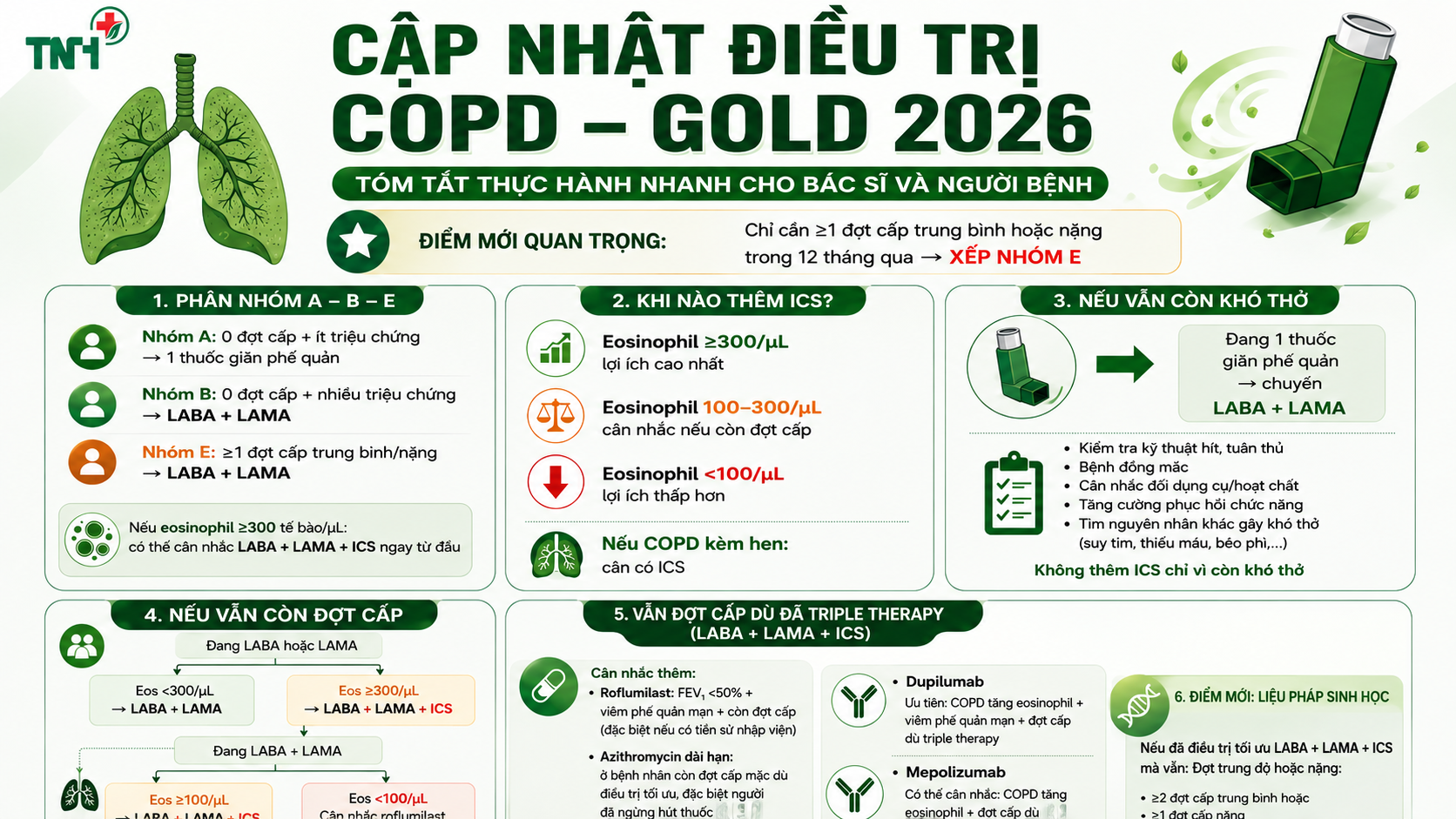
Chronic Obstructive Pulmonary Disease (COPD) is a progressive chronic respiratory disease that significantly affects breathing, daily activities, and quality of life. According to the latest GOLD 2026 (Global Initiative for Chronic Obstructive Lung Disease) update, COPD treatment should be individualized based on symptoms, exacerbation risk, and each patient’s clinical characteristics, rather than applying a single treatment regimen to all patients.
GOLD 2026 emphasizes three major treatment goals: reducing symptoms, preventing exacerbations, and improving long-term quality of life.
Key Highlights from GOLD 2026
Exacerbation Risk Classification
Patients with one or more moderate or severe exacerbations within the previous 12 months are classified into Group E, a high-risk group requiring a more intensive management strategy.
Dual Bronchodilator Therapy Preferred for Group B
For Group B patients, GOLD 2026 recommends LABA + LAMA (dual long-acting bronchodilator therapy) as the preferred treatment approach for better symptom control compared with monotherapy.
Role of Eosinophils in Guiding ICS Use
Blood eosinophil counts are considered a useful biomarker to help guide the use of inhaled corticosteroids (ICS), supporting more appropriate treatment selection and reducing unnecessary ICS exposure.
Persistent Dyspnea Requires Comprehensive Reassessment
When dyspnea persists despite treatment, clinicians should reassess:
- Inhaler technique
- Treatment adherence
- Comorbidities such as asthma, heart failure, obesity, anxiety, and depression
GOLD 2026 highlights that ICS should not be added automatically solely because symptoms persist.
Management of Recurrent Exacerbations Despite Optimal Therapy
For patients who continue to experience exacerbations despite optimized treatment, additional options may be considered, including:
- Roflumilast
- Azithromycin
- Biologic therapies in appropriately selected patients under specialist guidance.
The GOLD 2026 Message
Modern COPD management extends beyond medication alone and requires a comprehensive, personalized approach based on:
- Symptom burden
- Exacerbation history
- Lung function
- Comorbid conditions
- Inhaler use ability and treatment adherence
Regular follow-up and ongoing treatment reassessment are essential for long-term disease control, reducing hospitalization risk, and improving quality of life.
Individuals with chronic cough, sputum production, shortness of breath during exertion, or those already diagnosed with COPD should seek respiratory specialist evaluation for timely assessment and treatment guidance.
For consultation and support, please send a message to our Fanpage or contact the Hotline 1900 8035.
TNH Hospital Group Joint Stock Company
- Hotline: 1900 8035
- Website: https://tnh.com.vn
TNH Hospital System
- TNH Viet Yen Hospital: Nguyen The Nho Street, Viet Yen Ward, Bac Ninh.
- Thai Nguyen International Hospital: No. 328 Luong Ngoc Quyen Street, Phan Dinh Phung Ward, Thai Nguyen.
- TNH Lang Son Hospital: Block 10, Nhi Thanh Street, Tam Thanh Ward, Lang Son.
- TNH Pho Yen Hospital: Tran Nguyen Han Street, Chua Residential Group, Van Xuan Ward, Thai Nguyen.