






 Book an appointment
Colorectal Cancer Is Affecting Younger Adults – Don’t Overlook Colon Polyps
 Posted date: 27/07/2026
 Posted by: Nông Đức Thắng

Quick view of main content
Colon Polyps – A Precancerous Condition That Can Develop into Cancer
Who Is at Higher Risk of Developing Colon Polyps?
Colonoscopy – The Most Effective Method for Detecting and Removing Polyps
Take the Initiative to Protect Your Health Through Early Screening
Colorectal cancer is one of the most common cancers and remains a leading cause of cancer-related deaths when detected at an advanced stage. Alarmingly, in recent years, the disease has shown a growing trend of affecting younger adults, with an increasing number of cases diagnosed in people under the age of 50. Many patients are now found to have colon polyps or colorectal cancer as early as their 30s or 40s.
According to medical experts, one of the main reasons why colorectal cancer is often diagnosed late is that colon polyps usually develop silently, with few or no noticeable symptoms. By the time warning signs appear, the lesions may have already progressed or caused complications, reducing the effectiveness of treatment.
Colon Polyps – A Precancerous Condition That Can Develop into Cancer
Colon polyps are abnormal growths that develop on the lining of the colon or rectum. While most polyps are benign, certain types—particularly adenomatous polyps (adenomas)—have the potential to become cancerous if they are not detected and removed in time.
The transformation from a polyp to colorectal cancer typically occurs over several years. This creates a valuable window of opportunity for early detection and removal through colonoscopy, helping prevent colorectal cancer before it develops.
Who Is at Higher Risk of Developing Colon Polyps?
The risk of developing colon polyps increases in individuals with one or more of the following risk factors:
- A diet high in red meat and processed foods but low in dietary fiber.
- Overweight or obesity and a sedentary lifestyle.
- Smoking and excessive alcohol consumption.
- A family history of colon polyps or colorectal cancer.
- Inherited conditions such as Lynch syndrome or Familial Adenomatous Polyposis (FAP).
For people in these high-risk groups, regular colorectal screening plays a crucial role in early detection and cancer prevention.
Colonoscopy – The Most Effective Method for Detecting and Removing Polyps
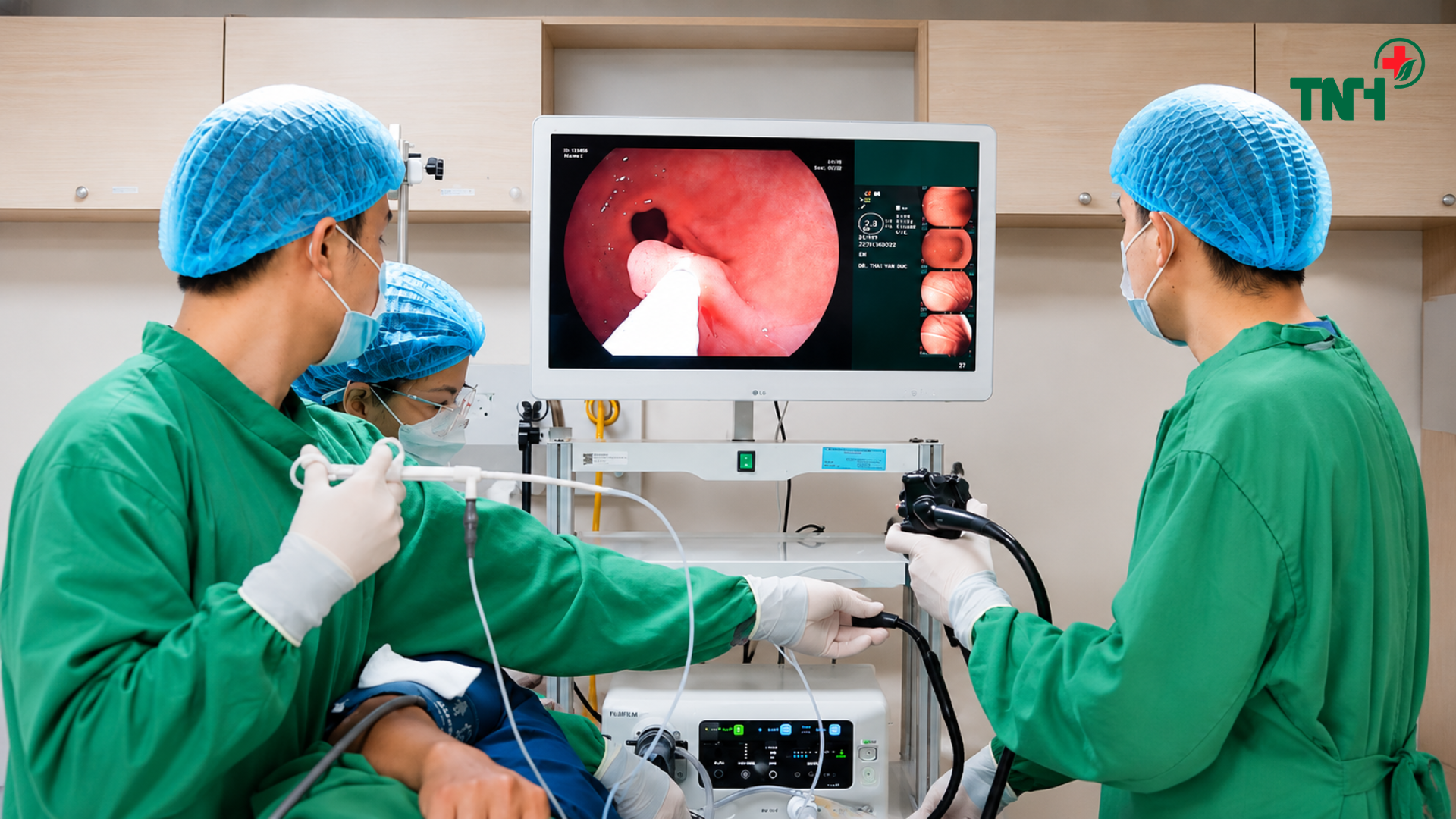
Colonoscopy is currently the most effective method for detecting colon polyps, colorectal cancer, and other abnormalities of the colon and rectum. In many cases, polyps can be removed during the same procedure when clinically indicated, significantly reducing the risk of progression to colorectal cancer without the need for additional surgery.
At the Department of Functional Diagnostics – TNH Pho Yen Hospital, advanced endoscopy systems and a team of highly experienced physicians ensure that colonoscopy is performed safely, accurately, and comfortably. This enables early detection of abnormalities and timely intervention, maximizing the effectiveness of colorectal cancer screening and treatment.
Take the Initiative to Protect Your Health Through Early Screening
Medical experts recommend that adults aged 45 and older undergo routine colonoscopy as part of colorectal cancer screening. Individuals under the age of 45 who have risk factors—such as a family history of colorectal cancer, obesity, smoking, heavy alcohol consumption, or inherited syndromes—should begin screening earlier based on their physician’s recommendations.
Early detection and timely removal of colon polyps not only improve treatment outcomes but also serve as one of the most effective strategies for preventing colorectal cancer before it develops.
Early Detection – Timely Intervention – Proactive Protection Against Colorectal Cancer