







 Book an appointment
Adenovirus Infections on the Rise: What Parents Need to Know to Care for Their Children Properly
 Posted date: 14/07/2026
 Posted by: Nông Đức Thắng

Quick view of main content
What is Adenovirus?
Common Symptoms
How Should Parents Care for Their Child?
Preventing Adenovirus Infection
TNH International Hospital – Supporting Parents in Protecting Children's Health
Contact Information
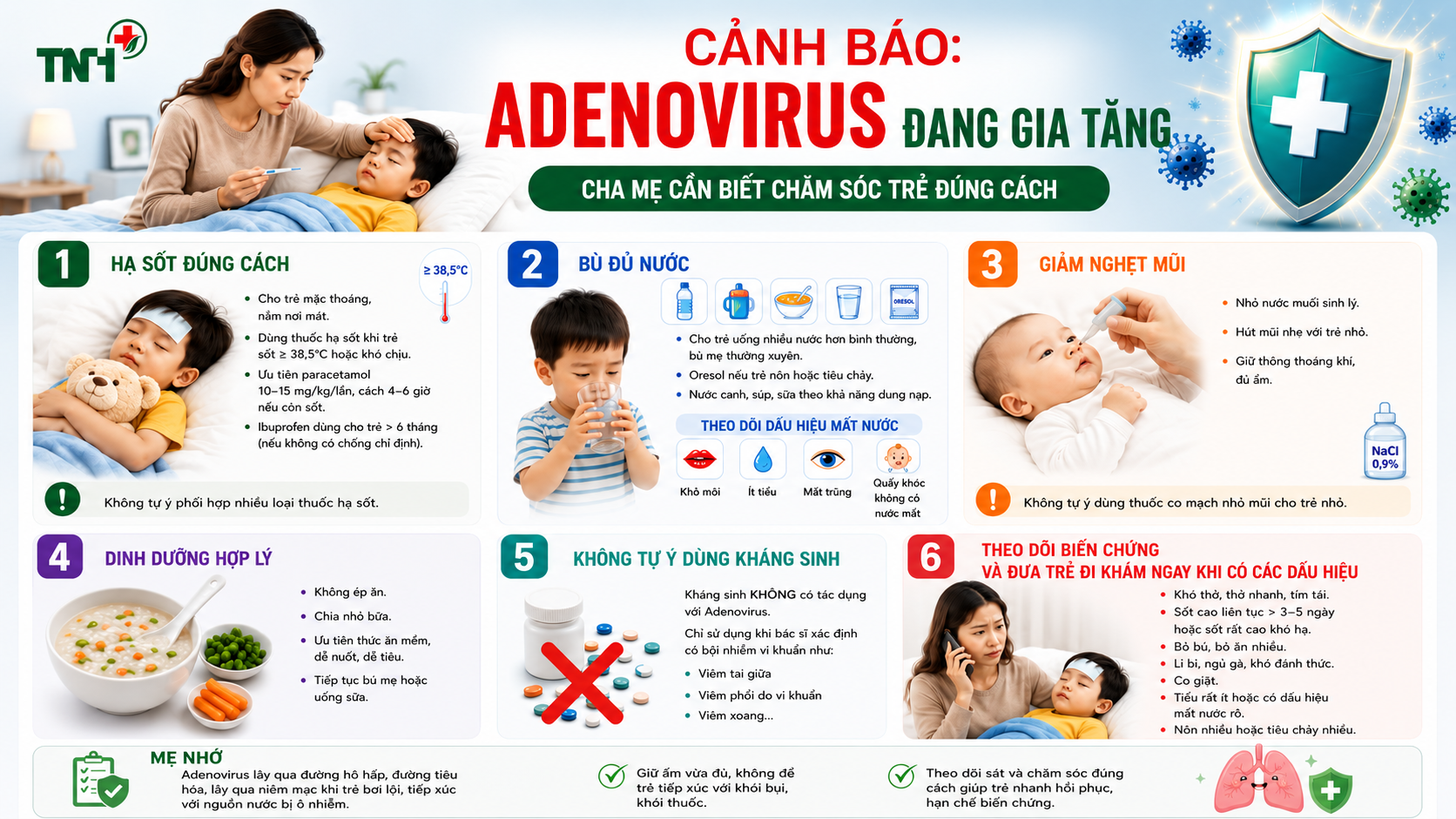
Recently, Adenovirus has become one of the leading causes of respiratory infections in children, with a noticeable increase in the number of cases. The virus spreads easily, particularly in crowded environments such as schools, daycare centers, and playgrounds. Recognizing the early signs of infection and providing appropriate care are essential to helping children recover quickly while reducing the risk of serious complications.
What is Adenovirus?
Adenovirus is a group of viruses that can cause a variety of illnesses, most commonly acute respiratory infections. It may also lead to conjunctivitis (pink eye), sore throat, fever, and gastrointestinal symptoms in young children.
The virus spreads through:
- Respiratory droplets released when an infected person coughs or sneezes.
- Direct contact with secretions from the eyes, nose, or throat of an infected person.
- Contact with contaminated surfaces, objects, or water.
Because Adenovirus can survive for extended periods in the environment, it can easily cause outbreaks within communities.
Common Symptoms
The clinical manifestations of Adenovirus infection vary, but the most common symptoms include:
- High fever, which may persist for several days.
- Sore throat.
- Cough, nasal congestion, or runny nose.
- Conjunctivitis (pink eye).
- Diarrhea, vomiting, or other gastrointestinal symptoms in some children.
Notably, many children—especially older ones—may experience persistent high fever that responds poorly to conventional fever-reducing medications. Without timely medical evaluation and appropriate treatment, the illness may progress to severe complications such as pneumonia, respiratory distress, and hospitalization.
How Should Parents Care for Their Child?
Proper home care plays a vital role in a child's recovery from Adenovirus infection. Parents should:
- Reduce fever according to medical advice and keep the child comfortably dressed in a cool environment.
- Encourage adequate fluid intake and continue breastfeeding or provide oral rehydration solutions when necessary.
- Clean the child's nose with normal saline to keep the airways clear.
- Offer soft, easy-to-digest foods in small, frequent meals.
- Avoid giving antibiotics without a doctor's prescription, as antibiotics are not effective against viral infections.
Parents should seek immediate medical attention if the child develops any of the following warning signs:
- Difficulty breathing, rapid breathing, or bluish lips/skin.
- High fever lasting more than 3–5 days or fever that is difficult to control.
- Excessive drowsiness, poor feeding, or refusal to eat.
- Seizures.
- Signs of dehydration, such as dry lips, sunken eyes, or decreased urination.
- Persistent vomiting or severe diarrhea.
Preventing Adenovirus Infection
Parents can help reduce the risk of infection by:
- Encouraging frequent handwashing with soap and water.
- Wearing face masks in crowded places when appropriate.
- Keeping toys, household items, and living environments clean.
- Limiting close contact with individuals who are ill.
- Ensuring children maintain a balanced diet, get sufficient sleep, and build a strong immune system.
TNH International Hospital – Supporting Parents in Protecting Children's Health
Early detection and timely treatment are key to minimizing complications, shortening recovery time, and safeguarding children's health. If your child experiences persistent fever or symptoms suggestive of Adenovirus infection, seek prompt medical evaluation and professional guidance.
Contact Information
TNH Hospital Group Joint Stock Company
Hotline: 1900 8035
Website: tnh.com.vn
Hospital Network:
- TNH International Hospital – Thai Nguyen: 328 Luong Ngoc Quyen Street, Phan Dinh Phung Ward, Thai Nguyen Province, Vietnam.
- TNH Pho Yen Hospital: Tran Nguyen Han Street, Chua Residential Area, Van Xuan Ward, Thai Nguyen Province, Vietnam.
- TNH Viet Yen Hospital: Nguyen The Nho Street, Viet Yen Ward, Bac Ninh Province, Vietnam.
- TNH Lang Son Hospital: Block 10, Nhi Thanh Street, Tam Thanh Ward, Lang Son Province, Vietnam.