






 Book an appointment
BE AWARE OF 5 GROUPS OF DISEASES THAT MAY BECOME MORE COMMON AFTER FLOODS
 Posted date: 25/08/2026
 Posted by: Nông Đức Thắng


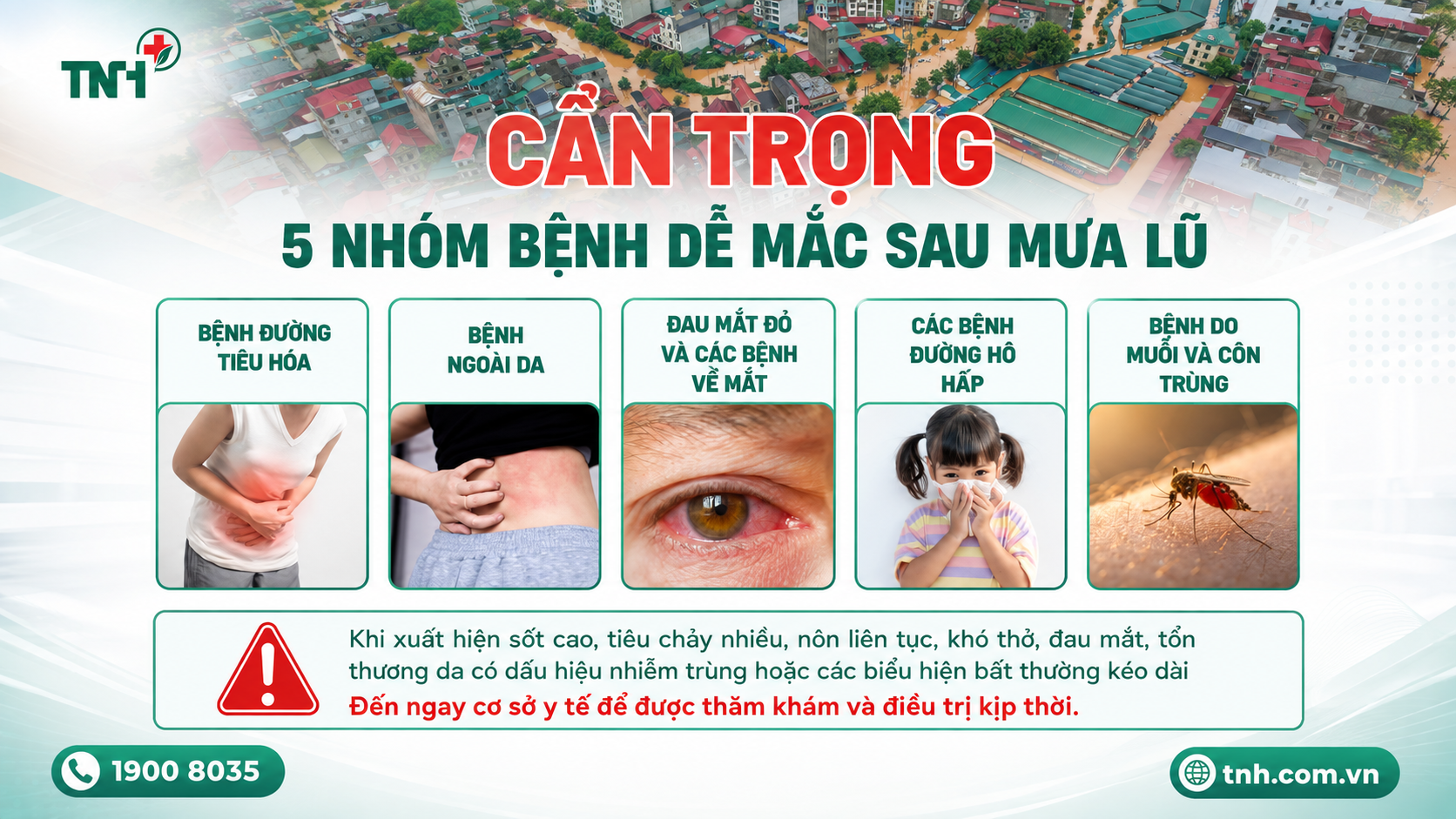
After days of storms and flooding, as floodwaters begin to recede, people need to pay special attention to protecting their health. Contaminated water, mud, accumulated waste, and humid conditions can create favorable environments for many disease-causing pathogens to grow and spread.
In particular, the risk of several groups of diseases may increase after flooding if appropriate preventive measures are not taken.
1. Gastrointestinal diseases
Contaminated water and food can increase the risk of gastrointestinal infections such as diarrhea, dysentery, and typhoid fever. Common symptoms may include abdominal pain, diarrhea, vomiting, fever, and fatigue.
To prevent illness, people should use clean water, eat thoroughly cooked food, drink boiled or safe water, and properly select and store food.
2. Skin diseases
Frequent exposure to floodwater, mud, and contaminated environments can increase the risk of dermatitis, fungal skin infections, athlete’s foot, folliculitis, itching, and other skin infections.
Particular care should be taken with areas of scratched or broken skin. These areas should be cleaned and protected carefully to reduce the risk of infection.
3. Conjunctivitis and eye infections
Dirty water, unsafe household water sources, or sharing personal items such as towels and washbasins can increase the risk of conjunctivitis and other eye infections.
People should maintain good personal hygiene, avoid sharing personal items, and seek medical attention if they experience eye redness, pain, or unusual discharge.
4. Respiratory diseases
Humid weather, temperature changes, and post-flood living conditions may increase the risk of respiratory conditions such as sore throat, respiratory tract infections, and bronchitis.
Young children, older adults, and people with underlying medical conditions should receive particular attention and have their health monitored more closely.
5. Mosquito- and insect-borne diseases
After flooding, stagnant water can provide favorable breeding grounds for mosquitoes, increasing the risk of mosquito-borne diseases, including dengue fever.
People should proactively clean their surroundings, dispose of waste, eliminate unnecessary containers that can hold stagnant water, and take measures to prevent mosquito bites.
PROACTIVELY PROTECT YOUR HEALTH AFTER FLOODING
To reduce the risk of illness, people should use clean water, eat thoroughly cooked food, drink safe water, and choose and store food properly. At the same time, clean and disinfect living areas, collect and dispose of waste, eliminate stagnant water, maintain personal hygiene, and avoid direct contact with contaminated floodwater when appropriate protective equipment is not available.
Do not ignore warning signs such as high fever, severe or persistent diarrhea, continuous vomiting, difficulty breathing, eye pain or redness, skin lesions showing signs of infection, or other unusual symptoms that persist. Seek medical attention promptly for appropriate examination, diagnosis, and treatment.
Contact the hotline 1900 8035 for consultation and appointment scheduling.
TNH HOSPITAL GROUP
Hotline: 1900 8035
Website: tnh.com.vn
Hospital System:
TNH Lang Son Hospital
Block 10, Nhi Thanh Street, Tam Thanh Ward, Lang Son
TNH International Hospital Thai Nguyen
No. 328, Luong Ngoc Quyen Street, Phan Dinh Phung Ward, Thai Nguyen
TNH Pho Yen Hospital
Tran Nguyen Han Street, Chua Residential Group, Van Xuan Ward, Thai Nguyen
TNH Viet Yen Hospital
Nguyen The Nho Street, Viet Yen Ward, Bac Ninh