







 Book an appointment
Ministry of Health Recommends Strengthening Hand, Foot and Mouth Disease Prevention – Parents Should Stay Vigilant
 Posted date: 04/09/2026
 Posted by: Nông Đức Thắng


Quick view of main content
Hand, Foot and Mouth Disease Can Become Severe
Prevent HFMD with the “3 Clean” Principle
Recognize Warning Signs Early
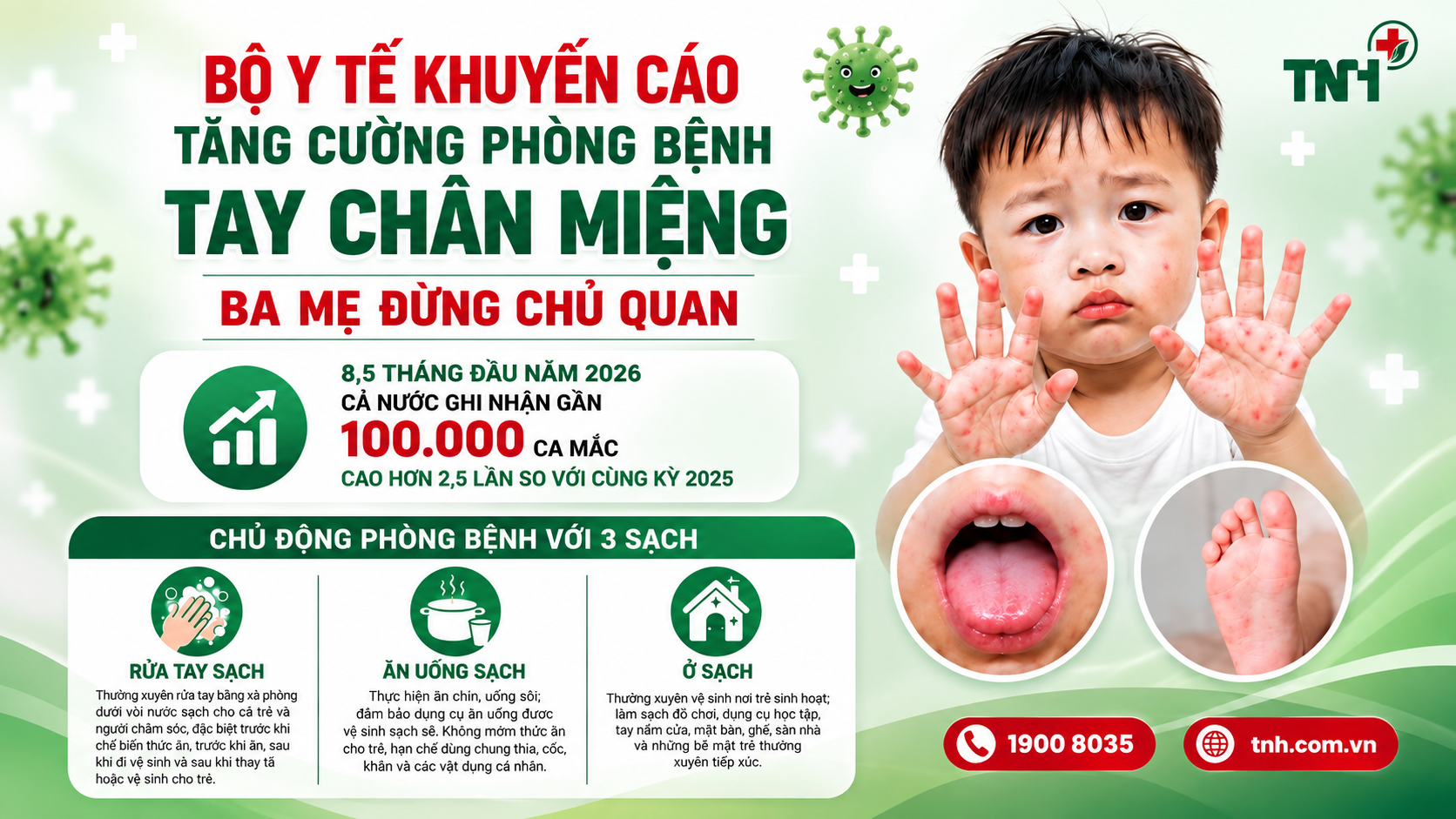
In the first 8.5 months of 2026, Vietnam recorded nearly 100,000 cases of hand, foot and mouth disease (HFMD), 2.5 times higher than during the same period in 2025. In response to the rising number of cases, the Ministry of Health has advised the public, particularly families with young children, to take proactive measures to prevent the disease.
As children begin a new school year, increased contact and group activities at schools, kindergartens, and playgrounds may create favorable conditions for infectious diseases, including HFMD, to spread if appropriate hygiene and preventive measures are not maintained.
Hand, Foot and Mouth Disease Can Become Severe
Hand, foot and mouth disease is a common infectious disease among young children. It can spread rapidly through the gastrointestinal route and through direct contact with an infected person’s secretions or waste, as well as contaminated surfaces and objects.
Most children with HFMD recover well. However, some cases may progress rapidly and develop serious complications if they are not detected, monitored, and treated promptly. Therefore, in addition to recognizing common symptoms, parents should pay close attention to any unusual warning signs.
Prevent HFMD with the “3 Clean” Principle
To reduce the risk of infection and transmission, parents and caregivers are encouraged to follow the “3 Clean” principle in children’s daily routines:
Clean Hands: Wash hands frequently with soap under clean running water for both children and caregivers, especially before preparing food, before eating, after using the toilet, and after changing diapers or cleaning a child.
Clean Food and Drinks: Make sure food is thoroughly cooked and drinking water is boiled or otherwise safe. Eating utensils should be properly cleaned. Avoid feeding children food directly from an adult’s mouth and limit the sharing of spoons, cups, towels, and other personal items.
Clean Environment: Regularly clean areas where children live and play, including toys, learning materials, door handles, tables, chairs, floors, and other frequently touched surfaces.
Recognize Warning Signs Early
Parents should not focus solely on blisters or skin lesions on the hands, feet, or around the mouth. If a child develops symptoms such as persistent high fever, frequent startling, unusual irritability or excessive crying, lethargy, trembling of the hands or feet, repeated vomiting, or abnormal breathing, the child should be taken to a medical facility promptly for examination and appropriate treatment.
When a child is suspected of having HFMD, families should also pay particular attention to personal hygiene and environmental sanitation and follow healthcare professionals’ instructions on care and monitoring to help reduce the risk of transmission to other children.
Disease prevention begins with simple daily habits. Maintaining good hand hygiene, safe food practices, and a clean living environment are practical measures that help protect children’s health every day.
If a child shows signs suggestive of hand, foot and mouth disease or develops any unusual symptoms, parents can bring the child to Thai Nguyen International Hospital for medical examination, assessment, and appropriate care instructions.
THAI NGUYEN INTERNATIONAL HOSPITAL
Address: 328 Luong Ngoc Quyen Street, Phan Dinh Phung Ward, Thai Nguyen
Hotline: 1900 8035
Website: tnh.com.vn